
Can getting periods once in three months help women stay fertile longer?
Chinese biologist Hongmei Wang is studying whether less frequent periods can preserve healthy eggs for longer. The work points to new fertility options but also raises questions about oestrogen's role in overall health.
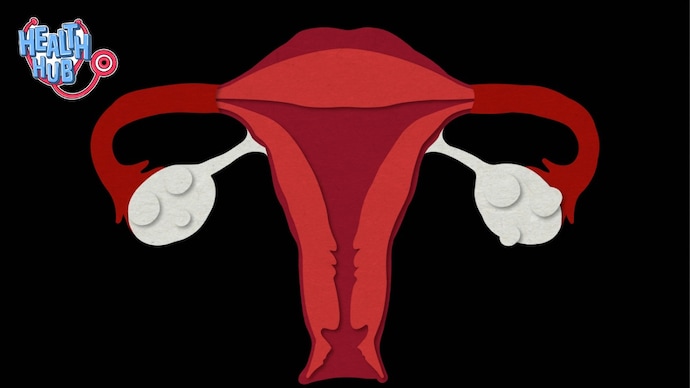

All said and done, it may not be about how many eggs a woman has, but how healthy those eggs remain over time.
That idea is driving new research by Chinese biologist Hongmei Wang, who is studying whether slowing down ovulation could help women preserve healthier eggs for longer and potentially delay menopause.
Wang, 52, a researcher at the State Key Laboratory of Stem Cell and Reproductive Biology in Beijing, believes that reducing how often a woman ovulates could slow ovarian ageing.
One possible approach being explored is reducing menstruation frequency to once every three months.
The research comes at a time when countries like China are struggling with falling birth rates despite policy changes encouraging families to have more children.
CAN SLOWING OVULATION PRESERVE FERTILITY?
Women are born with a fixed number of eggs, unlike men, who continuously produce sperm throughout their lives. Over time, both the number and quality of eggs decline, making it harder to conceive naturally with age.
“If we inhibit ovulation, we can preserve available eggs,” Wang said during a scientific conference in Spain.
But the science is still in its early stages, and researchers say the body’s hormonal balance makes the issue far more complex than simply delaying periods.
“At the same time, we inhibit the production of estrogen, which is a very important molecule for health,” Wang warned.
Her laboratory is now studying whether reducing the frequency of menstruation can preserve fertility without negatively affecting the body.
So far, the experiments are being conducted in mice.
OVARIES AND HEALTHY AGEING
The research has sparked wider conversations about reproductive longevity, the idea of extending not only fertility, but also the healthy functioning of the ovaries.
Dr. Nandita Palshetkar, Scientific Director and Head of the Bloom IVF Unit at Lilavati Hospital in Mumbai, said the work is important because ovaries play a much larger role than reproduction alone.
“We all know the ovary is not only a reproductive organ, it is also an important endocrine organ producing oestrogen, progesterone and several molecules that influence bone health, cardiovascular function, brain health, cognition, metabolism, skin and overall well-being,” she explained.
The bigger question, according to her, is whether ovarian function and hormonal health can be safely preserved for longer.
She added that researchers are increasingly focusing not just on lifespan, but on “health span”, how long people stay healthy as they age.
Scientists have long known that the ovaries are among the first organs in the body to age.
Some studies, including work from researchers at Harvard University, suggest ovarian ageing could influence broader ageing processes in women.
At the same time, experts caution against oversimplifying the science.
“Menstrual suppression alone does not necessarily preserve fertility or extend oestrogen production. It has not been proven for sure,” Dr. Palshetkar said.
CAN STEM CELLS HELP RESTORE FERTILITY?
Apart from studying ovulation suppression, researchers are also exploring other fertility-preserving approaches. Wang’s team recently reported the birth of a healthy baby monkey after injecting human stem cells into the ovaries of infertile monkeys.
In another small trial involving 63 women with premature ovarian failure, a condition in which fertility ends much earlier than expected, Wang said stem-cell-based treatment helped four women give birth.
“There are studies showing that PRP injections into the ovary can help. Research is moving in many different directions,” Dr. Palshetkar said.
“I feel the future will be about rejuvenating the ovaries. And rejuvenation of the ovaries is not only for fertility, but has far-reaching implications for the overall health and healthy lifespan of women,” she added.
For now, however, researchers stress that much more evidence is needed before any such treatments become mainstream.
As scientists continue studying longevity worldwide, extending reproductive health is increasingly becoming part of the larger conversation about healthier ageing in women.