
As 11 Gir lions fall to Babesiosis, Canine Distemper Virus, a 2018 horror is recalled
The deaths have revived anxieties about disease vulnerability of the Asiatic Lion in Gir, the last natural abode of the species
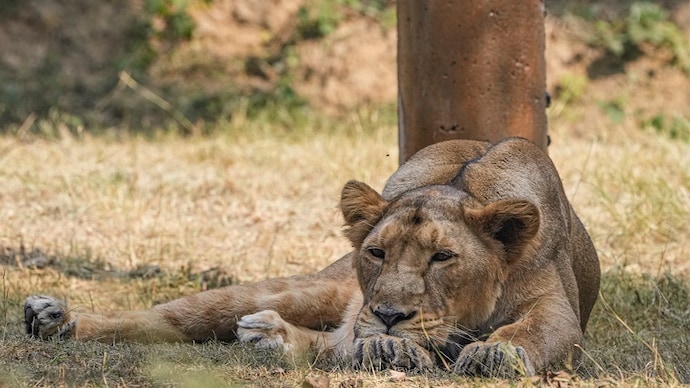

 Eleven Asiatic Lions—several of them cubs—have died in Gujarat’s Gir landscape over the past 10 days, with the state government now attributing the fatalities largely to a combination of Babesiosis and Canine Distemper Virus (CDV), a pathogen that had caused widespread lion deaths in 2018 as well.
Seventeen lions have been isolated over a 10 km radius. The deaths, clustered in Amreli district, have revived anxieties about disease vulnerability of the Asiatic Lion in Gir, the last natural abode of the species.
Earlier, amidst conflicting accounts of the death toll, state forest and environment minister Arjun Modhwadia had said that only two deaths were suspected to be linked to Babesiosis, a tick-borne parasitic disease, and the rest to infighting or other reasons. Modhwadia had said medical teams were monitoring lions and that such cases were typical of the first four or five months of the year.
The deaths come less than a year after the 16th Lion Population Estimation. Conducted in May 2025, it had placed Asiatic Lion numbers at 891—a 32 per cent rise from 674 in 2020. According to the estimation, only 56 per cent of lions now live inside forests; the remaining inhabit farmlands, riverine tracts, plantations and margins of villages.
Amreli, where the deaths have occurred, holds 332 lions—82 adult males, 117 adult females, 61 sub-adults and the rest cubs. This is the largest concentration of the Asiatic Lion outside the Gir National Park.
With CDV confirmed, memories go back to the 2018 precedent. Between September and November that year, at least 23 Asiatic Lions died in Gir East from a combination of CDV and Babesiosis. The National Institute of Virology in Pune sequenced a complete CDV genome and found it related to the India-1/Asia-5 strain—uncomfortably similar to the one that had wiped out roughly 1,000 lions in Tanzania’s Serengeti in 1994.
Gujarat eventually imported 300 doses of CDV vaccine from the United States and vaccinated 33 isolated lions while launching parallel dog/cattle vaccinations in 20 surrounding villages. A separate cluster in July-August 2025 saw three cubs die in the Kagvadar area of Jafrabad range, also in Amreli. The outcome of the inquiry was never made public.
Babesiosis is caused by intra-erythrocytic protozoan parasites. Transmitted by ticks, the parasites destroy red blood cells, causing severe haemolytic anaemia, fever, weakness and respiratory distress. Crucially, the resulting immune suppression makes infected lions far more vulnerable to secondary infections such as CDV. Treatment relies on anti-protozoal drugs such as imidocarb dipropionate, combined with blood transfusions, intravenous fluids and antibiotics—provided the diagnosis is made early.
But there is a deeper risk. Gir’s lions are running out of forest. Their range has expanded from 22,000 sq km in 2015 to roughly 35,000 sq km in 2025, but the protected forest has not. Wild prey remains concentrated in the core. Satellite lion populations in Amreli and the Saurashtra coast subsist substantially on livestock, bringing them into routine contact with feral dogs, tick-infested cattle pens and human settlements. Each such contact is a potential transmission event.
In April 2013, the Supreme Court had directed the Centre to translocate a small number of lions to the Kuno-Palpur Wildlife Sanctuary in Madhya Pradesh within six months, holding that “no state can claim ownership” of wildlife and that a single isolated population faced grave epidemic risk. Thirteen years on, not a single lion has been moved. Kuno now hosts African cheetahs, and the worst fears on which the translocation was ordered seem more real than ever.
Subscribe to India Today Magazine