
CDS Anil Chauhan exclusive: How India rewrote conventional deterrence with Op Sindoor
Pakistan was blinded by our electronic and air warfare, says Gen. Anil Chauhan, detailing the precision strikes and multi-domain dominance of Indian armed forces
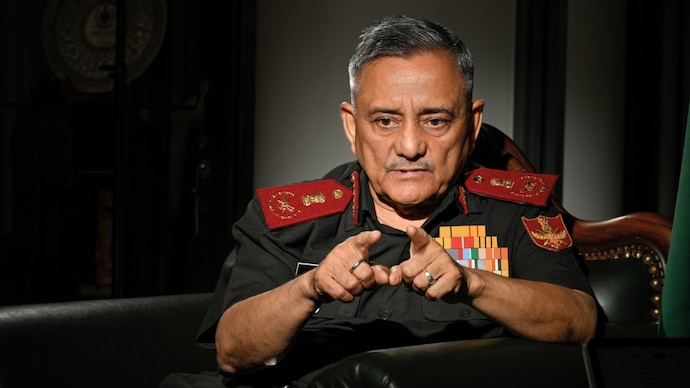

 India’s 88-hour-long Operation Sindoor against Pakistan last May was not merely another cross-border military strike. Chief of Defence Staff (CDS) General Anil Chauhan says it marked a decisive shift in the country’s doctrine of deterrence, escalation control and modern warfare—a moment when India demonstrated not only military precision but also the ability to dominate the battlefield across multiple domains simultaneously.
In the aftermath of the April 2025 Pahalgam terror attack, the Indian armed forces delivered a masterclass in precision dominance, systematically dismantling Pakistan’s air defence network to pave the way for devastating strikes on its military bases.
In an exclusive interview to INDIA TODAY, Gen. Chauhan described Operation Sindoor as India’s “first truly multi-domain operation”, wherein the army, navy and air force operated in seamless integration alongside cyber and information warfare capabilities. More significantly, he suggested, Op Sindoor represented the maturation of India’s evolving strategy of calibrated conventional retaliation against Pakistan-backed terrorism—a strategy that has steadily expanded from the surgical strikes in 2016 to the Balakot air strikes in 2019, and now the deep, high-precision response under Operation Sindoor.
“India is constantly improving and expanding the depth of our conventional response to terror attacks,” Gen. Chauhan said, underlining what may be the clearest articulation yet of India’s post-Uri attack (2016) military doctrine.
The CDS, India’s seniormost military officer, offered rare insights into how India achieved escalation dominance over Pakistan during Operation Sindoor and why Islamabad was forced to seek an early ceasefire.
According to him, the success of Operation Sindoor rested not on a single strike but weeks of preparation involving intelligence fusion, precision targeting and strategic force mobilisation. Indian agencies continuously updated target data as terrorist groups shifted locations while operational planners repositioned military assets from the eastern sector and mobilised forces over a carefully calibrated two-to-three-week period.
India’s objective, Gen. Chauhan said, was clear from the outset: deliver punitive precision strikes against terror infrastructure while avoiding uncontrolled escalation. The operation succeeded because India possessed superior situational awareness and battlefield transparency. “We knew what we had hit, what effect it had created, and we knew when Pakistani strikes had been neutralised. That gave us escalation control,” he explained.
One of the most significant revelations from the interview was India’s electronic and air warfare campaign against Pakistan. Gen. Chauhan disclosed that Indian strikes had heavily disrupted Pakistan’s radar and air defence systems through anti-radiation attacks, forcing Pakistani operators to shut down radar networks to avoid detection and destruction. “Pakistan became blind,” he said bluntly.
Indian forces unleashed a multi-domain blitz using BrahMos, SCALP and Crystal Maze cruise missiles, alongside loitering munitions like Harop, backed by Rafale and Sukhoi fighter jets and an integrated air defence shield anchored by the S-400 system.
This overwhelmed and neutralised Pakistani radars, SAM sites and command nodes, blinding their response. With air superiority secured, India hammered key Pakistani airbases, including Nur Khan, Jacobabad and Sargodha, in relentless waves, cratering runways, destroying aircraft on the ground and shattering infrastructure.
What began as targeted action against terror camps evolved into a decisive 10-hour air blitz that exposed Pakistan’s vulnerabilities, inflicted damages to the tune of billions, and forced a ceasefire—cementing India’s strategic edge and proving that no sanctuary exists for those who threaten its sovereignty.
That temporary blindness opened operational corridors for Indian aircraft and strike systems deep inside Pakistani territory. According to Gen. Chauhan, Pakistan struggled to accurately assess battlefield damage during the conflict and was reportedly relying on open-source imagery and foreign providers because its own systems were compromised.
This informational asymmetry, the CDS argued, became one of India’s greatest advantages. While Indian commanders maintained a clear operational picture, Pakistan increasingly lost visibility over the battlefield, contributing to its decision to seek talks sooner than anticipated. Gen. Chauhan suggested Pakistan had initially prepared for a much longer confrontation but was surprised by the speed and depth of Indian strikes.
The interview also addressed one of the central strategic questions surrounding any India-Pakistan conflict—the nuclear dimension. Contrary to fears of nuclear escalation, Gen. Chauhan said India observed no nuclear signalling from Pakistan during the operation. He argued that India’s nuclear doctrine of ‘No First Use’, combined with the threat of “massive retaliation”, creates greater operational space for conventional military action.
On the much-speculated China factor at play during Operation Sindoor, Gen. Chauhan said the fact is that nearly 70 per cent of Pakistan’s military inventory is of Chinese origin. It is also natural that original equipment manufacturers support equipment during wartime. Commercial satellite imagery is widely available today. Whether intelligence-sharing crossed into deeper operational cooperation is difficult to conclusively establish. There were instances that raised suspicions. For example, Pakistan appeared aware of some Indian land deployments.
Yet he dismissed the possibility of China opening a full second front in such a scenario, arguing that future India-China confrontations would likely remain localised and increasingly shaped by cyber, intelligence and technological domains rather than massive territorial wars.
Beyond the operational details, the interview painted a larger picture of how India’s military establishment now views the future of warfare. Gen. Chauhan repeatedly stressed that warfare is no longer platform-centric but network-centric and rapidly evolving into data-centric and AI-driven conflict. From drones and hypersonic weapons to cyber warfare, cognitive operations and information battles, armed forces unable to adapt risk becoming obsolete, he warned.
“The battlefield is no longer confined to land, sea and air,” the CDS said. “Modern conflict is increasingly being fought in informational, digital and psychological realms.” That transformation, he argued, is also driving India’s push toward integrated theatre commands and deeper military jointness. Operation Sindoor, in many ways, became the first real-world validation of that transformation.
For years, military reforms, such as joint theatre commands, faced bureaucratic resistance and inter-service hesitation. But the CDS indicated that Operation Sindoor demonstrated the operational value of integrated warfighting structures wherein air, land, sea, cyber and information operations are fused into a single operational framework.
A highly consequential takeaway from the interview was that India’s deterrence posture against Pakistan appears to have fundamentally evolved. Gen. Chauhan’s remarks suggest New Delhi no longer sees conventional military action as exceptional or politically prohibitive but as a calibrated and sustainable instrument of statecraft below the nuclear threshold.
From the post-Uri strikes to Balakot and now Operation Sindoor, India’s conventional response ladder has steadily expanded in range, precision and confidence. Operation Sindoor may, therefore, be remembered not simply as a successful military operation but as the moment India signalled that the old rules of deterrence in South Asia had changed.
Subscribe to India Today Magazine