
How Bihar chief secy Pratyaya Amrit is unveiling an era of official austerity
Cut power bills, car pool to office and switch to video meetings, says the chief secretary in one of the strongest cost-cutting directives from the government yet
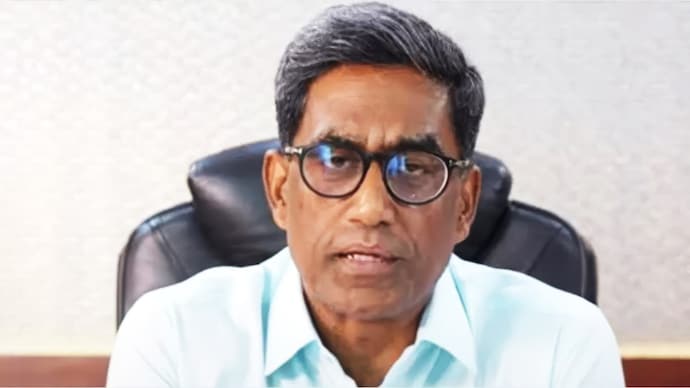

 Put your passport away and shelve any plans for overseas travel for at least the next six months if you work for the Bihar government. And if you are among the state’s more than one million government employees, prepare as well for a new administrative culture wherein official cars may need to be shared, meetings increasingly shift to video screens instead of conference halls, and even the office air-conditioner becomes subject to scrutiny.
In a striking austerity push that reflects both Prime Minister Narendra Modi’s repeated calls for leaner governance and chief minister Samrat Choudhary’s insistence on expenditure discipline, Bihar chief secretary Pratyaya Amrit has issued one of the strongest cost-cutting directives seen in the state bureaucracy in recent years.
The chief secretary’s order is sweeping in both tone and intent. Physical meetings are to be replaced, wherever possible, by video-conferencing. Car-pooling is to be encouraged across departments. Electricity consumption is to be monitored aggressively. Air-conditioners, lights and electrical equipment are not to remain switched on unnecessarily. Departments are being nudged towards electric vehicles while foreign travel by officials will generally remain restricted for the next six months.
What makes Amrit’s directive notable is not merely the content but the larger administrative philosophy underpinning it: Bihar’s bureaucracy is being told that visible frugality is no longer optional; it is now part of governance itself.
Amrit issued this directive on May 26 to all additional chief secretaries, principal secretaries, divisional commissioners and district magistrates across Bihar. At one level, it reads like a conventional government order on financial discipline. At another, it is an attempt to alter the everyday habits of administration in one of India’s poorest yet politically consequential states.
Incidentally, Choudhary, who inherited a fiscally strained state burdened by welfare commitments and ambitious infrastructure plans, has stressed the need for tighter expenditure management within government. Amrit’s order now gives that messaging a concrete bureaucratic form.
Indeed, if any officer within Bihar’s bureaucracy possessed the credibility to attempt such a behavioural correction, it was perhaps Amrit himself. The 1991 batch IAS officer and recipient of Prime Minister’s Awards for Excellence in Public Administration occupies a distinctive space.
He is regarded as an administrator associated with visible execution. Roads improved under his watch at a time when Bihar’s public-works culture had acquired a reputation for chronic delay and abandonment. The electricity sector, once synonymous with absence and unpredictability, became substantially more stable through sustained monitoring and administrative pressure. During crises—floods, disasters and the Covid pandemic—Amrit built a reputation for operational seriousness rather than ceremonial visibility.
That background matters because the latest directive reads like the accumulated belief of an administrator who knows governments are expected to deliver despite limited resources. The message is clear: no wasteful expenditure in the system.
Among the order’s most significant instructions is the direction that official meetings should increasingly move online. State-level meetings are to be conducted through video-conferencing except in exceptional circumstances while district-level reviews are also expected to minimise physical gatherings.
The symbolism here is important. In Indian bureaucratic culture, meetings often become performances of hierarchy rather than instruments of governance. Officers travel long distances, entire district establishments rearrange themselves around review sessions, and vast amounts of time, fuel and administrative energy disappear into procedural choreography. Bihar’s latest directive effectively asks a blunt question: if technology can accomplish the same purpose, why continue the physical ritual?
The same logic underpins the push for car-pooling. On paper, the instruction appears modest. In practice, it quietly challenges one of the most deeply embedded symbols of bureaucratic privilege—the individually assigned official vehicle. The state government is subtly redefining administrative seriousness from visible grandeur to restrained efficiency.
The energy-conservation component of the directive is even more revealing. Departments have been instructed to appoint nodal officers responsible specifically for monitoring electricity consumption. Monthly reviews are to be conducted. Air-conditioners, lights and electrical equipment are not to remain switched on unnecessarily. Offices have been encouraged to install central switching systems capable of regulating electricity usage more efficiently.
District administrations have additionally been instructed to conduct energy-conservation campaigns across subordinate offices. Departments are also required to examine whether previously sanctioned solar-energy systems are functioning and, where absent, to explore the installation of solar arrangements across government buildings.
What emerges is less a routine economy drive than an attempt to reshape administrative psychology itself. There is also something distinctly contemporary about the tone of the order. Earlier generations of Indian bureaucratic circulars often framed austerity as moral virtue. This directive treats it as operational necessity.
Bihar is simultaneously attempting to expand infrastructure, attract investment, improve policing, modernise governance systems and maintain large welfare commitments. All of that requires fiscal room. In a resource-constrained state, expenditure discipline becomes the structural compulsion.
The directive’s restriction on foreign travel further reinforces that message. Official overseas visits by government officers will generally remain prohibited for the next six months. Such restrictions are often politically sensitive because official tours function not merely as administrative exercises but also as institutional privileges. By curtailing them, the state government appears keen to signal that financial restraint must begin at the top of the hierarchy itself.
Perhaps the most significant portion of the order is the concluding instruction. All drawing and disbursing officers have been directed to ensure that fuel and electricity expenditure within their offices falls below corresponding levels during the same period last year. In bureaucratic terms, this transforms austerity from a moral appeal into a measurable performance benchmark.
Naturally, scepticism persists. Indian administrative history is crowded with circulars advocating economy that gradually dissolved into procedural ritual. Air-conditioners continue humming in empty corridors. Official vehicles continue moving with half-occupied seating. Video-conferencing systems exist, yet meetings continue physically because institutional habits change slowly.
But Amrit’s intervention carries greater weight precisely because he is not regarded within the system as an ornamental administrator. His reputation rests on follow-through. That credibility gives the present directive unusual seriousness.
The larger significance of the order lies elsewhere, however. Bihar’s bureaucracy is being informed, in unmistakable terms, that the age of casual governmental expenditure may be ending. Administrative authority will increasingly be measured not by how expansively the state spends but by how intelligently it functions. For a political culture long accustomed to equating power with visible state consumption, that may prove to be a far more consequential shift than what the circular suggests.
Subscribe to India Today Magazine