
How BJP is reading Kerala's political shift
Inside the calculations of a party that now has genuine foothold in Kerala and no longer sees the state as unwinnable
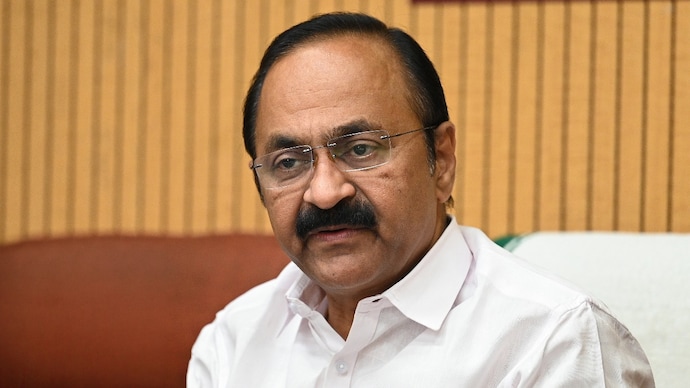

 The numbers tell one story. The politics beneath them tells quite another. V.D. Satheesan’s elevation as Kerala chief minister following the United Democratic Front’s (UDF) election sweep looks, on the surface, like a textbook democratic transition—an Opposition leader vindicated by voters and ascending to the office his campaign earned.
But in Kerala’s layered political culture, the manner of a succession often says as much as the succession itself. And the manner of this one has set off conversations that will outlast the honeymoon period of any new government. The central question being asked in political corridors, from Thiruvananthapuram to Kozhikode, is deceptively simple: who is the senior partner in the Congress-led UDF now?
No serious analyst of Kerala politics disputes the Indian Union Muslim League’s (IUML) electoral efficiency. Its strike rate, booth-level discipline and vote-transfer machinery are the envy of coalition managers across the country. The IUML, which contested 24 seats in the assembly elections, retained a win rate that comfortably outperformed the coalition average, holding firm across Malappuram while extending its organisational reach into segments where it had previously been a marginal presence.
Malappuram, the district most closely associated with the League’s dominance, recorded one of the highest voter turnouts, a fact that did not go unnoticed in either the Congress or BJP war-rooms. What the 2026 result has done is convert that operational superiority into visible political capital; and visibility, in coalition arithmetic, changes the nature of relationships.
The IUML’s early alignment behind Satheesan was rational politics. Satheesan had been the most consistent senior Congress voice defending the League against attacks from both the CPI(M) and the BJP. Coalition loyalty was being rewarded with coalition loyalty. That is how functioning alliances work.
With a far more powerful IUML now entrenched inside the UDF, the BJP sees an opportunity in accelerating its outreach among Christian groups as well as other Hindu communities. “With a formidable NDA (National Democratic Alliance) regime at the Centre, we hope that sooner or later these groups will realise that the BJP is now in a better position to defend their rights vis-a-vis the CPI(M) and Congress,” says a top BJP leader in New Delhi.
The BJP leader argued that over the last decade, the BJP has made inroads among Syrian Christian groups as well as some Roman Catholics, and intends to deepen that outreach further. The League’s growing assertiveness, visible most recently in its role in shaping the succession to Satheesan, has a longer and more complicated history than its current electoral performance suggests.
For decades, the IUML maintained an inconsistent relationship with several of Kerala’s Christian communities, despite the two groups sharing UDF membership and, in many constituencies, an implicit understanding that their electoral interests were complementary rather than competitive. That understanding has frayed in ways that the coalition’s public messaging has struggled to contain.
The friction has surfaced repeatedly around questions of institutional control, particularly in the education sector, where both communities operate extensive networks of aided colleges and schools. Disputes over minority institution autonomy, government regulatory oversight, and the distribution of aided posts have at various points placed League-aligned interests and Church-backed managements on opposing sides of the same policy argument.
The controversies surrounding the rationalisation of aided college posts in the late 2010s, for instance, saw Christian managements and IUML-affiliated institutions compete for protection under the same minority rights framework, producing tensions that occasionally spilled into open political disagreement within the UDF itself.
More visceral have been the confrontations over land and demographic anxieties in central Kerala. In districts such as Ernakulam, Thrissur and parts of Kottayam, sections of the Syrian Christian community have periodically expressed unease about changing land ownership patterns, migration flows from the north, and what some church leaders have described as the encroachment of Gulf-funded Islamic revivalism into previously mixed social landscapes.
These are not positions endorsed by mainstream Christian political leadership, and the institutional church has generally been careful to avoid direct confrontation with the League. But at the community level, the anxieties are real, and they circulate with particular intensity on digital platforms and in parish networks where institutional caution carries less weight.
The rise of organisations such as the Popular Front of India (PFI), subsequently banned by the central government in 2022, deepened these anxieties. The PFI and the IUML represented sharply different political traditions, and the League was consistent in distancing itself from the PFI’s ideology and methods. But in public discourse, particularly among Christian communities in central Kerala, the distinction was not always preserved. The perception of a broader assertiveness within Kerala’s Muslim society, regardless of its specific organisational expression, became a political reality that parties had to navigate.
The problem is one of optics in a state acutely sensitive to community perception. When the succession narrative, even partially and even informally, attaches itself to League endorsement, it provides political adversaries with precisely the ammunition they need. And in Kerala’s current climate, adversaries are watching very carefully. Unlike in the past, when the BJP was a merely peripheral force, it now has genuine footholds in the state. With the fall of the Left in West Bengal, its cadre has drawn a morale-boosting lesson about how to expand in states once considered structurally closed, including Tamil Nadu, Telangana, Punjab and Kerala.
Here is where honest analysis requires acknowledging something uncomfortable for those who reflexively dismiss the BJP’s prospects in Kerala: the party’s strategic evolution in this state is real, even if its electoral ceiling remains distant. The 2024 Lok Sabha election produced a nearly 19 per cent vote share for the NDA in Kerala, along with the party’s first-ever Lok Sabha seat from the state when Suresh Gopi won Thrissur.
The 2026 assembly election added three seats to the BJP’s tally, its best-ever performance in a state legislative contest. More significantly, the party finished first or second in over 22 assembly segments despite polling little more than 12 per cent statewide, a geographic spread that would have seemed implausible as recently as 2016 when the BJP held a single seat and polled below 11 per cent.
The party has shed the protest vote characterisation that previously diminished its victories. Cadre who spent years being told their efforts were symbolic are now being told they are foundational. That is a different political energy entirely. “There are around 7 per cent of voters who are not averse to voting for the BJP but did not do so in the assembly polls. We need to do a lot more detailed work to convert many of these voters and build their confidence,” says a BJP insider who has been analysing the results for the party leadership.
The Thrissur Lok Sabha victory is worth pausing on because it was not simply a celebrity candidate effect. Thrissur has historically been Kerala’s most communally mixed and politically competitive district, with significant Hindu, Christian and Muslim populations and a tradition of swinging between coalitions. The BJP’s ability to consolidate enough votes across those communities to win the seat suggested that the party’s social coalition, at least in pockets of central Kerala, had begun acquiring a cross-community character that its earlier electoral profile lacked.
More significant than the seats won is the Bengal analogy gaining traction within Sangh circles. Whether or not West Bengal is the right template for Kerala—and there are serious structural reasons to be cautious about that comparison—the internal belief that entrenched political orders can be cracked is itself a political force. Movements that believe they can win, eventually often do.
The outreach to Christian communities, who account for roughly 18 per cent of Kerala’s population, deserves particular scrutiny. This is not the blunt Hindutva messaging of previous decades. It is granular, issue-specific and in several constituencies demonstrably effective. Farmer distress, educational autonomy concerns, anti-radicalisation sentiment: these are not communal wedges in the conventional sense. They are genuine grievances being politically harvested.
Pinarayi Vijayan built a formidable political identity around decisive governance and ideological clarity across two full terms. The 2026 loss complicates both. The Left Democratic Front’s (LDF) vote share fell below 38 per cent, its weakest performance since 2006, and the coalition’s seat count dropped sharply from its 2021 high of 99. But the deeper strategic problem for the CPI(M) is the trap the IUML’s growing visibility creates for Left politics in Kerala.
Attack the League too aggressively, and Muslim consolidation behind the UDF firms up, making the CPI(M)’s recovery path even steeper. Soften that critique and the BJP’s narrative of both national parties being captured by minority appeasement gains credibility among precisely the Hindu and Christian voters the Left needs to retain. There is no clean move available. This is the structural bind that defines Kerala’s current moment. The state is transitioning from a stable bipolar contest into a more volatile triangular one. In triangular contests, the party with the most focused constituency often wins, even from third place.
An honest political reading requires holding two things simultaneously. Framing Muslim political consolidation as inherently threatening, as the BJP’s messaging often implies, is a narrative choice. But it is one that is finding an audience. At the same time, perceptions of disproportionate influence, regardless of their accuracy, carry real political consequences in plural democracies.
In other parts of the country, the BJP has excelled not only in building such narratives but also in taking them to the ground. The Congress cannot wish away the optics problem by simply defending the IUML more loudly. In fact, the more defensive that posture becomes, the more it confirms the narrative it is trying to counter.
Satheesan’s government will be judged, as all governments are, on governance. But the political subtext it inherits—the question of coalition balance, community anxieties and the BJP’s patient consolidation—will not quietly recede. Kerala’s famous political sophistication has always managed these tensions through institutional accommodation and economic integration. Whether that sophistication is equal to the current moment is the real story of the next five years. The votes have been counted. The more consequential arithmetic is just beginning.
The BJP is obviously playing the long game in Kerala. Its bet: a Congress-led UDF, leaning on a rejuvenated IUML, will keep tilting until the contradiction is impossible to hide. Bakrid is the latest tell. The Satheesan government declared both May 27 and 28 as holiday. The backdrop matters: in 2025, when the state shifted the Bakrid date, the IUML had criticised the LDF government.
BJP-ruled Bengal presents the contrast. The Suvendu Adhikari government scrapped the previous tradition of two-day breaks and announced only May 28 as holiday, in line with the Centre.
The Kerala BJP is in no hurry. It’s waiting for the UDF to be pulled in so many directions that space for the party opens up on its own.
Subscribe to India Today Magazine