
How Maharashtra eyes monumental shift in tourist experience with site-focused plans
Site management plans will cover all 392 monuments protected by the Directorate of Archaeology and Museums, boosting conservation and offering immersive experiences
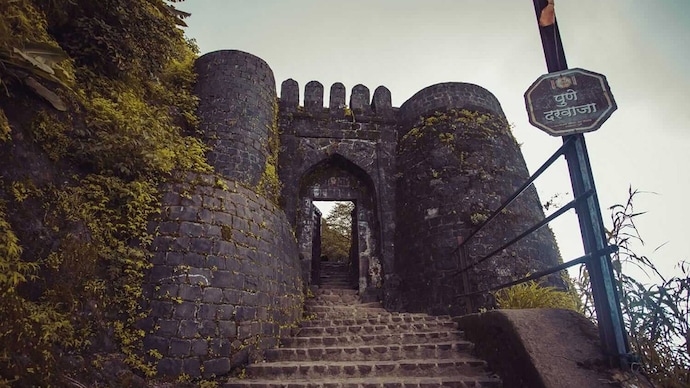

 Maharashtra is working on site management plans (SMPs) for conservation and protection of historical places such as forts, temples, caves and Stone Age-era features. These plans will cover sites protected by the Directorate of Archaeology and Museums and help boost tourist infrastructure and offer visitors an immersive experience.
The SMPs include a framework for conservation, infrastructure development, visitor management and community engagement. These cover short-term, medium-term and long-term deliverables, such as administrative structure, site infrastructure, interpretation and visitor management systems, excavation, conservation, mobility plan, disaster and risk management, and community outreach.
“We have launched a drive to prepare SMPs for all 392 protected monuments in our ambit,” said Kiran Kulkarni, secretary, cultural affairs, Maharashtra government, noting that this would boost conservation, restoration and maintenance of sites, besides improving access to them.
State-protected sites in Maharashtra include the Stone Age-era petroglyphs in the Konkan, Rajgad and Sinhagad forts of Pune district, the Aundha Nagnath temple in Hingoli district, the Khandeshwari Caves and Ghodbunder temple in Thane, Ghatotkach Caves and the Panchakki in Aurangabad, and Lokmanya Bal Gangadhar Tilak’s birthplace in Ratnagiri. Ten sites in Mumbai are protected: Gateway of India, August Kranti Maidan, Banganga, Dean’s Bungalow in the J.J. School of Art, and the forts at Worli, Shivdi, Bandra, Saint George (behind CSMT railway station), Dharavi and Mahim.
Kulkarni said the plans so far for around 50 monuments, including 12 major fortifications, included in the ‘Maratha Military Landscapes of India’ that have been inscribed on the UNESCO World Heritage List. These cover 11 forts, namely Raigad, Rajgad, Shivneri, Pratapgad, Panhala, Vijaydurg, Lohagad, Salher, Sindhudurg, Suvarnadurg and Khanderi, besides Gingee in Tamil Nadu. The sites cover hill, coastal and island forts. Maharashtra is perhaps the only state to have all types of fort architecture—land, sea and hill.
The forts, which are located in and around the Western Ghats and the Sahyadri ranges, showcase the military might of the Marathas, from the time of Chhatrapati Shivaji Maharaj (1627/30-1680) to the unravelling of the Maratha confederacy, which controlled vast swathes of the Indian subcontinent, in 1818.
The empanelled agencies are expected to prepare the SMPS within a year, said Kulkarni. Once these are in place, initiatives like digital heritage walks can be launched. The photogrammetric and LiDAR (light detection and ranging) survey of all protected monuments launched by the directorate—to indicate the area of these sites and the encroachments around it—is also expected to be completed soon.
“SMPs are needed for overall management of the site as they cover aspects such as conservation, protection, disaster management and provision of tourist amenities. They are like a roadmap for a site, which may have its own unique features. For instance, a site in an urban area will need to be assessed on different parameters compared to that in a rural area,” noted an official from the Directorate of Archaeology and Museums.
The Maharashtra Ancient Monuments and Archaeological Sites and Remains Act, 1960, allows the state government to preserve historical monuments, records and archaeological sites and remains.
Subscribe to India Today Magazine