
How Maharashtra's circular-economy plan aims to get the best out of waste
A policy to boost recycling, reduce pollution and tackle the mounting challenge of handling various types of waste will be tabled before the state cabinet soon
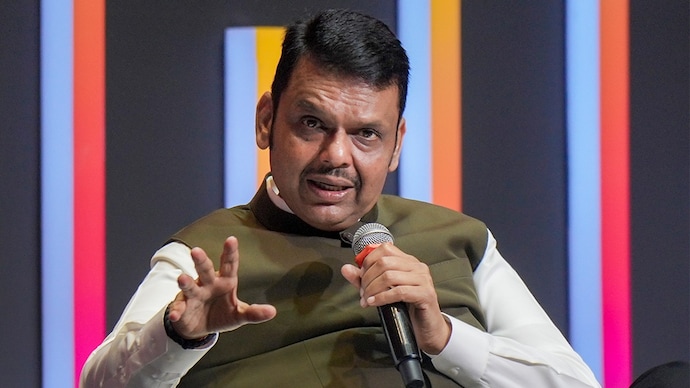

 The Maharashtra government is working on a policy to boost the state’s recycling industry and reduce the proliferation of waste. The policy, which will be tabled before the state cabinet soon, plans to create a circular economy, reduce pollution, and tackle the mounting challenges involved in handling the various types of waste, such as electronic, municipal, solid, and plastic.
The government’s flagship industrial policy, approved in 2019, seeks to augment the manufacturing ecosystem of Maharashtra. This policy for a circular economy is part of the government’s larger push for sectoral policies, with those for industries and verticals such as MSMEs, electronics, aerospace and defence, apparel and garments, and media and electronics being in the pipeline.
The Devendra Fadnavis government has already approved an artificial intelligence (AI) policy that targets investments of Rs 10,000 crore, creation of around 150,000 jobs in AI and AI-enabled domains by 2031, and training of around 200,000 youth and professionals in AI, data, cloud and emerging technologies in order to build a skilled workforce.
India generates around 62 million tonnes of waste annually, and it is estimated that the circular economy could reach a market size of $2 million by 2050, with a potential to create 10 million jobs. The circular economy transition has a Rs 10.8 lakh crore investment opportunity. It is estimated that a circular economy will reduce emission of greenhouse gases by 39 per cent by 2050. Annual waste generation is also expected to increase by 70 per cent by then.
Deependra Singh Kushwah, development commissioner (industries), government of Maharashtra, said the draft policy aimed to boost linear use of products. “This will ensure recycling and reuse of plastic, electronics, textile, metal, construction, solid, and municipal waste,” he informed.
The draft policy will support industries in the recycling sector through fiscal and non-fiscal incentives, ease of doing business initiatives, and infrastructure for waste recycling parks. These industries could include those involved in the reprocessing of discarded plastics and textiles to create new products and waste-to-energy projects.
“The policy will help boost investments and create employment opportunities in the waste recycling sector while spurring a new economy,” said Kushwah.
This will enable scientific disposal of waste and ensure there are no ‘dark spots’ like Govandi in Mumbai. Located in the city’s eastern suburbs, the Govandi landfill holds around 18.5 million tonnes of legacy waste dumped over the decades. Such landfills carry health and environmental hazards for residents and the larger precinct. Officials from the Brihanmumbai Municipal Corporation (BMC) admit to the challenge of handling the burgeoning waste generated by its 15 million residents and the massive floating population.
Kushwah noted that the policy for a circular economy aims to ensure a shift from the present system, wherein local bodies such as municipalities are challenged by the handling and disposal of waste, to one where they can generate revenues on sale of waste.
Maharashtra has 430 urban local bodies, including municipal corporations, councils and nagar parishads. These together generated 24,297 metric tonnes of waste daily in 2025. Around 82 per cent of this waste (19,847 MT) is treated. The handling and treatment of this waste needs improvement. For instance, Mumbai city generates around 7,000 metric tonnes (MT) of dry and wet waste daily. This includes food and organic waste, wood, cloth, sand, stone and fine earth, plastic, paper and recyclables including metals.
This volume creates problems as segregation at source is poor despite the 5 per cent rebate in property tax offered to housing societies and complexes, say BMC officials.
Pune generates around 2,800 MT of waste daily. Waste handling at the landfill at Urali Devachi has created concerns about the environmental impact and sees frequent protests by local people. A 500 MT mixed waste processing plant has been set up at Urali Devachi, and biomining for the around 5.3 million MT of legacy waste at the site has also been launched.
In 2024-25, Maharashtra generated hazardous waste of 4.41 lakh MT, which was sent to the common hazardous waste processing centres. The state also has a robust recycling ecosystem across sectors for material recovery, including 441 plastic waste recyclers, 260 electronic waste recyclers, 126 non-ferrous metal scrap recyclers, 94 battery waste recyclers, 92 waste tyre recyclers, 90 spent solvent recyclers, 86 used or waste oil recyclers, 45 ferrous metal scrap recyclers, and six recyclers who are engaged in scrapping of old and used vehicles. Around 87.3 per cent of plastic waste generated in Maharashtra is recycled.
Subscribe to India Today Magazine