
Rote to reasoning: How CBSE is resetting the way students think, learn and grow
The curriculum for 2026-27 is a bold step away from a system dominated by memorisation towards one that values thinking, application and adaptability
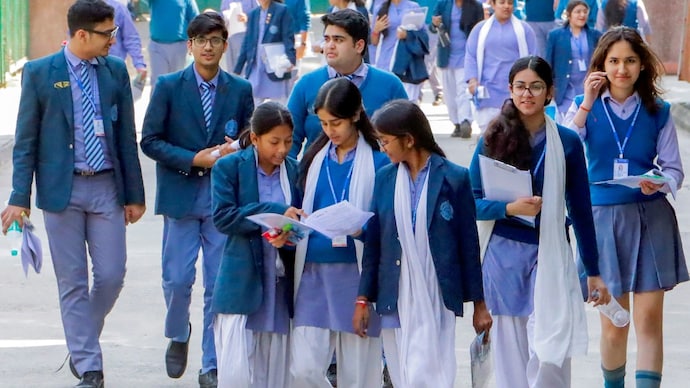

 Walk into a Central Board of Secondary Education (CBSE)-affiliated school and you may begin to notice subtle shifts. Exams and marks may still be a reality and teachers could be focused on the syllabus. Yet, beneath all of this, the broader concept of how learning happens is changing.
The 2026-27 CBSE curriculum is seen as a decisive move away from a system dominated by memorisation towards one that values thinking, application and adaptability. This could redefine not just how students study but how they understand the world.
Memorisation is pass
For decades, success in school meant mastering the art of memorisation. Notes, repetition and last-minute revision defined learning. Now, that model is being questioned.
“Competency-based education is a correction to a system that has long rewarded recall over reasoning,” says Ganesh Kohli, founder of career counselling firm IC3 Movement. “Students will now increasingly be judged on their ability to think, apply and interpret.”
This means even examinations are changing. With nearly 50 per cent of assessment questions now competency-focused—case-based, data-driven and application-oriented—the shift is structural. Learning is no longer about finishing the syllabus but about engaging with it meaningfully.
“This alignment between learning outcomes, pedagogy and assessment reflects a systemic redesign rather than a superficial change,” says Vishal Aditya Sahoo, director-new age learning, SAI International Education Group.
The reform vision
The CBSE curriculum shift is aligned with the National Education Policy (NEP) 2020 that treats education as capability-building. The transition is intentionally phased. “The reforms are phased but transformational. The idea is to give schools time to adapt while steadily moving towards a new learning paradigm,” says Sahoo.
From the gradual introduction of AI modules to the reworking of language requirements, the phased rollout reflects a balance between ambition and institutional readiness because real change needs to transcend policy and reflect in classrooms.
Redefining foundational literacy
One of the most profound shifts is how foundational literacy is being reimagined. If earlier being good at studies meant reading, writing and solving maths problems, that definition now feels incomplete. Students are being introduced to AI, coding and computational thinking earlier than ever. The goal is to help them think clearly in a complex world.
“Foundational literacy now includes logical reasoning, pattern recognition and ethical engagement with technology,” explains Sahoo.
Kohli adds a critical dimension: “Students are already using AI to search and decide. The issue is whether they are being taught how to question what they see and apply judgment.”
In simpler terms, it’s no longer just about finding answers. It’s about asking: does this make sense? Can I trust this? What am I missing?
Language, cognition and culture
The revised three-language formula is another big reform. It is aimed at strengthening multilingual proficiency while reinforcing cognitive growth. Research shows multilingualism enhances memory, problem-solving ability and cognitive flexibility. However, the impact of this move will depend heavily on execution.
“Language shapes how students think, express themselves and build confidence,” says Kohli. “If approached as compliance, it may add pressure. If delivered thoughtfully, it can deepen learning.”
Kavita Kerawalla, vice-chairperson, VIBGYOR Group of Schools, echoes this perspective, noting: “Multilingualism strengthens cultural grounding while enhancing cognitive agility, which is an essential capability in a complex world.”
But like many reforms, its success will depend on how it feels to students. If it becomes another checkbox, it risks adding pressure. If it becomes meaningful, it could become a lifelong advantage. Perhaps, the real shift isn’t about how many languages students learn but how deeply they engage with them.
Rethinking exams
If you ask students what defines school life, most will say one word: exams. The good news is that even exams are changing. They’re becoming less predictable, more application-based and reflective of real-life thinking.
If the nature of assessment changes, preparations must follow suit. Competency-based questions demand conceptual clarity, analytical thinking and the ability to apply knowledge in unfamiliar contexts.
“Assessment reform must be accompanied by ecosystem reform,” says Kohli. “Otherwise, students will be caught between two systems—one that values thinking and another that still trains them to memorise.”
Digital evaluation and continuous assessment models signal a move away from one-time, high-stakes testing towards sustained learning. If implemented well, this could reduce exam anxiety and encourage deeper engagement. But this will require a shift in mindset—in classrooms and coaching centres and at home.
Global concept, Indian classrooms
There’s also a visible shift towards global learning styles: more inquiry, flexibility and interdisciplinary thinking. But CBSE isn’t trying to become a Cambridge or International Board. It’s trying to adapt those ideas to Indian classrooms where diversity is vast, resources vary and cultural context matters deeply.
“CBSE is aligning with global standards while staying rooted in Indian realities,” says Kerawalla. This dual approach could become one of the system’s greatest strengths.
The intent behind the reforms is clear: to build a more flexible, relevant and future-ready education system. But intent alone is not enough. Success will depend on teachers being equipped to shift pedagogy, schools supporting interdisciplinary learning, parents and coaching systems handling the expectations, and students being guided, not pressured. After all, the shift from ‘tell me what to write’ to ‘tell me what you think’ takes time.
Subscribe to India Today Magazine