

Excise case: Kejriwal flags judge conflict, Delhi HC takes affidavit on record
Arvind Kejriwal's virtual appearance before the Delhi High Court adds a fresh twist to the excise policy case, with new filings accepted and the CBI stepping in to respond before the court moves ahead.
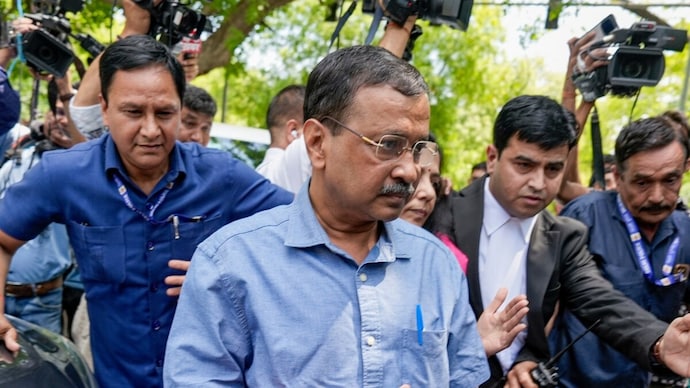


In a dramatic turn in the Delhi excise policy case, Arvind Kejriwal on Thursday urged the Delhi High Court to take on record an additional affidavit alleging a “direct conflict of interest” against the presiding judge, even as the court made it clear the matter would not be reopened.
Kejriwal, who appeared virtually before a bench of Justice Swarna Kanta Sharma, said, “I have filed an additional affidavit, can that be taken on record please,” adding that the filing had been submitted before the registry but required judicial approval.
The bench directed the registry to take the affidavit on record, observing that the applicant sought to place fresh material. However, Justice Sharma clarified, “But this matter is reserved. I am not re-opening it. Reserved matters are not reopened.”
The court had earlier reserved its verdict on April 13 on Kejriwal’s plea seeking the judge’s recusal.
‘DIRECT CONFLICT OF INTEREST’ CLAIM
In his additional affidavit dated April 14, Kejriwal alleged that the judge’s children are empanelled central government lawyers who receive work through the Solicitor General, who is representing the Central Bureau of Investigation in the case.
He claimed this created a “direct conflict of interest” and had “amplified” his apprehensions, forming grounds for recusal. The affidavit also sought time for further oral and rejoinder submissions, arguing that continuing before the same bench may not reflect “judicial detachment, independence and neutrality”.
Citing documents in the public domain, including information accessed through the Right to Information Act mechanism, Kejriwal alleged that substantial legal work had been allocated to the judge’s son. “A total of 2,487 cases were marked in 2023; 1,784 in 2024 and 1,633 in 2025,” the affidavit claimed.
He added that these “material facts” came to light after filing the recusal application and stressed that empanelment involves court appearances and financial benefits.
CBI FILES RESPONSE
Appearing for the prosecution, Tushar Mehta earlier said he had no objection to the affidavit being taken on record and that the CBI would respond.
The agency has now filed its affidavit before the High Court, describing Kejriwal’s fresh filing as a “belated affidavit” submitted after the court reserved its order.
The agency said the claims regarding the judge’s children being empanelled as government lawyers were an “afterthought” and a “deliberate attempt to malign” the judiciary.
It argued that accepting such pleas could have serious consequences for the legal system.
‘ATTEMPT TO PRESSURE JUDICIARY’
The CBI said the allegations were meant to “pressure the judiciary” and should be dismissed outright.
“Perception of bias by a litigant is not valid grounds to recuse,” the agency said, warning that if such arguments were accepted, any judge with relatives on a government panel could be barred from hearing political matters.
The agency also described the claims as “wild allegations” aimed at “browbeating” the judicial institution.
RTI DATA ‘MISREPRESENTED’
Responding to Kejriwal’s reliance on information obtained through the Right to Information Act, the CBI said the data had been “misrepresented” on social media.
It added that “half-baked, selective information” was being circulated and that empanelled lawyers under different categories do not necessarily argue or appear independently in all matters.
The agency said the number of cases cited in the affidavit had been presented in a misleading manner.
WARNING ON ‘INSTITUTIONAL INTEGRITY’
The CBI cautioned that allowing such allegations would undermine institutional integrity.
“If such litigants are permitted to malign and pressure judges, it would compromise the integrity and fairness of the judicial system,” the agency argued, adding that it could open the door for similar tactics across courts, from trial courts to the Supreme Court.
BACKGROUND OF THE CASE
Kejriwal had earlier raised objections on April 13, pointing to previous orders by the same judge denying him relief in his arrest challenge and rejecting bail pleas of co-accused, including Manish Sisodia and K Kavitha.
The developments come after a trial court on February 27 discharged Kejriwal, Sisodia and others in the case, ruling that the CBI’s case “was wholly unable to survive judicial scrutiny”.
With fresh allegations now on record but no further hearings scheduled, the focus shifts to the court’s pending verdict.