

Delhi Gymkhana goes to High Court against government's eviction order, hearing tomorrow
The government had mentioned in their notice earlier that the land is needed for strengthening defence infrastructure, governance-related facilities and other critical public security requirements.
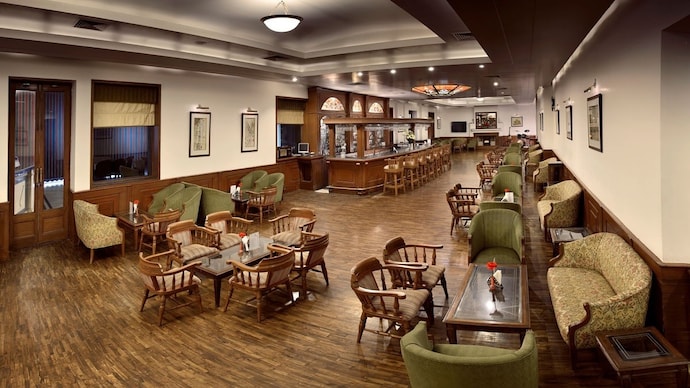


Delhi Gymkhana Club has moved the Delhi High Court challenging a central government directive asking it to vacate its 27.3-acre premises in Lutyens' Delhi by June 5. The matter was mentioned before Justice Avneesh Jhingan by Senior Advocate Abhishek Manu Singhvi, who sought an urgent hearing in the case. The court agreed to hear the matter on May 26.
On May 22, the Land and Development Office (L&DO) directed the Delhi Gymkhana Club to vacate and hand over its 27.3-acre property at 2, Safdarjung Road. The order cited Clause 4 of the original lease agreement, which empowers the government to reclaim the land if it is required for a “public purpose”.
According to the government, the land, situated close to the Prime Minister’s residence and several high-security establishments in Lutyens' Delhi, is needed for strengthening defence infrastructure, governance-related facilities and other critical public security requirements.
"Upon such re-entry, the entire plot of land measuring 27.3 acres, along with all buildings, standing erections, structures, lawns, and fittings thereon, shall vest absolutely in the Lessor, i.e., the President of India, through the Land & Development Office," the government notice read.
It had further added that the premises shall be taken over by the Land & Development Office on June 5.
GROUNDS RAISED BY GYMKHANA CLUB BEFORE DELHI HC
However, in its petition before the Delhi High Court, the Delhi Gymkhana Club challenged the takeover order on multiple grounds. The club argued that the Centre had given vague and generalised reasons such as “defence infrastructure”, “public security purposes” and “governance infrastructure” for the takeover without furnishing any particulars or material, calling the exercise a “sham”.
The club further contended that the order did not provide for any compensation towards the loss of the property, the premium paid, or the buildings and structures standing on the premises.
It also alleged that the directive violated Article 300A of the Constitution, asserting that the government itself had earlier recognised the club’s ownership rights through a 2009 communication saying that its “ownership and titles stand restored”. The petition argued that such proprietary rights cannot be extinguished arbitrarily without due acquisition proceedings, safeguards and compensation.
The petition additionally termed the move a “malicious and colourable exercise”, alleging that it was part of a larger attempt by the government to gain control over the institution, including a recent effort to take over the club’s management.
The club also claimed that the government was attempting to carry out a forced eviction through executive action and threat of police power instead of following due process of law.
CLUB SOUGHT CLARITY AFTER REVIEW MEETING
Following the Centre’s directive, the General Committee of the Delhi Gymkhana Club convened an emergency review meeting and resolved to seek urgent clarification from the government on multiple concerns related to its members and staff.
In a statement, the Delhi Gymkhana Club said its General Committee met on an urgent basis and, after detailed discussions, decided to immediately write to the Land and Development Office (L&DO) seeking clarity on several issues concerning the interests of the club’s members and employees.
The club further stated that the committee had requested an urgent meeting with officials of the Ministry of Housing and Urban Affairs to discuss the matter.
It added that the immediate priority of the General Committee was to ensure that the functioning and operations of the club continue without disruption.
Established on July 3, 1913 as the Imperial Delhi Gymkhana Club, the institution primarily served British civil servants and military officials during the colonial era. After India gained Independence in 1947, the word “Imperial” was dropped from its name, while a majority of the club’s existing structures were built in the 1930s.