

Catch-22 for me, win-win for Kejriwal: What Justice Sharma said on recusal plea
While pronouncing the order, Justice Swarana Kanta Sharma made a series of pointed observations on the recusal plea and its implications for the judiciary.
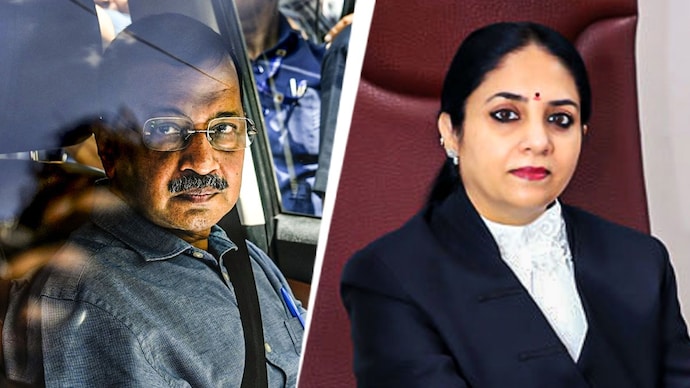


A Delhi High Court bench led by Justice Swarana Kanta Sharma on Monday delivered its verdict on pleas by Arvind Kejriwal and others seeking her recusal from the excise policy case. In a sharp framing of the controversy, the judge described the situation as a "Catch-22" for herself but a "win-win" for the AAP chief.
Justice Sharma, after delivering a detailed verdict both in English and Hindi, ultimately rejected the recusal applications.
The case stemmed from applications moved by Kejriwal, Manish Sisodia and others, urging Justice Sharma to recuse herself from hearing the Central Bureau of Investigation's plea challenging his discharge in the liquor policy case.
The AAP chief argued that prior adverse orders by the judge, including refusal of relief to him and other accused like Manish Sisodia and K Kavitha, indicated bias. He also alleged a "conflict of interest", claiming the judge's children were empanelled as central government lawyers.
Justice Sharma, while placing Kejriwal's additional submissions on record, addressed both the legal and institutional implications of such recusal pleas in a series of pointed remarks.
Here are top quotes from Justice Sharma's verdict:
Now, it is a Catch-22 situation of seeking a recusal. In this case, I have been placed in such a position where whether I recuse or do not recuse, questions will arise. The applicant (Kejriwal) has created a win-win situation for himself.
If he [Kejriwal] does not get the relief, he will say that he had already predicted the outcome. If he gets the relief, he can say the court acted under pressure. The litigant may portray the situation whichever way it suits his narrative. Recusal has to stem from law and not from narrative. Thus, the pleas filed by Kejriwal and others are rejected.
A recusal would lead the public to believe that judges are aligned with a particular political party or ideology. This court, by penning a recusal, cannot allow this. A courtroom cannot be a theatre of perception... In case this court withdraws from this case in the absence of any demonstrable cause, it would attach weight to allegations which carry none.
The issue was clear as to whether I should recuse. My impartiality and dignity had been challenged. The easier path would have been to recuse without hearing the application. I decided to adjudicate the application because it was a question of the institution. I decided to decide it without being affected by the accusations, as I have done in 34 years of my judicial career.
Responding to Arvind Kejriwal’s allegation of a “direct conflict of interest” over her children being empanelled as central government lawyers, Justice Sharma said, "If the wife of a politician can become a politician, if the children of a politician can become politicians. How can it be said that the children of a judge can't enter the profession of law? This would mean taking away the fundamental rights of a family of judges".
In the opinion of this court, even if the relatives of this court are on the government panel, the litigant has to show the impact of that on the present case or the decision-making power of this court. No such nexus has been shown.
As an officer of this court i am conscious of the fact that a lie even if repeated thousand times in court or on social media does not become truth. It remains false. Truth doesn't lose its force merely because a lie is repeated several times.
I choose the path to resolve the controversy. The strength of judiciary lies in its strong resolve to decide the acquisitions. I have written the order without being affected by anything.
In Kejriwal's arrest case, only the necessity of arrest question was referred to a larger bench and interim bail was granted. The order of his court was not set aside. If a judge's order is set aside by a superior court, it does not give a litigant the right to stand here and claim that the judge is unfit to hear the case.
Recusal would not be prudence, but abdication of duty. It would be an act of surrender.