

Consumers' deepening trust fodder for online frauds? Govt issues safety directives
The government has issued a nationwide alert warning consumers about rising online smartphone shopping scams, where cybercriminals are exploiting fake discounts, flash sales, and deceptive offers to target buyers across India.
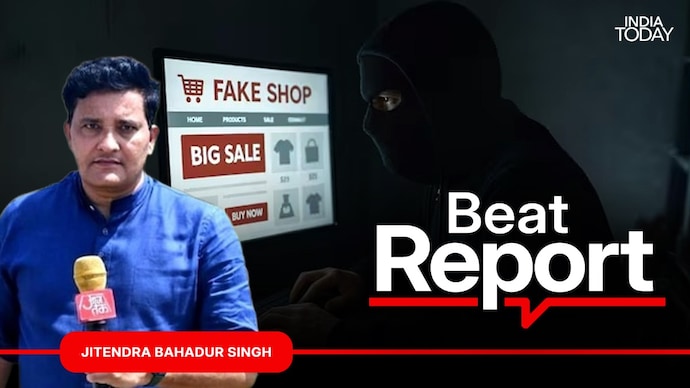


As smartphone shopping shifts rapidly online, millions of consumers are chasing attractive discounts and flash sales with just a few clicks. But behind many "unbelievable deals" lies a dangerous network of cyber fraudsters exploiting trust, urgency, and digital inexperience. With cyber scams linked to online shopping rising sharply across India, the Ministry of Home Affairs's cyber wing has now issued a nationwide alert.
The online shopping market in India is expanding rapidly. People are placing immense trust in e-commerce platforms, particularly for purchasing smartphones. Every month, thousands of people buy mobile phones through e-commerce sites or other websites.
However, as the trend of online shopping has grown, cybercriminals have also begun adopting increasingly sophisticated methods. Today, cyber fraudsters are no longer limited to making fraudulent calls; they are now draining people's bank accounts through fake websites, social media advertisements, bogus delivery agents, refund scams, and screen-sharing applications.
Notably, most people fall victim to these scams after being enticed by the allure of massive discounts, flash sales, and "limited-time offers." According to data from the National Cyber Crime Reporting Portal, the year 2025 witnessed an increase of approximately 38 percent in cyber fraud cases linked to online shopping.
Experts point out that there is a sharp surge in such incidents during festivals, sale seasons, and the launch periods of new smartphones. But how do fraudsters dupe people?
WEB OF FAKE E-COMMERCE WEBSITES
Cybercriminals create counterfeit websites that look identical to legitimate ones. These sites feature expensive phones listed at incredibly low prices; for instance, a phone worth 100,000 might be offered for just 25,000 or 30,000. When a user visits the website and completes a payment, either the product is never delivered, or an empty box is sent instead. In many instances, the website itself vanishes completely after a few days.
FRAUD VIA SOCIAL MEDIA ADS
Advertisements featuring claims such as "90% Discount," "Stock Clearance Sale," or "Government Auction" are frequently run on platforms like Instagram, Facebook, and YouTube. Upon clicking these advertisements, users are redirected to fraudulent websites. According to experts, it is crucial to verify the authenticity of every advertisement appearing on social media, as scammers are now utilizing AI-based designs and fake reviews.
FAKE CUSTOMER CARE, REFUND FRAUD
Often, people search the internet for customer care numbers to lodge complaints regarding online orders. Cybercriminals insert fake numbers into Google search results. As soon as a customer places a call, they are instructed to download apps such as AnyDesk, TeamViewer, or QuickSupport. Once screen sharing is enabled, the scammers gain access to banking apps, UPI details, and even One-Time Passwords (OTPs). Within just a few minutes, the victim's bank account is drained.
FAKE PAYMENT LINKS, PHISHING
Scammers send payment links via WhatsApp, SMS, or email. These links are designed to look exactly like those from legitimate websites. The moment a user enters their card details or UPI information, all that data is transmitted directly to the criminals. According to cybersecurity agencies, thousands of phishing links are activated in India every single day.
DELIVERY SCAMS
In some instances, scammers pose as delivery agents. They instruct the victim to "provide the OTP to confirm delivery" or "scan this QR code." People often share this information without a second thought, resulting in money being siphoned off from their bank accounts.
WHY ARE SUCH CRIMES ON RISE?
Experts in cybersecurity believe that the rapid expansion of digital payments and online shopping has opened up new avenues for cybercriminals. The number of internet users in India has now exceeded 950 million. Online shopping is also growing rapidly in rural areas. The younger demographic is particularly susceptible to the allure of quick discounts and special offers. Furthermore, many people remain unaware of basic cybersecurity protocols. This is precisely why cyber scammers are constantly devising new methods to exploit victims.
HOW TO IDENTIFY FAKE ONLINE OFFER?
If a mobile phone is being offered at half its market price—or even less—exercise extreme caution. Many fraudulent websites create domain names that closely resemble those of legitimate brands, often incorporating terms such as "offer" or "fake-sale."
They attempt to sell products as quickly as possible. During this process, if a consumer proceeds to make an online payment and the website demands only an upfront payment—without offering a Cash on Delivery (COD) option—one should be suspicious.
Additionally, fraudulent websites often feature poorly written or grammatically incorrect Hindi or English. In many instances, all the customer reviews appear identical; if you observe this, you can assume that online fraud is likely taking place.
Furthermore, if you encounter offers such as "Offer Valid for Only 5 Minutes" or "Buy Now or Miss Out," recognise that you are dealing with a fraudulent website; such messages are designed to create psychological pressure on consumers.
SIX TIPS FOR SAFE ONLINE SHOPPING
- Use only trusted platforms: Always purchase mobile phones from authorized websites or reputable e-commerce platforms. The brand's official website is generally considered the safest option.
- Verify the website URL: Look for "HTTPS" and a padlock icon preceding the website's name in the address bar. Avoid sites that contain spelling errors.
- Record a video during delivery: It is considered safe practice to record a video while unboxing your phone. This serves as evidence in the event of a dispute.
- Check IMEI Number: Upon receiving the phone, dial *#06# to retrieve the IMEI number and cross-check it against the number printed on the box. The IMEI number can also be verified via the 'Sanchar Saathi' portal.
- Never share your OTP or UPI pin: No bank, company, or delivery agent will ever ask you for your One-Time Password (OTP). Sharing your OTP is tantamount to granting direct access to your bank account.
- Avoid screen-sharing apps: Do not download applications such as AnyDesk or TeamViewer at the behest of an unknown individual.
The government is continuously working to curb cybercrime. A campaign is currently underway. The Indian Cyber Crime Coordination Centre (I4C), operating under the Ministry of Home Affairs, is conducting a digital campaign to raise public awareness. Furthermore, banks and e-commerce companies have been issued directives to enhance their security measures.
Action has already been taken against numerous fraudulent websites and cyber gangs. While purchasing mobile phones online is undoubtedly convenient, even a slight lapse in caution can result in significant financial loss. Cybercriminals exploit people's haste, greed, and lack of technical knowledge.
It is absolutely essential to remain vigilant to avoid falling into the trap of enticing offers, fake websites, and fraudulent calls. Remember—"Secure digital behaviour is the greatest defence against cyber fraud." If an offer appears too good to be true, verify its authenticity first; for in the online world, vigilance is the ultimate safeguard.