

A year after attack, Pahalgam's Baisaran struggles with empty trails, broken lives
One year after the Pahalgam terror attack, the Baisaran meadows remain shut, leaving ponywallahs, hoteliers and local traders mired in a prolonged tourism slump with no clear path to recovery.
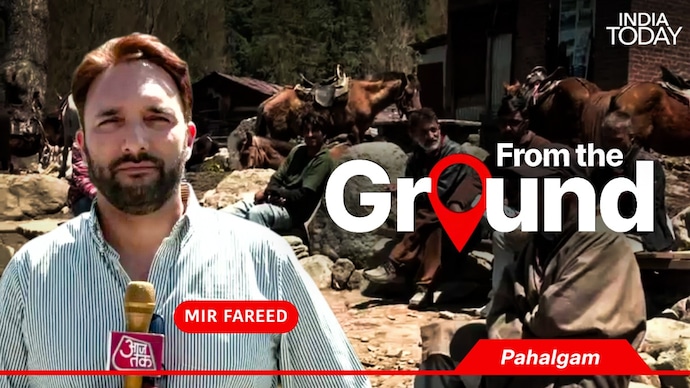


One year after the deadly terrorist attack in Pahalgam that claimed 26 lives, the famed Baisaran meadow, often dubbed 'Mini Switzerland', remains shut. Its once-lush expanse now echoes with silence instead of the chatter of tourists, while local traders and pony riders continue to wait for life to return to normal.
While parts of Pahalgam are cautiously seeing a trickle of visitors, the continued closure of Baisaran has pushed the region’s tourism-dependent community into prolonged distress.
Among the worst hit are the pony riders, whose animals once carried tourists through the scenic trails. As India Today reached the foothills of the Baisaran trail, rows of ponies stood idle, their handlers, locally known as ponywallahs, waiting for customers who no longer come.
'OUR LIVELIHOODS ENDED OVERNIGHT'
For nearly 5,000-6,000 pony operators in Pahalgam, Baisaran was not just a tourist attraction. It was the backbone of their livelihood. The scenic uphill trek to the meadow, often covered on horseback, sustained entire families. Today, that lifeline has vanished.
“We have been in this business for 30 years. Never have we seen such a collapse,” said a ponywallah at the stand. “Earlier, we would make multiple trips a day. Now, even one ride is rare.”
Many say the past year has been about survival, not income. With no alternative livelihoods and minimal support, families have been pushed to the brink.
“Our homes no longer function the way they used to. Everything stopped after the attack,” another handler said.
The once-familiar sounds of hoofbeats and tourist chatter have given way to an uneasy silence and lingering uncertainty.
HOTELS, RESTAURANTS STRUGGLE TO SURVIVE
The crisis extends far beyond the pony stands.
According to Javed Burza, president of the Pahalgam Hotel and Restaurant Owners Association, the tourism sector is operating at just 30-40 per cent occupancy, with many establishments struggling to break even.
“Even when tourists come, they don’t stay overnight,” Burza said. “They arrive in the morning and leave by evening. Night occupancy has dropped sharply, and that’s where the real revenue lies.”
Hotels that once saw full bookings during the peak spring season are now grappling with empty rooms. Restaurants report sharply reduced footfall, while many smaller establishments have either shut down or are barely surviving.
“Some properties have gone under. Others remained open but saw zero occupancy for months,” he added.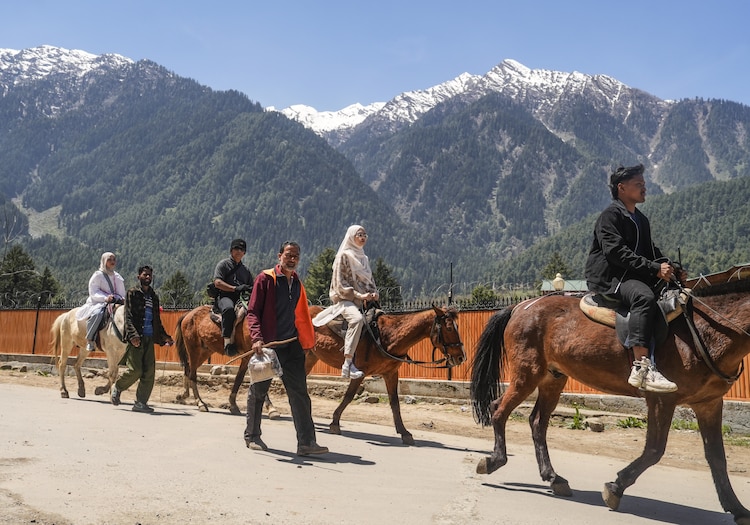
LOCAL BUSINESS AT STANDSTILL
In Pahalgam’s markets, shopkeepers selling shawls, handicrafts and essentials, once buoyed by tourist spending, now sit idle for hours.
“Tourism is our backbone. When it stops, everything stops,” said a local merchant. “Even those who invested recently are struggling. Many young people who found jobs in hotels or shops are now unemployed.”
The ripple effect is visible across sectors, taxi operators, guides and vendors all looking at steep losses.
TRUST DEFICIT AND SECURITY CONCERNS
Stakeholders in Pahalgam say the biggest challenge is not just reopening destinations, but restoring tourist confidence.
“There is a gap in messaging,” Burza of the Restaurant Owners Association said. “Unless there is strong assurance from leadership and visible confidence-building measures, tourists will remain hesitant.”
While security has been tightened, many believe the balance between safety and accessibility is yet to be achieved. Several tourist spots, including Baisaran, remain closed or partially restricted, further discouraging longer stays.
Industry players have urged authorities to reopen key destinations with robust security arrangements, arguing that prolonged closures send a negative signal.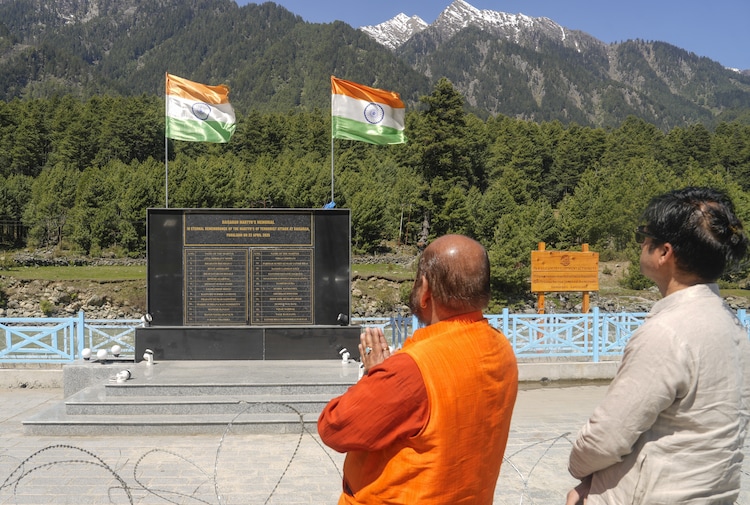
A SEASON THAT NEVER CAME
Spring is traditionally the busiest season for Pahalgam. But it has failed to deliver this year. There was a time when April and May meant packed hotels, bustling markets and endless pony rides to Baisaran. Today, even during peak hours, the town feels subdued.
“Last year, there was no space to stand,” recalled a hotel worker. “This year, there are barely any tourists.”
Despite the hardship, there is resilience and hope. Stakeholders are calling for the reopening of Baisaran and other key tourist spots, stronger national-level messaging on safety, and sustained promotional efforts to rebuild confidence.
“Tourism will return,” said a local hotel worker. “But it will take time. Until then, we can only hope, and survive.”
For now, Pahalgam waits. Its people caught between memory and recovery, its economy suspended in uncertainty and its most iconic meadow still out of reach.