
Amid political row over Bakrid sacrifice, know what Islam says about Qurbani
Bakrid marks the sacrifice and devotion of Hazrat Ibrahim in Islam. Amid political debates over animal sacrifice, here's what Islamic teachings and Shariat rules actually say about Qurbani and the animals permitted for sacrifice.
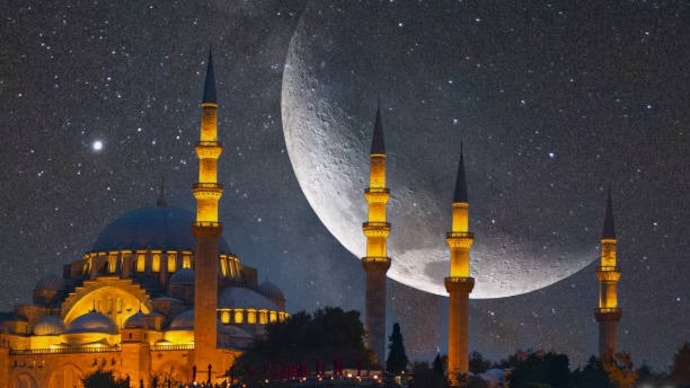

In Islam, there are mainly two major festivals. One is Eid-ul-Fitr and the other is Eid-ul-Adha. Eid-ul-Fitr is commonly called Meethi Eid or Sevai Wali Eid in India, while Eid-ul-Adha is popularly known as Bakrid. On this occasion, members of the Muslim community not only offer prayers but also perform animal sacrifice.
Bakrid will be celebrated in India on Thursday, May 28. The issue of animal sacrifice during Bakrid has sparked political controversy from West Bengal to Uttar Pradesh and Delhi. In West Bengal, after the BJP government came to power, cow sacrifice was banned.
From Uttar Pradesh to West Bengal, several state governments have issued guidelines regarding which animals Muslims can sacrifice during Bakrid and which animals cannot be sacrificed. In such a situation, what does Islam say and what are the rules of sacrifice in Shariat?
WHAT IS BAKRID AND WHEN IS IT CELEBRATED?
In Islam, Eid-ul-Adha or Eid-uz-Zoha is called Bakrid. According to the Islamic calendar, it is celebrated on the 10th day of Zilhijjah, the last month of the Islamic year. Muslims celebrate this festival in memory of the sacrifice of Prophet Ibrahim, an Islamic prophet and ancestor of Prophet Muhammad.
According to Mufti Mohammad Osama Nadvi, sacrifice holds great importance in Islam. According to Islamic belief, Allah wanted to test the loyalty and devotion of Hazrat Ibrahim and asked him to sacrifice the thing dearest to him. Hazrat Ibrahim was blessed with a child at the age of 80. Therefore, his most beloved possession was his son, Hazrat Ismail.
Hazrat Ibrahim decided to sacrifice his young son Hazrat Ismail in the path of Allah. As he was about to sacrifice his son and placed the knife on his neck, Allah accepted his immense devotion and miraculously replaced his son with a ram (sheep/goat). Since then, the tradition of sacrificing animals in the path of Allah began in Islam.
Muslims across the world celebrate Eid-ul-Adha in memory of this tradition of Hazrat Ibrahim. After offering Eid-ul-Adha prayers, Muslims sacrifice an animal. Every year, millions of Muslims travel to Mecca for Hajj during this occasion. The sacrifice of a goat is an important part of Hajj. There are also specific conditions regarding the animal chosen for sacrifice.
WHO SHOULD PERFORM SACRIFICE?
Allah was so pleased with the act of Hazrat Ibrahim that sacrifice was made obligatory for every Sahib-e-Nisab Muslim. Sacrifice is compulsory only for a person who is financially capable (Sahib-e-Nisab). Islam does not permit a person to take loans or become a burden on others to perform sacrifice.
According to Islam, a Sahib-e-Nisab is a person on whom Zakat becomes obligatory. A person who possesses seven-and-a-half tolas of gold, 52-and-a-half tolas of silver, or wealth equal to that value qualifies. According to current calculations, if a person has around Rs 1.5 lakh, sacrifice becomes obligatory for them during Eid-ul-Adha.
WHAT ARE THE RULES OF SACRIFICE IN ISLAM?
Islam has very strict rules regarding animal sacrifice, and if these rules are violated, the sacrifice is not accepted by Allah.
The animal must be completely healthy. It should not be blind, one-eyed, lame, sick or extremely weak. Causing any mental or physical pain to the animal is prohibited. Slaughtering one animal in front of another or sharpening the knife in front of the animal is completely forbidden.
Mufti Osama says that in Islam, sacrifice is not merely about taking the life of a voiceless animal. The purpose is to see how willing a person is to give up something dear or a part of their wealth for the will of Allah. It symbolises the sacrifice of ego, greed and selfishness.
WHICH ANIMALS ARE ALLOWED FOR SACRIFICE?
Mufti Osama Nadvi says Islam permits the sacrifice of sheep, ram, goat, buffalo, cow, bull and camel. However, there is also a condition that only those animals should be sacrificed which are permitted by the law of the land.
If a country bans the slaughter of a particular animal, then Islam does not permit its sacrifice. Muslims should strictly avoid sacrificing animals that are prohibited by law. Therefore, cow sacrifice should not be performed in India because it is banned in many parts of the country.
If a goat, sheep or ram is being sacrificed, it should not be less than one year old because the animal must be healthy. A buffalo should be at least two years old for sacrifice, while a camel should be at least five years old.
WHAT SHOULD BE DONE WITH THE SACRIFICIAL MEAT?
Osama Nadvi says that if a person performs sacrifice, it is important to understand its rules. Large animals have seven shares, while small animals have only one share. This means if someone sacrifices a buffalo or camel, seven people can participate in it, whereas the sacrifice of a goat is done on behalf of only one person.
Shariat advises dividing the sacrificial meat into three parts. One part should be distributed among the poor, the second part should be used for friends and relatives, and the third part should be kept for the household.
Distributing meat among the poor is considered beneficial. The rules made in Islam regarding sacrificial meat are based on social justice and brotherhood.
The biggest benefit of this system is that at least once a year, even the poorer sections of society are able to eat nutritious food such as meat with dignity, which they may not be able to afford regularly due to poverty. This religious practice thus turns into a wider form of social welfare.