
Natural vs chemically ripened mangoes: Easy ways to spot the difference
As mango season peaks, experts warn buyers not to judge the fruit by its colour alone. With concerns rising over chemically ripened mangoes and calcium carbide use, shoppers are being urged to watch for signs of natural ripening.
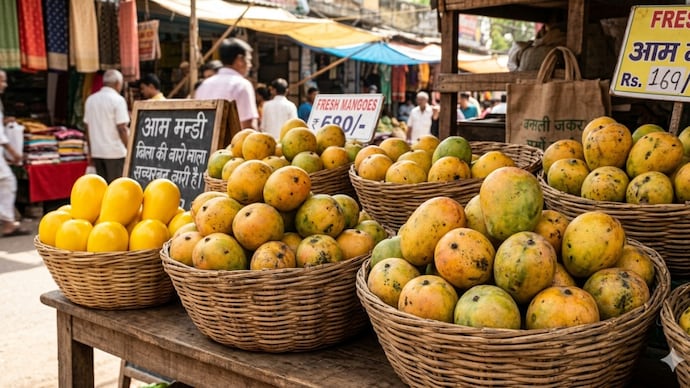
As mango season peaks, buyers are being advised to check for signs of natural ripening.

New Delhi,UPDATED: May 16, 2026 10:08 IST
Mango season is one of the most awaited times of the year in India. From juicy Alphonso to sweet Langra and Dasheri, mango lovers enjoy the fruit in every form. However, not all mangoes available in the market are naturally ripened. Many sellers use chemicals to speed up the ripening process, making it important for buyers to know how to identify safe and naturally ripened mangoes.
Here are some easy ways to check if your mangoes are naturally ripened or chemically treated.
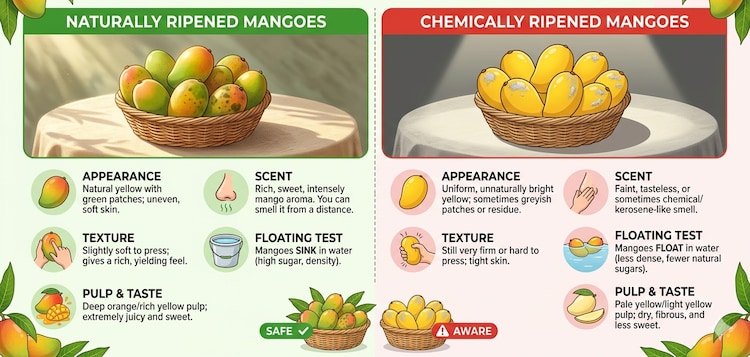
OBSERVE THE COLOUR CAREFULLY
Naturally ripened mangoes usually have uneven shades of green, yellow, and orange. The skin may not look perfectly uniform.
Chemically treated mangoes often appear bright yellow or golden all over. If every mango looks identical in colour, it may be artificially ripened.
SMELL THE STEM AREA
A naturally ripened mango gives off a sweet, fruity aroma, especially near the stem.
If the mango has little smell or gives a chemical-like odour, it could be chemically treated.
CHECK THE TEXTURE
Naturally ripened mangoes feel slightly soft when pressed gently.
Artificially ripened mangoes may feel soft outside but remain hard inside. Some may also have an unusually mushy texture.
LOOK FOR BLACK SPOTS AND PATCHES
Small dark spots are normal in naturally ripened mangoes.
However, excessive black marks, wrinkles, or damaged patches may indicate chemical ripening or poor storage conditions.
CUT THE MANGO OPEN
The inside of a naturally ripened mango usually has evenly coloured, juicy pulp.

Chemically treated mangoes may show pale yellow patches, hard fibres, or uneven ripening from inside.
DO THE WATER TEST
Place the mango in a bucket of water.
Naturally ripened mangoes generally sink, while chemically treated mangoes may float due to changes caused during artificial ripening.
AVOID OVERLY SHINY MANGOES
Very glossy mangoes may have been coated with wax or chemicals to improve appearance.
Choose mangoes with a natural-looking skin instead of extremely polished ones.
KNOW ABOUT CALCIUM CARBIDE
Some traders use calcium carbide to ripen mangoes quickly. This chemical releases harmful substances that may cause headaches, dizziness, stomach irritation, and other health problems.
The use of calcium carbide for ripening fruits is banned in many places due to health concerns.
BUY FROM TRUSTED SOURCES
Purchasing mangoes from trusted fruit sellers, farmers’ markets, or organic stores can reduce the risk of buying chemically treated fruits.
Seasonal mangoes sourced locally are often fresher and safer.
A naturally ripened mango not only tastes better but is also safer for health. Instead of choosing mangoes based only on bright colour and perfect appearance, pay attention to smell, texture, and ripening signs. A few careful checks can help you enjoy delicious and healthy mangoes all summer long.
- Ends