
Khandvi vs Laphing: Why these rolled snacks look alike but taste different
Khandvi and Laphing often confuse food lovers because of their rolled appearance, but the two dishes come from completely different cuisines and offer very different flavours and textures.
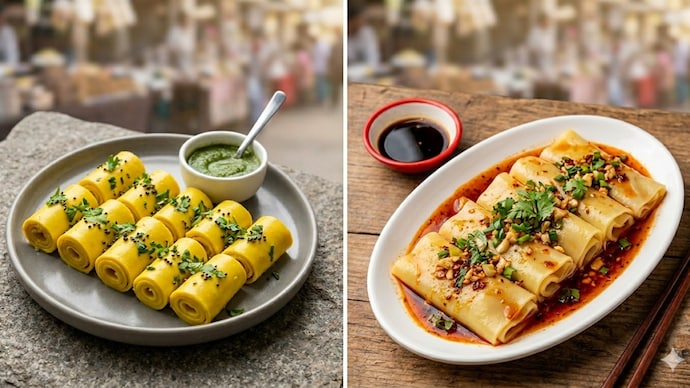

At first glance, Khandvi and Laphing can easily confuse food lovers. Both are rolled snacks with a soft texture and eye-catching presentation. Social media videos and food reels have also added to the confusion, with many people assuming the two dishes are variations of the same recipe.
But despite their similar appearance, Khandvi and Laphing come from completely different culinary traditions and taste nothing alike.
One is a mild Gujarati snack known for its soft, savoury flavour, while the other is a spicy Tibetan street food packed with chilli and garlic.
Their ingredients, texture and preparation methods are also very different.
WHY PEOPLE CONFUSE KHANDVI AND LAPHING
The biggest reason behind the confusion is their appearance. Both dishes are usually served in rolled strips and have a soft, silky look. They are also commonly sold as street snacks and shared widely on social media food pages.
However, once you taste them, the difference becomes obvious. Khandvi is light, mildly tangy and comforting, while Laphing is bold, spicy and loaded with sauces and seasonings.
WHAT IS KHANDVI?
Khandvi is a popular snack from Gujarat made using gram flour (besan), yoghurt and mild spices. The batter is cooked slowly until smooth, spread thinly on a flat surface and then rolled into delicate layers.
The dish is usually topped with mustard seeds, curry leaves, green chillies and grated coconut. Khandvi is known for its soft texture and balanced flavour rather than strong spices.
It is often served as a tea-time snack and is considered one of Gujarat’s most loved traditional foods.
HOW THE TASTE OF KHANDVI DIFFERS FROM LAPHING
Laphing, on the other hand, comes from Tibetan cuisine and has become extremely popular as street food in cities like Delhi, especially in areas such as Majnu Ka Tila.
Traditional Laphing is made using mung bean or wheat starch jelly sheets that are rolled and topped with spicy sauces, garlic paste, soy sauce and chilli oil. Cold Laphing is especially popular during summer months.
Unlike Khandvi’s mild and savoury profile, Laphing delivers a sharp spicy kick. The garlic, red chilli and tangy sauces dominate the flavour, making it much more intense than the Gujarati snack.
Texture also plays a major role in the difference. Khandvi feels soft and airy, while Laphing has a slippery, chewy texture similar to cold noodles or jelly rolls.
TWO DISHES, TWO VERY DIFFERENT FOOD CULTURES
Even though Khandvi and Laphing may appear similar visually, they represent two completely different food cultures. Khandvi is rooted in traditional Gujarati home cooking, while Laphing belongs to Tibetan street food culture and is known for its spicy flavours.
Their growing popularity online has made comparisons common, but food experts say the only real similarity between them is the rolled presentation.
ALSO READ: Gujarati farsaan: You've heard of dhokla and khandvi, but ...
FAQs
Which cuisine does Khandvi belong to?
Khandvi belongs to Gujarati cuisine and is a traditional snack made from besan and yoghurt.
Is Laphing spicy?
Yes, Laphing is usually spicy. It is commonly served with chilli oil, garlic sauce and spicy seasonings.