
Rah-Veer scheme: Rs 25,000 reward for helping accident victims. Know details
The Rah-Veer scheme encourages people to help road accident victims during the Golden Hour by offering legal protection, anonymity, and a reward of Rs 25,000 for timely assistance.

The Rah-Veer scheme protects Good Samaritans who help road accident victims, offers anonymity, legal safeguards and a reward of Rs 25,000 for assistance provided during the Golden Hour.

New Delhi,UPDATED: Jun 9, 2026 13:03 IST
Road accidents continue to claim thousands of lives across India, and in many cases, timely help can make the difference between life and death.
To encourage people to assist accident victims without fear, the Ministry of Road Transport and Highways has strengthened Good Samaritan protections through the Rah-Veer scheme.
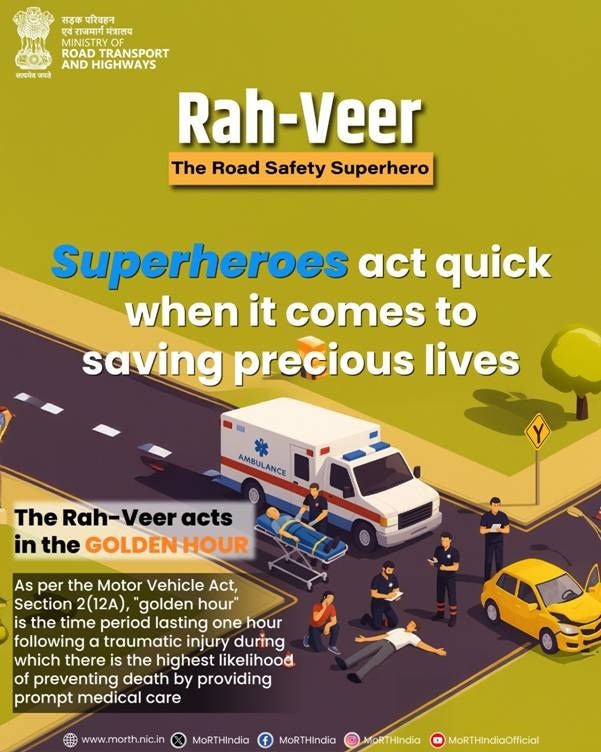
The initiative focusses on the critical Golden Hour, the first hour after a serious injury when medical attention is most effective.
Under the scheme, people who help accident victims receive legal protection, can remain anonymous if they choose, and may also receive financial recognition for their timely action.
SAVING LIVES DURING THE GOLDEN HOUR
The Golden Hour is the first hour after a serious injury and is considered the most important period for medical treatment. Quick action during this time can reduce the risk of death, long-term disability and severe trauma.
The government says anyone can become a Rah-Veer. Medical training or specialised equipment is not required.
In many situations, simply ensuring that an injured person reaches a hospital quickly can save a life.
BEING A GOOD SAMARITAN: WHAT YOU SHOULD DO AND DON'T
DO'S
- Do help without fear: You are legally protected from civil or criminal liability when acting in good faith.
- Do know you can stay anonymous: You are not required to share personal details unless you choose to be a witness.
- Do allow only one police statement: If you volunteer as a witness, you may be examined once at a time and place convenient to you.
- Do request a hospital acknowledgement: You are entitled to a simple confirmation that you brought the victim for treatment.
DON'TS
- Don’t hesitate because of legal concerns: The system is designed to protect Rah-Veers.
- Don’t feel obligated to remain at the hospital: Once the patient is admitted, you are free to leave.
- Don’t pay for treatment: Hospitals cannot demand payment from you for emergency care.
- Don’t feel forced to file an FIR or give evidence: Becoming a witness is your personal choice.
- Don’t reveal personal details if you prefer anonymity: It is your right.
- Don’t allow detention by authorities: It is not permitted.
WHO CAN BECOME A RAH-VEER?
GOOD SAMARITAN RULES: WHAT HELPERS NEED TO KNOW
The Good Samaritan Rules were notified in 2020 under Section 134A of the Motor Vehicles (Amendment) Act, 2019.
These rules aim to remove fears that often stop bystanders from helping road accident victims.
People who assist accident victims are protected from civil and criminal liability when acting in good faith.
They cannot be forced into legal complications, detained unnecessarily or compelled to reveal personal details.
Those who choose to become witnesses may be asked to provide only one police statement at a time and place convenient to them.
They can also request a simple acknowledgement from the hospital confirming that they brought the victim for treatment.
The rules also make it clear that helpers do not need to stay at the hospital after the victim is admitted, pay for treatment, file an FIR or reveal their identity if they prefer to remain anonymous.
WHY INDIA NEEDS MORE RAH-VEERS
Despite improvements in road infrastructure, India continues to report a high number of road accidents.
According to information cited by Union Road Transport and Highways Minister Nitin Gadkari, road crashes cost the country nearly 3 per cent of its GDP, based on an IIT Delhi report.
Many deaths occur because help does not arrive quickly enough.
Fear of police procedures, hospital formalities and legal issues often discourages people from stepping forward.
ALSO READ: Why are highway signboards green and not red, yellow or blue? Explained
REWARD FOR HELPING ACCIDENT VICTIMS
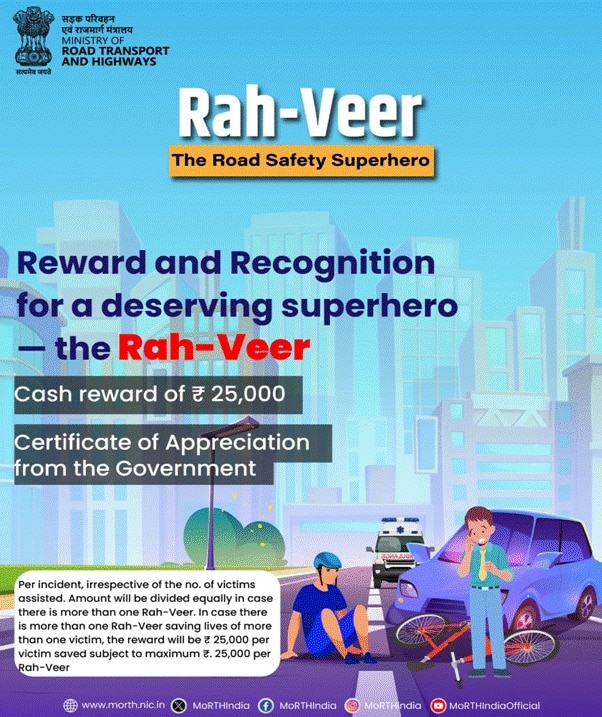
To encourage timely assistance, the Rah-Veer scheme offers a reward of Rs 25,000 and a Certificate of Appreciation to individuals who help accident victims receive medical attention within the Golden Hour.
Recognition can be awarded up to five times a year for repeated acts of assistance.
The scheme aims to build a culture where helping accident victims becomes a shared responsibility and a normal public response in emergencies.
- Ends