
Why don't foreign homes have rooftop water tanks? Here's the answer
Rooftop water tanks, water supply systems, municipal water pressure and underground pipelines explain why homes in many foreign countries receive water without needing storage tanks on their roofs.
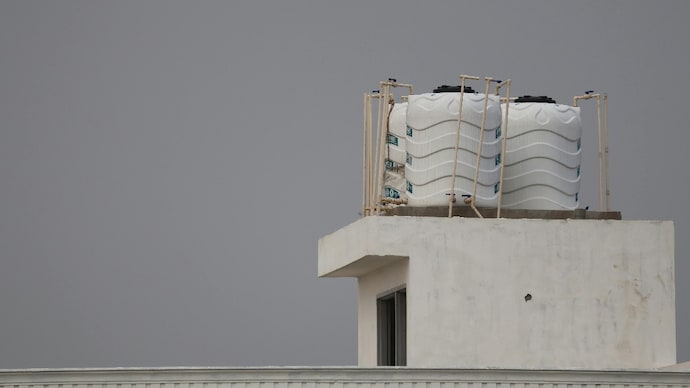

In India, black and blue water tanks on rooftops are such a familiar sight that many people assume every country uses the same system. But travel to the US, Canada, Australia or much of Europe, and you'll notice something missing, rooftop water tanks.
Yet people there enjoy running water around the clock. So how does water reach bathrooms, kitchens and upper floors without storage tanks?
The answer lies in reliable water infrastructure, constant pressure and a system that was built differently more than a century ago.
WHY INDIA USES ROOFTOP WATER TANKS
In many Indian cities, municipal water is supplied only during certain hours of the day. To ensure a continuous supply, water is first collected in a ground-level tank and then pumped to a rooftop tank.
From there, gravity pushes water down through pipes to bathrooms, kitchens and taps across the building. This simple and effective system also provides backup during supply cuts.
HOW WATER REACHES HOMES ABROAD
In countries such as the US, Canada and much of Europe, water is delivered through a pressurised network of underground pipes.
Water is treated at large municipal plants and supplied continuously. The pressure inside the network is strong enough to push water directly into homes and even upper floors of many buildings.
As a result, individual rooftop storage tanks are usually unnecessary.
THE ROLE OF WATER TOWERS
A common misconception is that foreign countries do not use water storage at all.
In reality, many cities use large municipal water towers. Unlike India's rooftop tanks, these structures serve entire neighbourhoods rather than a single building.
They help maintain stable pressure and store water during periods of lower demand, ensuring a steady supply throughout the day.
WHY CLIMATE ALSO MATTERS
Weather has played a major role in shaping water systems.
In colder regions such as parts of the US and Canada, winter temperatures can drop well below freezing. Water stored in exposed rooftop tanks could freeze, disrupting supply and damaging infrastructure.
To avoid this, water systems were built underground, below the frost line where temperatures remain stable.
A SYSTEM BUILT OVER GENERATIONS
Many Western cities invested in centralised water infrastructure during the 19th century. As these cities expanded, pressurised water networks became the standard.
Because reliable supply and pressure were already available, rooftop tanks never became a common feature in residential buildings.
WHERE ROOFTOP TANKS ARE STILL COMMON
India is not alone in relying on rooftop storage. Similar systems are widely used in parts of Mexico, Egypt, Brazil, Turkey and several other regions where water pressure varies or supply is not always continuous.
In these places, rooftop tanks remain an important part of daily life.
ALSO READ: Why Feviquick sticks to everything but not to its own bottle
IS ONE SYSTEM BETTER THAN THE OTHER?
Not necessarily.
India's rooftop tank system provides a practical solution where supply is intermittent. Pressurised networks used in developed countries work well because they are supported by extensive infrastructure and continuous water delivery.
Both systems are designed to solve local challenges.
The reason foreign homes do not have rooftop water tanks is not because of superior technology. It is mainly due to reliable 24/7 water supply, strong municipal water pressure, underground pipeline networks and climate conditions in many regions.
While rooftop tanks remain essential in countries like India, many developed nations have built systems that deliver water directly to every tap without the need for storage on individual rooftops.