
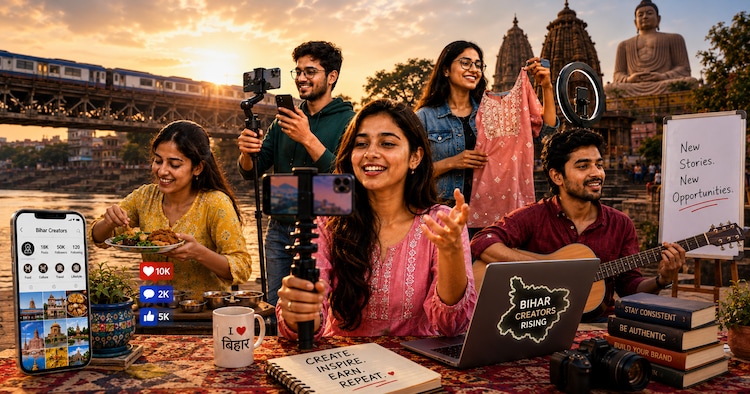
Bihar's new dream job isn't UPSC. It's content creation
For decades, Bihar's youth chased government jobs and metro-city dreams. The generation raised on UPSC dreams is discovering a different route to success now. They are building careers from their phones, turning local stories, culture and creativity into income and influence.
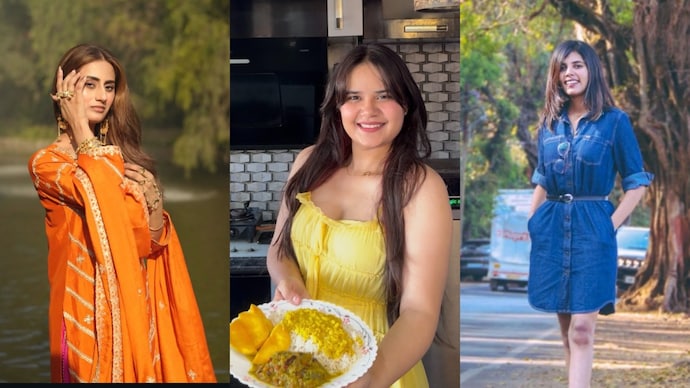
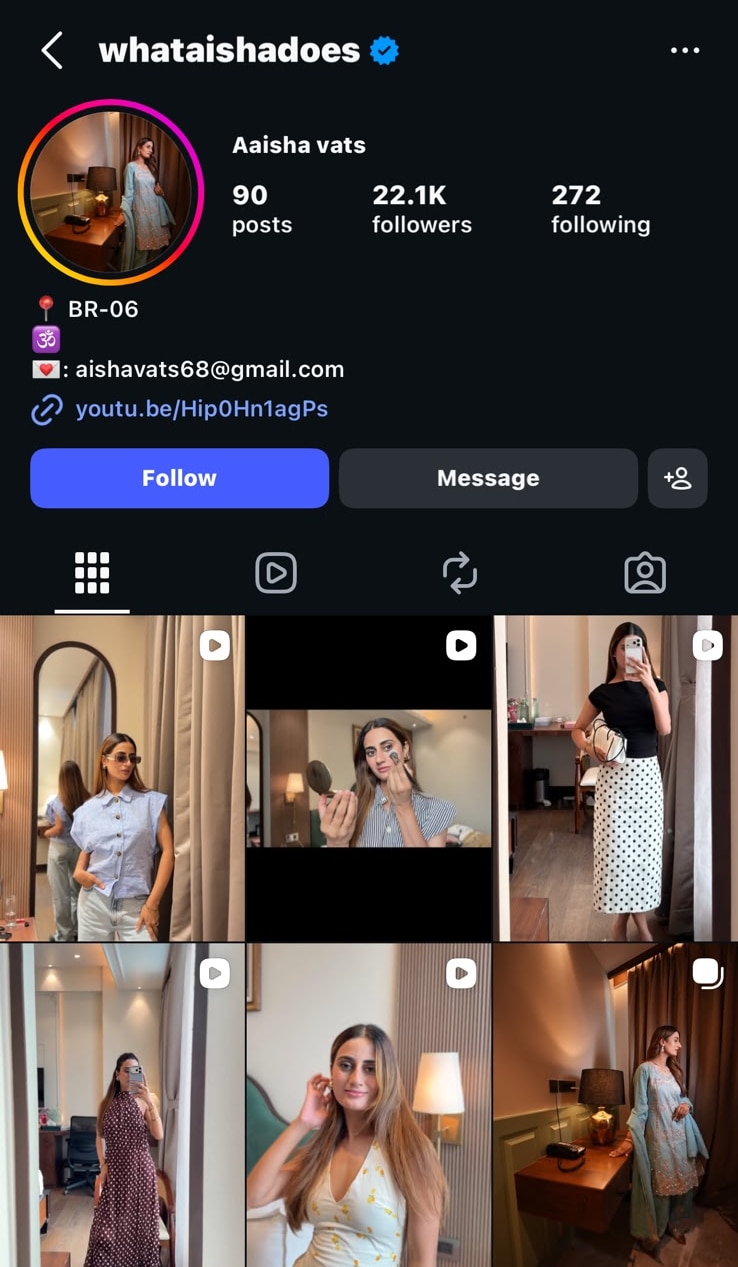
Content creators from Bihar ((L)Aaisha vats (M)Nitika Singh (R)Anushka Raj)


New Delhi,UPDATED: Jun 9, 2026 16:48 IST
When Aaisha Vats started creating content, she was told what many young people from Bihar have heard for years: real opportunities exist elsewhere.
The idea was simple. If you wanted a serious career, you left.
For decades, many ambitious Biharis moved to cities such as Delhi, Bengaluru and Mumbai to prepare for competitive examinations, pursue professional degrees or build careers.
Bihar’s ambition, for a long time, was often framed through one lens: civil services. UPSC preparation became part of the state’s identity, with Patna and other cities known as places from where young people moved to different metro cities to study, struggle and chase stability. Civil services, engineering and government jobs dominated conversations around success.
Today, another path is emerging.
"People once believed they had to move to Delhi or Mumbai to find opportunities. Today, creators in Bihar are showing that quality content matters more than location," says the 25-year-old creator.
With around 18,000 Instagram followers, Aaisha says she now earns nearly Rs 80,000 a month through content creation.
Her story reflects a larger shift unfolding across Bihar, one where smartphones, cheap internet and social media platforms are creating opportunities that previously did not exist.
And Bihar is no longer merely participating in India's creator economy. It is becoming one of its fastest-growing talent pools.
THE UPSC STATE IS DISCOVERING A NEW ASPIRATION
Bihar's identity has long been tied to education and competitive examinations.
Families invested heavily in coaching. Students spent years preparing for government jobs. Success was measured by ranks, selections and postings.
But while those aspirations remain, a parallel ambition is quietly taking shape.
The creator economy is opening doors for young people who want to build careers through storytelling, food content, fashion, education, comedy, culture and local experiences.
According to the Kofluence Annual Research Report 2025-26, Tier 3 and Tier 4 cities now account for 43–48 per cent of influencer campaigns and often generate higher engagement than metro creators. The report found engagement rates of 4.5-5.5 per cent in smaller cities, compared to 3–4 per cent in metros.
For Ankur Agrawal, Founder and CEO of The LHR Group, the rise of creators from Bihar is not surprising.
"It tells you that when we enable people with infrastructure and access, they can create success out of nothing," he says.
"Bihar has always had sharp, articulate and emotionally intelligent people. What changed is that smartphones, affordable data and social media have given them a global distribution network at near-zero cost," he adds.
THE FOLLOWERS MAY BE SMALL. THE IMPACT ISN'T.
The stereotype that creators need millions of followers to earn money is increasingly outdated.
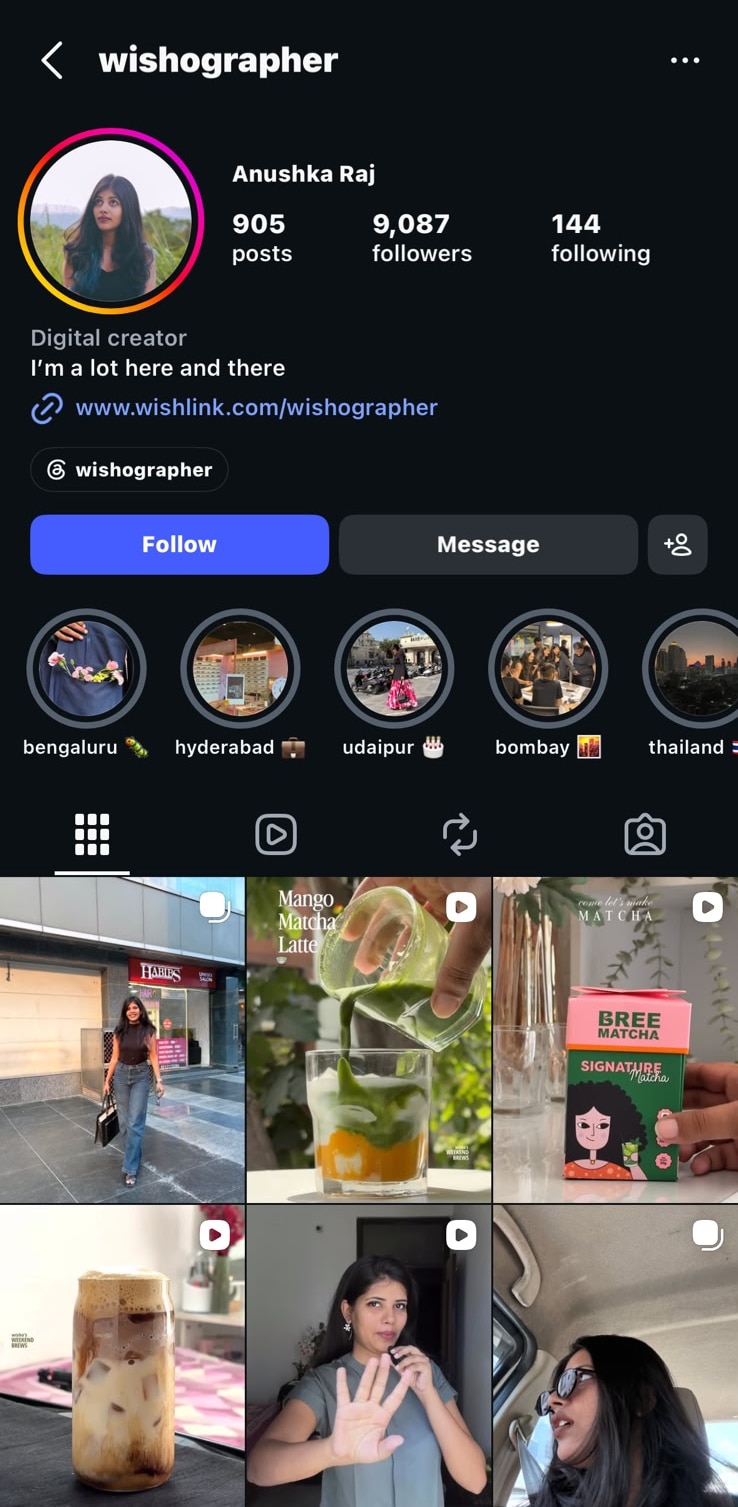
Anushka Raj has around 7,000 followers on Instagram. Yet she earns approximately Rs 28,000 per month.
"Bihar is growing rapidly, and creators are getting more opportunities now. Brands are increasingly collaborating with influencers, which is helping the creator economy expand in the state," she says.
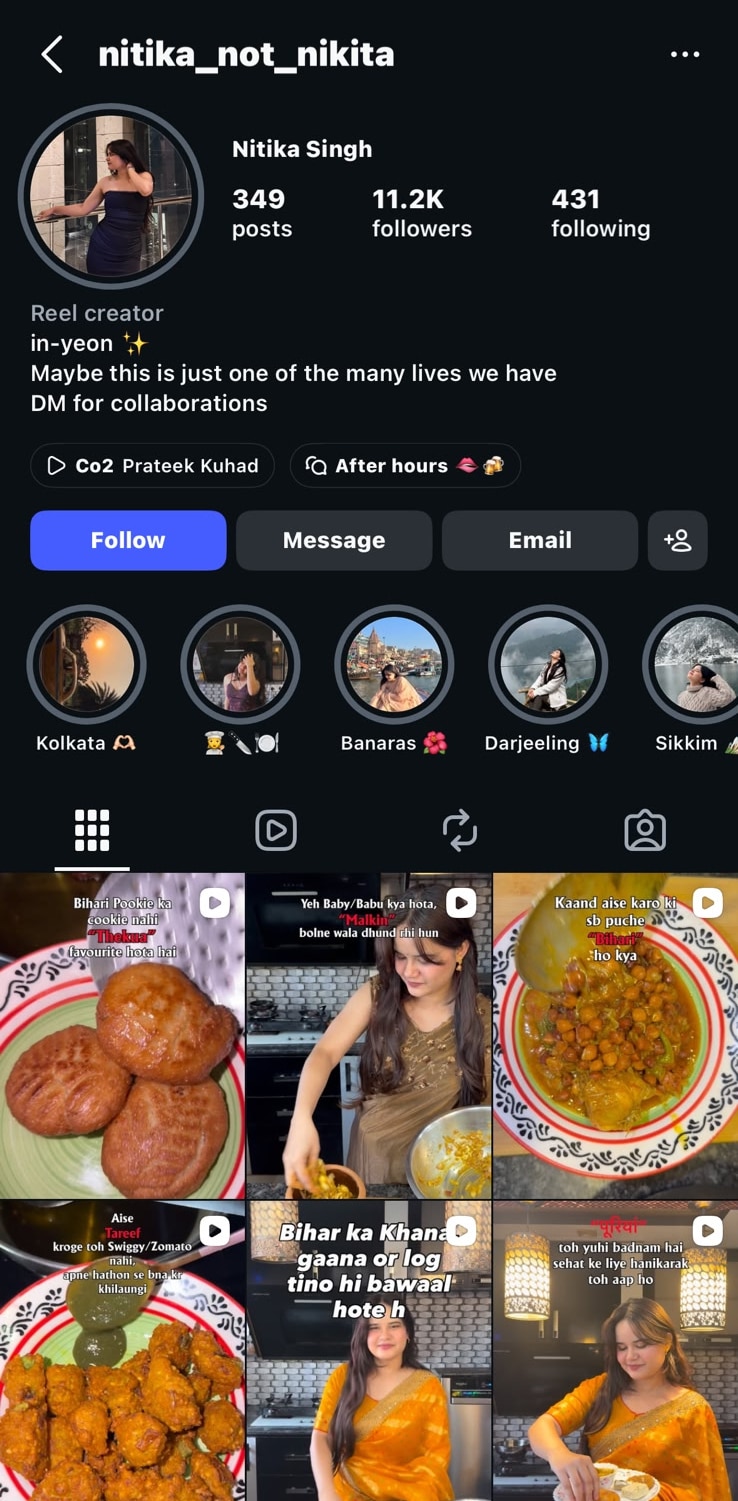
Then there is Nitika Kumari.
What started as a hobby documenting Bihari food and culture turned into a career.
"I began creating content as a hobby to share authentic Bihari food and culture. Within a few months, my audience grew to more than 11,000 followers, and today I earn around Rs 50,000 per month through content creation. It's proof that you don't need to leave Bihar to build a digital career."
The common thread is striking.
None of these creators are celebrities. None have massive audiences. Yet all have found a way to monetise local stories and local culture. That is precisely what brands are increasingly looking for.
BIHAR'S BIGGEST ADVANTAGE? AUTHENTICITY.
While metro creators often have better equipment, bigger networks and larger audiences, Bihar's creators possess something that cannot be bought.
Authenticity.
According to the Kofluence report, 49.2% of creators believe audiences prefer raw, authentic content over high-production content. It also notes that 62%+ of creators are receiving more vernacular briefs from brands, showing that language is no longer a side issue, it is central to growth.
A Bihar creator quoted in the report, Amit Parimal, says the audience connects because he "sounds like them", adding that speaking Hindi the way people actually speak in Bihar builds trust faster than any high-budget ad. He also says the time when creators had to move to Mumbai or Delhi has passed.
That trust matters because the creator economy is no longer just about reach. The report says a creator with 50,000 engaged followers in Patna can outperform a celebrity with 5 million generic followers when the goal is purchase intent or community trust.
Agrawal believes authenticity gives creators from Bihar a major advantage.
"When a creator from a small town in Bihar speaks about education, money or career anxiety, their audience knows they have lived it," he says.
"Metro creators often speak about those same topics from a position of relative comfort, and audiences pick up on that."
In other words, relatability has become a currency.
And Bihar has plenty of it.
THE OPPORTUNITY IS REAL. SO IS THE RISK.
The creator economy is growing quickly, but it is not a guaranteed success story.
The Kofluence report notes that nine out of ten creators still cannot rely entirely on social media for their income. Many continue to depend on additional sources of earnings.
That is why experts caution against viewing content creation as an easy alternative to traditional careers.
The rewards can be substantial. So can the uncertainty.
Success requires consistency, patience and the ability to adapt to constantly changing algorithms and audience preferences.
Or, as Agrawal puts it, "The top 5 per cent make serious money. The next 20 per cent make a decent living. For many others, it remains a side hustle."
HOW MUCH DOES IT PAY?
This is the question most young people, and their parents, want answered.
Can content creation actually become a career?
The answer, according to experts, is yes. But with an important caveat. "Content creation is viable, but it is not a job with a salary," says Agrawal.
"It is more like a business with costs, risks and uneven cash flow," he adds.
He explains that the creators building sustainable incomes are diversifying their revenue streams through brand collaborations, affiliate partnerships, community products and live sessions rather than relying on a single platform.
The earnings of Bihar's creators reflect that reality.
Aaisha Vats: approximately Rs 80,000 per month
Nitika Kumari: approximately Rs 50,000 per month
Anushka Raj: approximately Rs 28,000 per month
For many young people in Bihar, those figures are significant.
As Agrawal points out, "A creator in Patna who earns Rs 50,000 a month from content has genuinely changed their life."
A NEW BIHAR STORY
For years, Bihar's success stories were often measured by the number of students who cleared UPSC, IIT-JEE or other competitive examinations.
Those stories still matter. But they are no longer the only stories.
Today, another generation is building careers with cameras instead of coaching notes, audiences instead of interview panels, and content instead of conventional rsums.
The state that once exported talent is increasingly exporting creators.
And for thousands of young people scrolling through their phones in Patna, Muzaffarpur, Gaya and Bhagalpur, that may be the most significant career shift of all.
- Ends