
Are Gen Z women really choosing to date millennial men? Or so we think
We are just trying to see if there is any truth to this common belief among people that Gen Z women are choosing to date Milennial men or are we just overexaggerating it?

Across forums and social media threads, one thing becomes clear: people aren’t fully convinced. (Photo generated using Nano Banana)

New Delhi,UPDATED: Apr 17, 2026 15:19 IST
From the time I found myself taking an interest in the opposite gender, I realised I was attracted to older men. In fact, the opposite, women interested in younger men were considered exotic. I am a millennial. Confused about what we’re getting at? Let us explain.
Suddenly, there has been a surge in the belief that Gen Z women are choosing millennial men as partners, and the internet (along with some websites) want us to act all surprised. But wasn’t this always the case, for reasons galore?
We’re just trying to dissect this belief, or notion, whatever you want to call it, through facts, surveys, and some hard truths.
A “trend” without proof?
Across forums and social media threads, one thing becomes clear: people aren’t fully convinced.
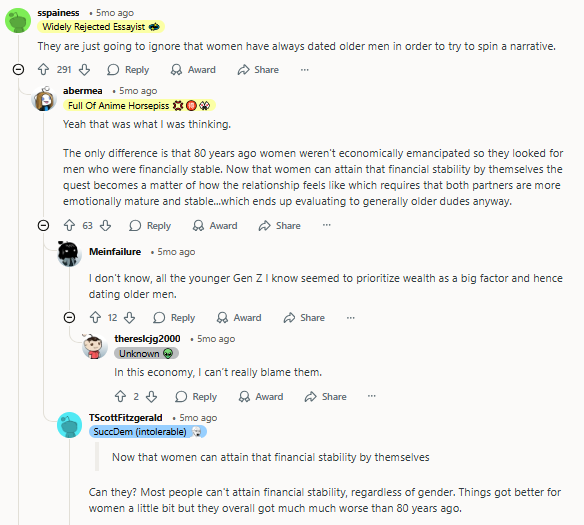
Many point out the obvious, there’s little hard data to suggest that Gen Z women, at scale, are actively choosing older millennial men. What exists instead is a narrative that seems to be gaining traction because it fits into broader conversations around modern dating.
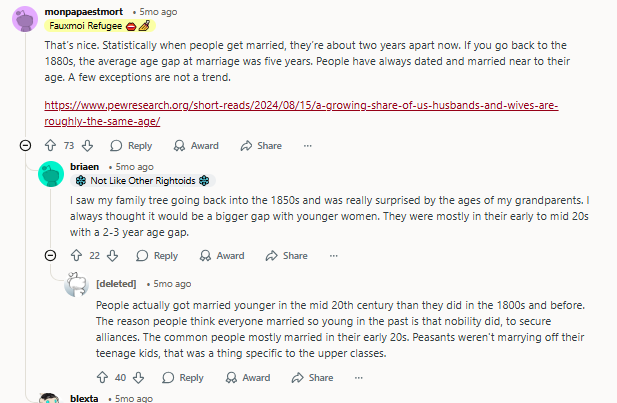
In other words, it’s not entirely false—but if you say it is only limited to Gen Z women and millennial men, we have some discussions to have.
So what’s really going on?
According to Dr Chandni Tugnait, the attraction, where it exists, is rarely about age itself.
“It’s less about age and more about energy,” she explains.
“Many Gen Z women are drawn to qualities like clarity, consistency, and emotional presence. Some millennial men tend to bring that, but it’s not exclusive to them.”
That distinction matters.
Because what’s often framed as a generational preference may actually be a response to something more universal: emotional reliability.
The maturity factor (and why it’s being misunderstood)
If there’s one word that keeps coming up, it’s maturity. But maturity here doesn’t mean being older on paper. It means:
- communicating clearly
- showing up consistently
- handling conflict without emotional chaos
“Gen Z women have grown up in a very emotionally noisy environment,” says Dr Tugnait. “They’re quicker to recognise what feels stable and what doesn’t, and they don’t have the patience to wait for it to develop.”
In that context, someone slightly older may sometimes feel easier to be with—not because of age, but because of lived experience.
This is also where the Gen Z–millennial debate starts to feel a bit overstated. Research published in the peer-reviewed journal Evolutionary Psychological Science suggests that women’s interest in slightly older men isn’t new or generation-specific. The study, conducted by researchers examining heterosexual dating preferences, found that women across age groups tend to show a consistent inclination towards partners who are marginally older, often linking this to perceived stability, experience, and resourcefulness.
In that sense, what we’re seeing today may not be a sudden Gen Z shift, but a continuation of a long-observed pattern, one that is now being reframed through the lens of modern dating discourse.
It’s not about money (despite what people assume)
Another common assumption is that older partners mean financial security.
But that doesn’t quite hold up either.
“This generation values emotional safety far more than financial stability,” Dr Tugnait points out. “They’re not looking to be taken care of. They’re looking for clarity, knowing where they stand without having to guess.”
In fact, financial stability without emotional availability is often seen as a dealbreaker, not an advantage.
So, is it true then?
There’s no data to suggest that Gen Z women are specifically into millennial men.
But having said that, there is research to show that across age groups, women tend to have an inclination towards slightly older men—just not in a way that’s unique to any one generation.
- Ends