
The gulf in the Gulf | Viewpoint by Sunjay Sudhir
As the UAE exits OPEC, India must leverage ties without alienating its GCC neighbours

ISSUE DATE: May 18, 2026 | UPDATED: May 12, 2026 19:06 IST
The American and Israeli strikes on Iran have more than reshaped the military map of West Asia. They have laid bare the fissures within the six states of the Gulf Cooperation Council (GCC) and accelerated a reordering of the region with consequences extending well beyond its shores. The clearest signal came on April 28, when the United Arab Emirates (UAE) announced its exit from the Organization of the Petroleum Exporting Countries (OPEC). Its timing, on the eve of the first GCC summit in Jeddah, Saudi Arabia, since the war began, was both deliberate and telling.
The UAE’s departure from OPEC is as much about oil as about the future of Arab unity. As the cartel’s third-largest producer, with a capacity of 4.85 million barrels a day (mbd) that has been capped at 3.2 mbd, Abu Dhabi had long borne the cost of underutilised investment. Where the Saudis seek higher prices, the UAE, among the most efficient producers in the world, understandably seeks higher output to fund its post-oil transition. The UAE’s exit diminishes cohesion in the OPEC, as well as Saudi Arabia’s clout within it.
The political fracture is even sharper. Targeted by Iranian missiles and drones more heavily than Israel and the rest of the Gulf combined, the UAE found its Arab partners offering little more than statements of support. By contrast, Israel reportedly deployed Iron Dome batteries and Israel Defence Forces personnel to assist Emirati defences. Moreover, on May 1, the US State Department cleared over $8.6 billion in arms sales to the UAE, Qatar, Kuwait and Israel.
Gulf responses to the war have been anything but uniform. The UAE and Bahrain took the hardest line. Oman, casting itself as a diplomatic bridge to Tehran, profited quietly from rising oil exports. Qatar reopened channels with Iran and pushed mediation. Saudi Arabia and Kuwait hedged. When the ceasefire arrived, the UAE alone insisted that any settlement address Iran’s nuclear file and proxies, its strikes on neighbours and the Strait of Hormuz. The bloc then split between a hawkish Bahrain–UAE pole and a dialogue-first Qatar–Oman pole. The Saudis worked their way into the mediation room through its proxy, Pakistan. The Emiratis were left outside it.
The Saudi–UAE rift is now writ large in a clash of ambition, regional primacy and personal friction between two leaders. The UAE had already broken with the GCC Customs Union in 2022 by signing a Comprehensive Economic Partnership Agreement (CEPA) with India, and over 20 similar deals with other countries. The triggers for this rift were the paralysis of GCC trade talks and Riyadh’s ‘regional headquarters’ rule, which obliged multinationals to shift their Middle East and North Africa (MENA) bases to the kingdom, at Dubai’s expense. In Yemen, the two states back rival factions, fuelling a bitterness that has spilled into social media. Riyadh is further unsettled by Israeli recognition of Somaliland, where the UAE is already entrenched. Tellingly, when Saudi Arabia drew closer to Pakistan during the Iran mediation, the UAE called in a $3.65 billion loan from Islamabad, which was promptly repaid.
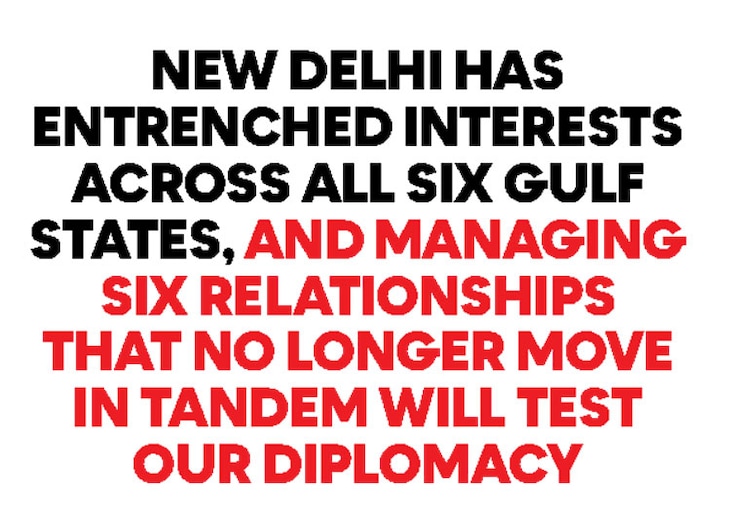
India must read these tea leaves carefully. A weakened cartel and larger volumes on the market should soften crude prices, which is welcome. But New Delhi has entrenched interests across all six Gulf states, and managing six relationships that no longer move in tandem will test our diplomacy. Prime Minister Narendra Modi’s visit to Abu Dhabi on May 15 comes at an inflection point as the Gulf landscape is being redrawn. The UAE has, for now, prioritised Washington and Tel Aviv over its GCC partners. At this juncture, India’s task is to deepen its embrace of Abu Dhabi without forfeiting the trust it has built in Riyadh, Doha, Muscat, Kuwait, and Manama. With the Gulf’s tectonic plates still in motion, India must not pick a side, but be indispensable to all.
—Sunjay Sudhir is former ambassador to UAE and distinguished fellow, IIM-A
- Ends