
View from Oman | From crisis to comeback
Oman's unique location in the Gulf can enable alternative routes for oil, gas and other goods through its Indian Ocean-facing ports, but only if there's political will and significant investment from stakeholders
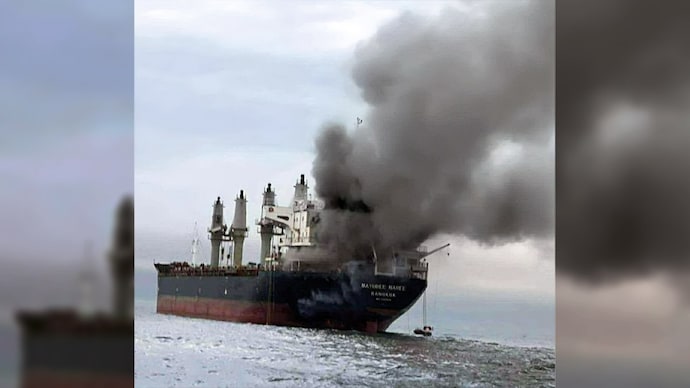
COLLATERAL DAMAGE: A Thailand cargo ship struck by Iran off Oman’s coast, Mar. 11. (Photo: AP)

ISSUE DATE: Apr 20, 2026 | UPDATED: Apr 14, 2026 15:03 IST
Six weeks into the conflict, the situation in the Gulf has moved from tension to sustained disruption. What was once a narrow diplomatic window, in which Oman was actively engaged in efforts to encourage dialogue and restraint, gave way to a wider crisis marked by significant uncertainty. The announcement of a ceasefire, therefore, is a welcome and important development, offering much-needed space for de-escalation and renewed diplomacy. While it may not by itself resolve the underlying issues, it creates an opportunity to stabilise markets, restore confidence and refocus attention on dialogue, economic resilience and regional cooperation.
There is, quite simply, no winner in such a conflict. In the medium to long term, every stakeholder stands to lose. The acceleration of hostilities, coupled with uncertainty about timelines, makes it difficult to predict whether resolution is days, weeks or months away. Amid this uncertainty, alternative strategies are being explored. Oman’s geographic positioning offers one such possibility. Located outside the Strait of Hormuz and facing the Indian Ocean, Oman hosts ports such as Duqm and Salalah that could serve as strategic gateways. The long-term idea is to strengthen connectivity between these ports and regional producers through pipelines, rail links and integrated logistics networks, thereby creating additional channels for trade and energy flows. Crucially, this is not seen as a project Oman or the Gulf Cooperation Council (GCC) can undertake alone. The proposal is that GCC countries, together with major energy-dependent partners, such as India, China, Japan and others, could collaborate to support such infrastructure. Those who depend most on the uninterrupted flow of Gulf energy would have a direct stake in strengthening alternative corridors that reduce risk and improve continuity of supply.
ACHIEVING LONG-TERM STABILITY
In this framework, oil, gas and goods could be routed through Oman’s Indian Ocean-facing ports and shipped directly to global markets, complementing existing routes and helping to strengthen supply-chain resilience during periods of uncertainty. However, this is not a simple fix. It requires significant investment, regional coordination and political will. It also demands alignment between producers and consumers—something that is often difficult in practice.
At the heart of the crisis lies a deeper regional question: how can long-term stability be built in a way that protects security, preserves sovereignty and supports economic development? The more pragmatic view acknowledges a simple reality: geography cannot be altered, and durable stability in the Gulf will always require practical coexistence, dialogue and economic cooperation alongside effective security arrangements.
The European Union offers a useful comparison. Once a region marked by repeated conflict, Europe gradually chose integration over confrontation, building interdependence through trade and shared institutions. The lesson is not that models can be copied directly, but that stronger economic linkages can raise the cost of conflict and create greater incentives for cooperation. In the Gulf, this points to the value of practical frameworks that promote connectivity, investment and stability.
Economic considerations reinforce this argument. Gulf economies are undergoing ambitious transformations—Saudi Arabia’s Vision 2030, Oman’s Vision 2040 and similar initiatives across the region. These strategies depend fundamentally on stability. Turbulence discourages foreign direct investment, drives capital outflows and erodes investor confidence. Rebuilding trust, once lost, is a long and difficult process.
LEVERAGING OMAN’S POSITION
Already, signs of strain are visible. Businesses are affected, investments are being reconsidered and supply chains are under pressure. For countries that rely heavily on imports, including Oman, rising energy prices translate directly into inflation. As costs increase globally, they are passed on domestically, affecting everything from construction materials to food prices. Yet there remains cautious optimism. There are limits to escalation, particularly when the economic and strategic costs become substantial for all parties involved. Prolonged conflict is difficult to sustain, and there is often a growing recognition over time that dialogue and negotiated outcomes offer a more viable path than continued disruption.
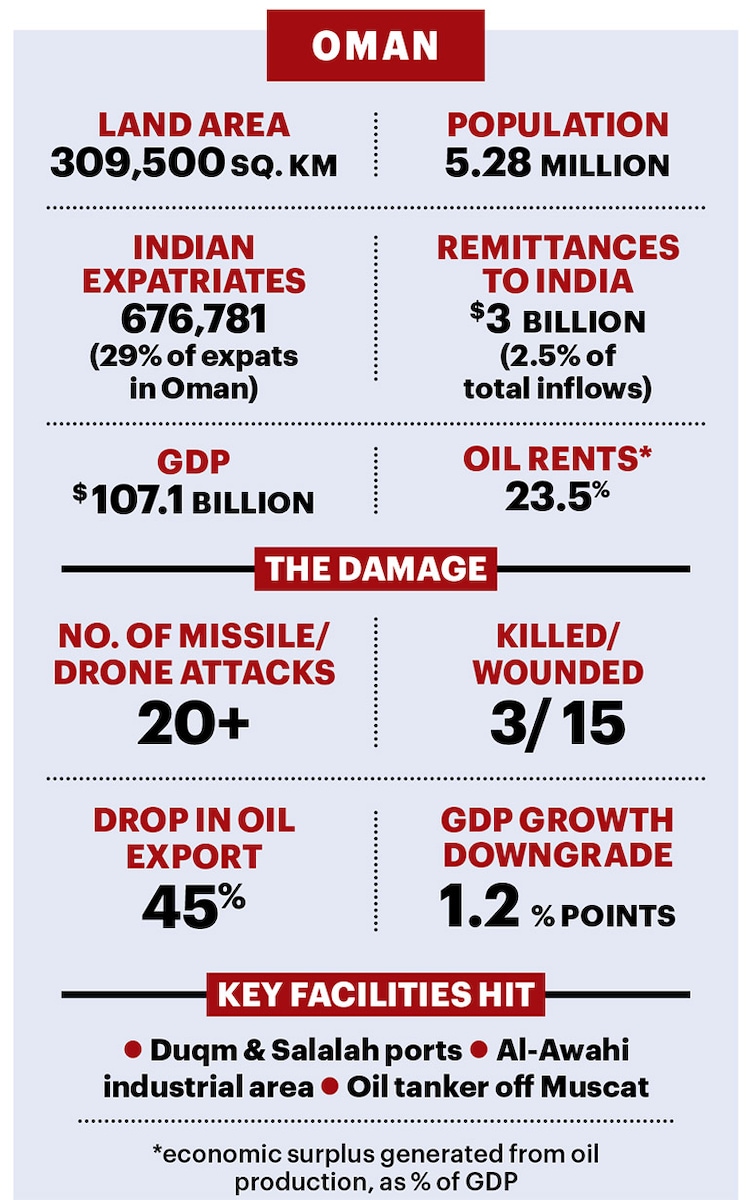
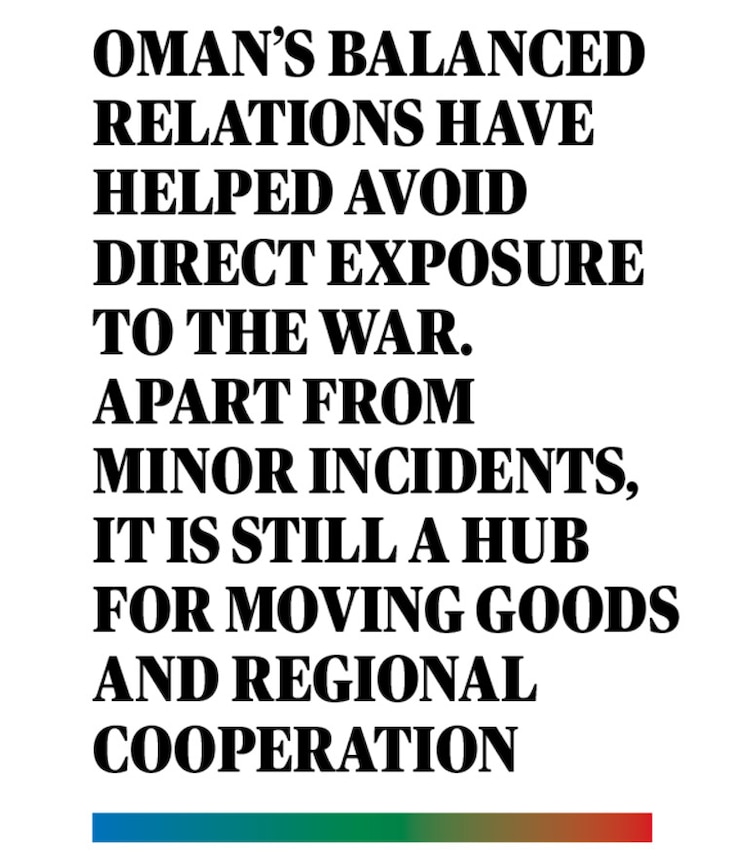
For Oman, the impact has been relatively contained so far. Its policy of maintaining balanced relations and a steady diplomatic approach has helped it avoid becoming directly exposed. While there have been minor incidents, they have not significantly disrupted daily operations. The country continues to function as a logistical hub, supporting regional trade and providing alternative routes for goods moving into the GCC. This role underscores Oman’s strategic importance. By facilitating the movement of goods through its ports and into neighbouring countries, Oman demonstrates its capacity to act as a reliable and constructive partner in regional stability.
The broader implications extend beyond the Gulf. India, for instance, has deep economic ties with the region. It depends heavily on Gulf energy supplies and maintains significant trade links, exporting a wide range of goods. Disruptions in the Gulf directly affect India’s growth trajectory, particularly as it positions itself to become one of the world’s leading economies. Recent agreements between India and Oman, including economic partnerships, underline the potential for deeper collaboration. But these opportunities hinge on stability. Periods of conflict shift the focus away from investment and trade toward risk management and contingency planning. For both sides, the priority should be to preserve and strengthen economic linkages rather than allow instability to undermine them.
Ultimately, the crisis reinforces a fundamental truth: in an interconnected world, regional conflicts have global consequences. The path forward requires a shift in approach. Rather than framing outcomes in zero-sum terms, stakeholders must seek workable solutions that protect trade, energy security and long-term development. This means recognising mutual dependencies, addressing underlying tensions with care and building frameworks that encourage cooperation over confrontation.
The alternative—a prolonged cycle of escalation—would only deepen economic losses, strain political relationships and delay the region’s development goals. Stability is not just a political necessity; it is an economic imperative. For now, the region stands at a crossroads. The choices made in the coming weeks will determine whether the current crisis evolves into a broader and more entrenched disruption or gives way to a more stable and constructive path. The stakes, both regional and global, remain exceptionally high.
—Dr Yousuf Hamed Al Balushi is an economist and founder of Smart Investment Gateway
- Ends