
FWICE, CINTAA and more: Don 3 row puts Bollywood's film bodies in focus
The Don 3 fallout between Ranveer Singh and Farhan Akhtar has turned attention to Bollywood's film bodies. The episode has highlighted how unions, guilds and trade bodies shape work, disputes and releases across the industry.
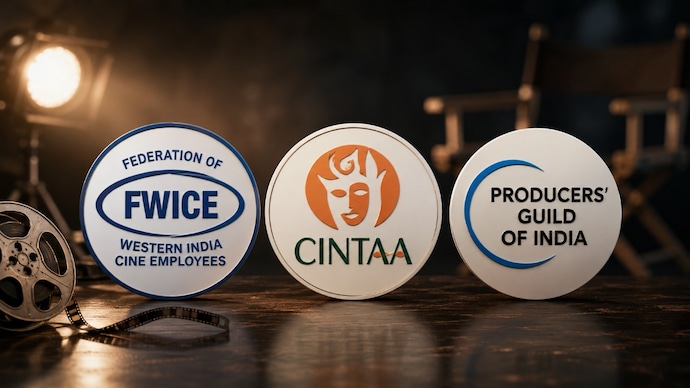

The fallout between Ranveer Singh and Farhan Akhtar over Don 3 has once again put Bollywood’s powerful film bodies in the spotlight. From Federation of Western India Cine Employees (FWICE) issuing a non-cooperation directive to the Producers’ Guild stepping in for mediation, many people suddenly found themselves asking one question: who actually runs the Hindi film industry behind the scenes?
While stars and filmmakers are the public face of Bollywood, the industry is quietly powered by a network of unions, councils and trade bodies that handle everything from workers’ rights and contracts to disputes and film releases.
Here’s a simple breakdown of the major organisations that keep the industry functioning.
FWICE: The workers’ powerhouse
The Federation of Western India Cine Employees, better known as FWICE, is one of the most influential bodies in the film industry.
Based in Mumbai, FWICE is an umbrella organisation representing more than 30 unions and thousands of workers across film and television. This includes spot boys, makeup artists, technicians, lightmen, editors, dancers, hairstylists and many others who work behind the camera.
So when FWICE takes a stand against an actor or producer, it matters. In Ranveer Singh’s case, the body issued a non-cooperation directive, which could affect access to technicians and workers affiliated with the federation.
FWICE often steps in during payment disputes, work-related conflicts and industry shutdowns. You can think of it as Bollywood’s biggest workers’ union.
CINTAA: The actors’ safety net
The Cine and TV Artistes Association (CINTAA) mainly represents actors and performers.
Whether it’s payment issues, harassment complaints, contracts or workplace disputes, actors often turn to CINTAA for support. The body includes television actors, film stars and junior artistes. The association usually tries to resolve matters through discussions between actors and producers and in some cases, it may issue notices or take disciplinary action.
Over the years, CINTAA has also played a role in conversations around mental health, working conditions and professional rights for actors trying to survive in a highly unpredictable industry.
Producers’ Guild of India: The producers’ voice
If FWICE protects workers, the Producers’ Guild of India represents the people financing and creating content.
The Guild includes some of the country’s biggest producers working across films, OTT platforms and television. It often acts as a mediator in disputes involving producers and talent.
In the Don 3 row, reports suggested the matter first reached the Producers’ Guild before escalating further after producer-director Farhan Akhtar filed a complaint.
The body also discusses larger industry concerns such as box office issues, piracy, release clashes and streaming policies.
IMPPA and IFTPC: The old guard of Bollywood
The Indian Motion Picture Producers’ Association (IMPPA) is one of the oldest film bodies in the country. It mainly focuses on producers working in the Hindi film industry.
Meanwhile, the Indian Film and Television Producers Council (IFTPC) also represents producers and helps resolve professional and contractual disputes.
While they may not dominate headlines as often as FWICE or CINTAA, both organisations still hold strong influence within the industry ecosystem.
South India has its own strong network
The South Indian film industries also have powerful governing bodies.
The South Indian Film Chamber of Commerce (SIFCC) acts as a key advisory and coordinating body for Tamil, Telugu, Malayalam and Kannada cinema industries. Beyond that, there are several other powerful regional associations, craft unions and industry bodies that represent producers, actors, writers, technicians and workers across different languages and sectors.
Given the growing national reach of South Indian films today, these bodies play an increasingly important role in shaping conversations around releases, disputes and industry rules.
Almost every film job has its own union
One interesting thing about the Indian film industry is that almost every craft has its own association.
Cinematographers have the Western India Cinematographers Association (WICA). Directors have the Indian Film and Television Directors’ Association (IFTDA). Writers are represented by the Screenwriters Association (SWA).
These groups help members with contracts, credits, legal issues and fair working conditions.
So who really controls Bollywood?
The truth is: nobody and everybody.
Bollywood does not have one single governing authority. Instead, it runs through a complicated network of producers, unions, workers’ bodies and trade associations that often work together, and sometimes against each other. And none of these bodies are government controlled or court appointed.
Bollywood does not have a single governing authority. Instead, it functions through a complicated network of producers, unions, workers’ bodies and trade associations that often work together — and sometimes against each other. None of these bodies is government-controlled or court-appointed.
Most people only hear about these organisations when controversies explode publicly, like the current Don 3 dispute. But behind every film shoot, release, strike or industry fight, these bodies are constantly negotiating, protecting interests and keeping the wheels turning.