
Jr NTR's Dragon glimpse in focus: New Prashanth Neel or Prashanth repeat?
The first glimpse of Jr NTR's Dragon, released on May 19, has triggered a sharp debate over Prashanth Neel's familiar visual language. Neel says the film is driven by different emotions and aimed at a patriotic elements.
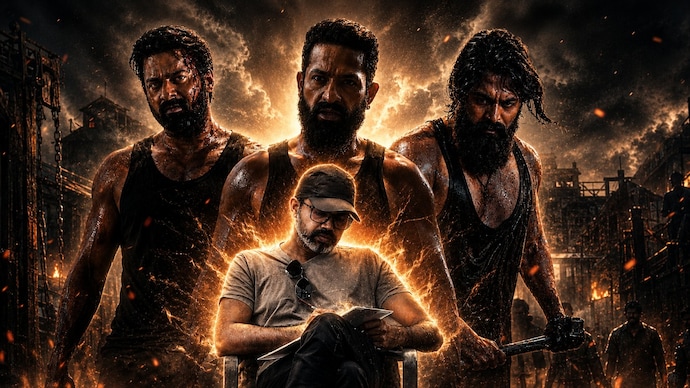
Director Prashanth Neel responds as Dragon faces ‘repetitive’ criticism.

Bengaluru,UPDATED: May 25, 2026 07:54 IST
For years, filmmakers across the globe have built identities around recurring cinematic signatures. SS Rajamouli structures his films around positive yet emotional pay-offs, Sanjay Leela Bhansali turns grandeur into narrative language itself. Mani Ratnam speaks through emotional silences and political undercurrents that hum beneath every scene. Internationally, Christopher Nolan, Quentin Tarantino, and Zack Snyder each carry fingerprints so distinct that audiences identify them before a single credit appears.
That signature is usually a strength. But, sometimes, it becomes a trap. That is precisely the conversation now surrounding Prashanth Neel and the first glimpse of Dragon, starring Jr NTR.
Before understanding more about this, there is a joke doing the rounds on the internet. Students who were in their first year of college when Dragon was officially announced have since sat their final exams, collected their degrees, and stepped into the working world, all before a single frame of promotional material surfaced. Then, finally, last week, a four-and-a-half-minute glimpse dropped, just minutes before Jr NTR's birthday. And as expected, social media caught fire.
The discourse split cleanly down the middle. One camp marvelled at the scale of the world, the audacity of the premise, and the sheer ferocity of Jr NTR's transformation into Luger, the cold-blooded Assassin-in-Chief of the Afghan Trading Company. The other camp had just one reaction: why does this feel like a film we have already seen?
To answer that fairly, one must first understand what the glimpse actually contains.
Inside the world of Dragon
The glimpse opens in the most unconventional way possible — not with action, not with a hero, but with history. A voice-over roots the story in pre-Independence India, tracing how the British Empire's presence on the subcontinent was, at its foundation, a calculated war for control of the opium trade. Two cultivation hubs sustained this empire of narcotics — Afghanistan and the Golden Triangle, spanning parts of Thailand, Laos, and Burma. The British controlled both. When they left, the vacuum they created did not remain empty.
The story shifts to 1967. The Afghan Trading Company and the Golden Trading Company go to war over a multi-billion-dollar trade that once moved entire empires.
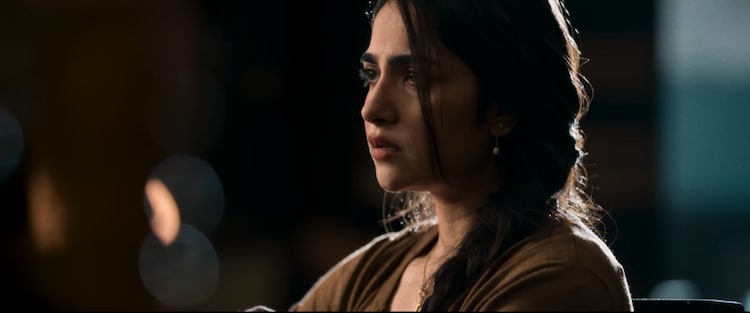
Instead of a detached omniscient voice-over, Rukmini Vasanth's character narrates the world through verses drawn from the Biblical Book of Genesis, binding creation mythology to the birth of a violent criminal empire. Her narration culminates in the arrival of Luger, the Afghan Trading Company's feared Assassin-in-Chief.
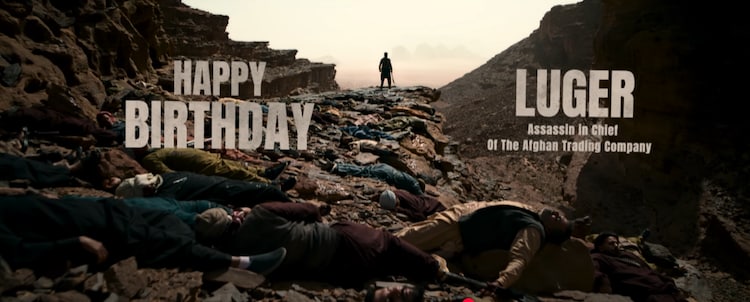
Jr. NTR's entrance was engineered as a mass eruption. Blood-soaked, animalistic, stripped of mercy, Luger moves through enemy factions with a cold efficiency that marks him as a force rather than merely a character.
Crucially, this is only one side of the story. The Golden Trading Company's leadership remains deliberately concealed, with speculation pointing to the film's titular character as its head. If that proves accurate, Dragon's universe may dwarf even Yash's KGF and Prabhas's Salaar.
The transformation is striking. The debate, however, is not about Jr NTR. It is about everything built around him.
Why the glimpse feels familiar
Despite the new world, the fresh premise, and the undeniable scale, the criticism surrounding the glimpse has very little to do with the story. It has everything to do with presentation. Because visually, structurally, and tonally, Dragon feels unmistakably like a Prashanth Neel film. That is its strength and weakness.
The glimpse carries every familiar Prashanth Neel hallmark — smoky monochromatic frames, muddy greys and dark golds, silhouettes swallowed by dust-filled environments, Ravi Basrur’s thunderous score, and stylised slow-motion reveals. Even the densely layered narration mapping territories, factions, and hierarchies of violence, along with the CGI-crafted criminal geographies, strongly echoes the world-building methods seen in KGF and Salaar.
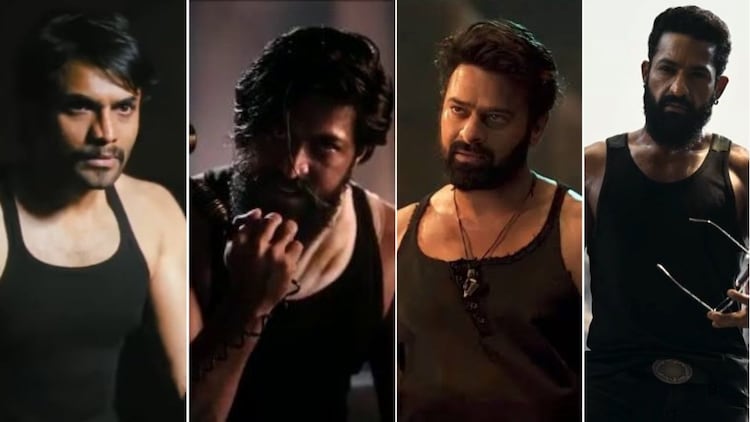
In KGF, it was the mining town Narachi. In Salaar, it was the fictional town of Khansaar. In Dragon, it is a sprawling opium empire stretching across continents. The worlds are different. The grammar used to build them is not.
The use of narrators as anchors follows the same structural template. Veteran actors Anant Nag and Prakash Raj guided audiences into Rocky's life in KGF films. Actors Mime Gopi and Shruti Haasan served the same function in Salaar. Now, in Dragon, it is Rukmini Vasanth and Biju Menon’s characters. The names rotate, the role remains the same.
The most discussed image in the glimpse sharpened the argument considerably. Jr NTR standing in a dimly lit setting in a black brief, framed and lit in a manner that immediately recalled Prabhas in Salaar. Close-up compositions, lighting patterns, frame constructions — the comparisons surfaced online within minutes. The reunion of Neel with cinematographer Bhuvan Gowda and composer Ravi Basrur, both principal architects of the aesthetic language of KGF and Salaar, makes the similarities even harder to dismiss.
Style vs. repetition
The core argument from one camp is not that directors should abandon their identity. Audiences celebrate auteurs. They always have. The concern is about the point at which a recognisable style hardens into a formula, when the cinematic language stops serving the story and begins serving only itself. That distinction matters. And it is precisely where Dragon runs into trouble.
Some viewers argue that one could splice frames from Salaar and Dragon together without the cut being visible. The counter-argument, however, is equally coherent.
Cinema is experienced through the emotional and narrative journey of a complete film, not four minutes of promotional material. Aesthetic similarities become far less significant if the emotional core, character arcs, and thematic intent are genuinely distinct. A glimpse is designed to establish the mood. The full architecture of a film reveals itself only in the theatre.
That argument also holds merit. Which is precisely why the debate has no clean resolution yet.
Neel responds to 'repetitive' criticism
Prashanth Neel addressed the criticism directly in an interview with Galatta Plus following the glimpse's release. "People have said to me that my movies are repetitive, but they aren't. I know it. The look of it makes it seem like that, but they are not. They are different emotions."
He was more pointed still when speaking about pressure to change. "I am not here to present Prashanth Neel the brand. I am here to tell the story. All my stories demanded those elements — music and lighting. If I change that just because somebody tells me to change my style, then I am doing injustice to my story."
He confirmed that Dragon will be the final instalment in his trilogy of dark-palette cinema, after KGF and Salaar, a statement that suggests genuine self-awareness.
But beyond that, he revealed some interesting details that add more weight to the perspective of his vision with the film. He called Luger the darkest character he has ever written and acknowledged the scale of risk Jr NTR accepted in taking it on. "It took three years to arrive at that last scene. It is very, very risky for a star of his magnitude."
Then came the line that reframes everything. "We're attempting, and will probably end up making, one of the most patriotic films ever seen."
That single sentence changes the context of Dragon entirely. Beneath the familiar dust, smoke and shadow, Neel hints at something larger driving the film emotionally — a destination unlike anything he has previously attempted. The visual language may be familiar. The story, he insists, is not.
He is not trying to convince audiences any more. He is counting on the trust he has already built. Whether that gamble works will be known on June 11, 2027.
- Ends