
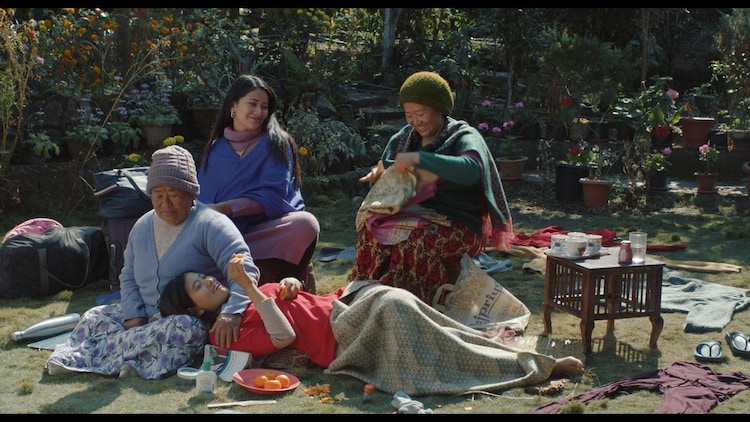
Shape of Momo director Tribeny Rai on patriarchy, identity, Northeast representation
Ahead of The Shape of Momo's May 29 release, director Tribeny Rai has spoken about the film's women-led story and symbols. Her comments place the Nepali-language drama within wider debates on patriarchy, identity and representation.
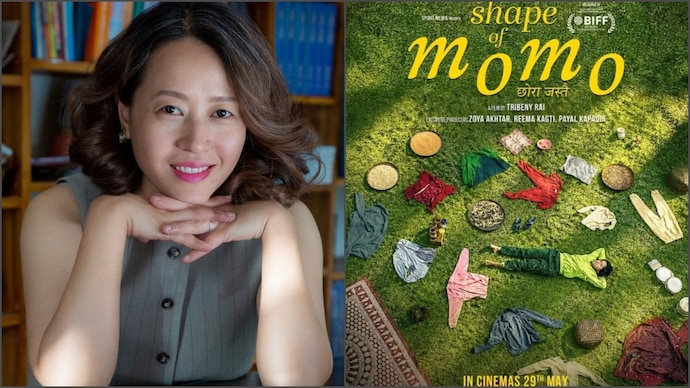
Tribeny Rai's Shape of Momo is set to hit cinemas on May 29.

New Delhi,UPDATED: May 28, 2026 14:30 IST
Writer-director Tribeny Rai’s upcoming Nepali-language film Shape of Momo, set for theatrical release on May 29 in India and Nepal, uses the humble momo as both a cultural symbol and a metaphor for control, identity, and quiet resistance. In an interview with India Today, Rai opened up about gender, generational conflict, Northeast representation in cinema and why she believes storytelling should create space for reflection rather than instruction.
A film rooted in women’s worlds and everyday resistance
At the heart of Shape of Momo is a story about women across generations navigating patriarchy in different ways. Rai said this was a deliberate creative choice.
“There isn’t just one way of dealing with oppression. Bishnu is direct and strong-headed, her mother is more strategic, and her sister follows a more conventional path. They are in the same struggle, just fighting it differently," she explained.
For Rai, this layered portrayal was essential to reflect how gendered power structures are experienced unevenly, even within the same household.
“Patriarchy doesn’t need men to function”
One of the film’s most striking narrative choices is the relative absence of male characters, who remain peripheral yet influential.
Rai says this was shaped by her own upbringing in a household of women.
“I am the third of four sisters, and my father passed away early. I grew up in a house full of women. I realised patriarchy does not require constant male presence. Even in absence, it is deeply internalised and continues to function," said the Sikkimese filmmaker.
This idea, she adds, became central to the film’s emotional and political texture.
While Shape of Momo has been described as semi-autobiographical, Rai is careful to draw a distinction. “I think I am most like Bishnu, but I also carry parts of the mother and sister. It is a personal film, but not literally my life," she said.
Trbeny Rai co-wrote the screenplay with Kislay, a collaboration she says helped introduce objectivity into a deeply personal narrative.
The metaphor of momo
The film’s title itself becomes a lens for its themes. For Rai, momo is not just food – it is a cultural memory.
“Momo is deeply connected to Himalayan and Nepali identity. The moment you say it, it evokes culture,” she said.
But beyond symbolism, she is drawn to the ordinary. “Even small actions – like someone finishing a plate and leaving it behind – can reflect class, behaviour, and society. We wanted to show that these larger systems exist in everyday life," she added.
A story about shaping – and refusing to be shaped
The film’s central metaphor emerges from the idea of shaping momos – something Rai connects directly to societal expectations placed on women.
“That’s exactly why the film is called Shape of Momo. Society tells women how to be shaped. The protagonist not knowing how to make momo – and not caring – is a small act of resistance," she said.
She added that even subtle refusals can accumulate into something larger.
Northeast representation and the search for identity
The 35-year-old spoke about how representation shaped her filmmaking. “I never saw my representation growing up – emotionally or physically – in the films I watched. That absence made me want to tell our stories," she said.
Shot in her own village and made in Nepali, the film deliberately resists linguistic or commercial homogenisation.
“If someone from Sikkim, where the industry is still developing, can make a theatrical film, then others can too,” she said.
Rai believes the growing visibility of Northeast cinema signals a shift in Indian filmmaking.
On cinema’s role
She is cautious about assigning cinema the burden of social reform.
“I don’t think film should be used as a direct tool for change. Audiences are intelligent. We should not underestimate them. A good film should leave space for interpretation and reflection, not instruction," she said.
Patriarchy, empathy, and everyday inequality
From gender bias to migration and discrimination, the film touches on multiple layers of social inequality.
Rai believes the solution lies not in a single medium but in collective awareness.
“Patriarchy is deeply ingrained and has existed for a long time. Education, awareness and empathy are essential if we want change," she said.
She adds that inequality often manifests in “ordinary everyday things,” rather than only extreme situations.
(Spoiler alert!)
A quietly radical mother figure
One of the most discussed characters in the film is Bishnu’s mother, who ultimately supports her daughter’s decision to leave.
Rai described her as “far more intelligent than we assume.”
“She appears to be conforming, but she is constantly observing and protecting her children,” she says. “Her decision comes from understanding what is truly right for her daughter.”
The ending
The film ends with its protagonist Bishnu leaving her hometown for Delhi – a decision that is both painful and liberating.
Rai admitted the ambiguity is intentional.
“I don’t know if she has made the right decision. But for now, it felt necessary that she leaves. Many of us are caught between home and opportunity. To keep her back would be to hold back a generation," she said.
Rai explained that staying would have meant stagnation.
Male preference and societal pressure
Rai also addressed the continued preference for male children in many communities.
“It is still very prevalent. There is pressure in many families to carry forward the legacy through a son. I have experienced it myself," she said.
The final word: “If I can do it, anyone can”
Reflecting on her journey from Sikkim to filmmaking, Rai returns to the question of access and possibility.
“If a girl like me from Sikkim, with no film industry around her, can make a theatrical film, then anyone can. Perseverance is the key," she said.
Directed by Tribeny Rai and Shape of Momo releases in theatres on May 29 across India and Nepal. The film's theatrical run is supported by Rana Daggubati’s Spirit Media, with filmmakers Zoya Akhtar, Reema Kagti and Payal Kapadia on board as executive producers.
- Ends