
Bandar review: Bobby Deol's film asks tough questions, offers easy answers
Bandar movie review: Anurag Kashyap's Bandar follows fading star Samar Mehra (Bobby Deol) as a rape accusation pushes him into police custody and jail. The film dwells on systemic humiliation and prison brutality, even as its moral perspective narrows.
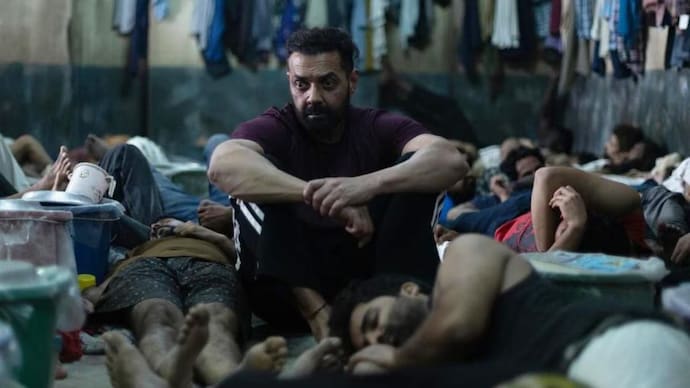

Why is the film called Bandar? Is it because its protagonist is eventually reduced to performing like a monkey in a system that strips him of every ounce of dignity? Or is it because, as he says, 'We are all monkeys of our own circus'? Whatever the answer, Anurag Kashyap’s latest leaves you unsettled... not because of its subject, but because of how it chooses to tell that story.
The film opens with one of its most heartbreaking moments. Samar Mehra (Bobby Deol), a once-famous actor-singer, is performing at a wedding. Spotting three young women holding up a phone, he instinctively poses for a photograph. Except they aren’t clicking him; they are taking selfies. In one small scene, Kashyap captures the tragedy of fading relevance. The man who once commanded crowds is now invisible in plain sight.
Samar’s life away from the spotlight is equally bleak. He lives alone, roams in Superman boxers, struggles with a painful back and worries about money. Just loneliness, insecurity and an increasing need to feel wanted. His much younger girlfriend offers companionship, but also exposes his vulnerabilities.
Then comes the knock on the door.
Samar is taken to a police station and informed that a woman has accused him of rape. He insists he is innocent, claiming what began as a consensual affair spiralled into obsession when he stopped responding to her messages and eventually blocked her.
The legal case becomes the spine of the film, but Bandar is less interested in guilt or innocence than in the machinery that swallows people once they enter the system. The police station sequences leave you shaken. Samar is humiliated, abused and mocked. His private chats are read aloud, and his dignity publicly dismantled.
But it is inside the jail that Bandar finds its strongest footing. New inmates are stripped naked, forced into degrading positions and treated less like humans and more like 'monkeys'. The prison feels like a cage – overcrowded, filthy and suffocating. It becomes a nightmare designed to crush identity and hopes.
The jail is full of men who claim innocence. An inmate accused of rape casually blames the victim’s clothes, revealing the entitlement and misogyny that often hide beneath ordinary faces. And even hardened criminals look down upon rapists. One inmate recalls how those accused in the Delhi case were ill-treated by them inside prison, underlining the gravity of the crime even within the criminal world.
Bobby Deol delivers one of his strongest performances. And because we know parts of his own journey, watching him play a fallen star feels painfully authentic. He captures Samar’s desperation, confusion and helplessness. Even when the character is unlikeable, Deol makes him human.
Jitendra Joshi as the investigating officer, Sanya Malhotra as Samar's sister and Saba Azad as his girlfriend make the most of what's written for them.
On the other hand, Sapna Pabbi is striking as Gayatri, the woman whose accusation changes Samar’s life. She brings anger, vulnerability and unpredictability to the role. Which is why it feels disappointing that the film never fully explores her perspective. We hear fragments about her troubled past and emotional wounds, but they are never developed enough to understand her psychology. And that is where Bandar begins to stumble.
The film wants to talk about false allegations, public shaming and the brutality of the justice system. But somewhere along the way, it begins to stack the emotional deck in Samar’s favour. The more time Bandar spends documenting his humiliation and suffering, the more it nudges the audience towards sympathising with him as the primary victim.
That approach feels limiting because the film’s most interesting questions lie elsewhere: the emotional fallout of rejection, power dynamics, accountability and public perception. They are all touched upon, yet rarely examined with the same depth as Samar’s ordeal.
A particularly questionable moment arrives when Samar writes a letter expressing regret, acknowledging that his actions may have emotionally damaged Gayatri. Yet the film continues framing him as the primary victim. The emotional consequences of being used, discarded and ghosted are acknowledged, but never truly explored.
And in doing so, Bandar risks reducing larger conversations around gender and accountability into the story of one man's suffering. Yes, the danger of a false accusation is real, but so is the tendency to use individual cases to cast doubt on larger conversations around crimes against women.
That’s also surprising because Anurag Kashyap usually thrives in moral grey zones. Here, however, a story that begins in shades of grey gradually narrows into a far more one-sided perspective.
The first half is gripping and relentlessly engaging. The second half, unfortunately, circles the same ideas repeatedly and loses momentum. The prison remains fascinating, but the narrative starts feeling trapped within it. The film seems to believe that making the audience squirm is the same as making them question.
Yet Bandar lingers... In a haunting monologue, Samar talks about forgetting his own face inside prison and becoming a ghost. That's the image you carry out of the theatre: a man slowly disappearing inside a system that has already decided who he is. It's a powerful image from a film that ultimately offers easier answers than its questions deserve.