
Mahavatar Parshuram, Ashwatthama, Drona: Rise of unsung ancient legends on screen
Indian mainstream cinema is looking to score big at the box office with stories of unsung mythological and folk heroes. Beyond Ram, Krishna, Hanuman or Mahadev, producers are exploring tales of Parashuram, Drona, Shukracharya, Agastya Muni and Ashwathhama.
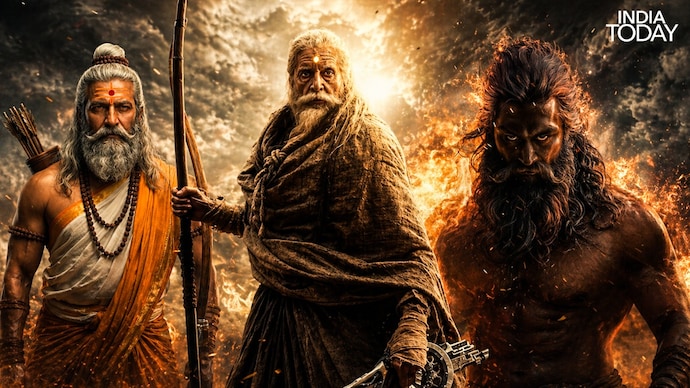

Dronacharya, Mahavatar Parshuram, Kalki 2898 AD 2, Mahakali, and Mirai: Jaitharaya are among upcoming films that point at an emerging trend: Indian mainstream cinema is turning attention towards unsung mythological and folk heroes.
Beyond the more popular stories of Ram, Krishna, Hanuman or Mahadev, producers are now looking at tales of Parashuram, Drona, Shukracharya, Agastya muni and Ashwathhama – heroes from our mythology and folklore who have largely remained unsung in our films till now.
From live action to AI and animated films
The current line-up reflects the emerging trend across industries and formats. Dronacharya, an AI-generated film set for release in June 2026, follows the legendary mentor Dronacharya, who trained valiant warriors and shaped legends.
Hombale Films has announced the animated Mahavatar Parshuram, while Vicky Kaushal is set to play the axe-wielding sixth avatar of Lord Vishnu in the live action big-screen adaptation, Mahavatar.
Elsewhere, Amitabh Bachchan returns as the immortal Ashwatthama in Kalki 2898 AD 2. In the south, director Prasanth Verma, the architect of the Hanu-Man universe, has cast actor Akshaye Khanna as Shukracharya in the upcoming film Mahakali (2026). In Telugu cinema, Jayaram's Agastya Muni in Mirai (2025) proved successful enough for the sequel Mirai Jaithraya to go on floors.
Films that started the trend
One of the films to trigger the trend was last year's Mahavatar Narsimha, a Rs 40-crore animated film that made over Rs 200 crore at the box office, as reported by Sacnilk. The unfancied animated film ended up being one of the highest-grossing Indian animated films ever — proving that audiences are ready for deeper dives into India's mystical legends.
There have been other recent releases, too, which added weight to the trend. Hanu-Man (2024) and Mirai ( 2025), made big money by turning indigenous mythology and folklore into pan-India success by blending VFX spectacle with spiritual fiction.
Appeal of such characters
The appeal of these characters lies in the range of stories they carry. Dronacharya's conflict between loyalty and ethics, Parshuram's rage against arrogant warrior kings, Ashwatthama's curse of immortality, Shukracharya's cunning as guru of the asuras, and Agastya Muni's quiet command over nature, each bring a moral complexity that is now finding space in mainstream storytelling. Rather than serving only as mere supporting characters, they are being positioned as the architects of dharma, flawed geniuses, immortal warriors and forest sages whose stories can drive entire films.
Producers appear to have recognised that lesser-featured mythological figures, too, come with established lore, strong dramatic arcs and visual potential that can rival major franchise origin stories. Hombale's move towards an animated Parshuram project suggests a wider ambition, while Verma's expanding Hanu-Man universe is moving into Mahakali with Akshaye Khanna bringing weight to the role of the asura (demon) guru Shukracharya. The AI experiment behind Drona also shows how far filmmakers are willing to go to tell these stories.
The ripple effect is already visible in industry conversations, sparking interest in how cinematic narratives could be shaped around events documented in the Puranas and Itihasa. There is immense potential for films to explore the profound sages like Bhrigu, Markandeya, Kashyapa and Bharadvaja. Similarly, the tales of mystic figures like Vashishta and Vishwamitra, often highlighted in the Ramayana, offer a rich narrative that could drive epic storytelling.
Taken together, the projects around Drona, Parshuram, Ashwatthama in Kalki 2898 AD 2, Shukracharya in Mahakali, and Agastya Muni in Mirai suggest that producers are not relying only on nostalgia. They are backing characters whose human struggles and superhuman resolve, they believe, can build the same kind of franchise loyalty that Mahavatar Narsimha and Hanu-Man have already sparked.