
Trump's favourite Field Marshal asked China for nuclear submarines: Report
Pakistan sought China's support for developing a sea-based nuclear second-strike capability during talks in 2024, signalling that Islamabad continued strategic negotiations with Beijing even as ties with Washington strengthened.
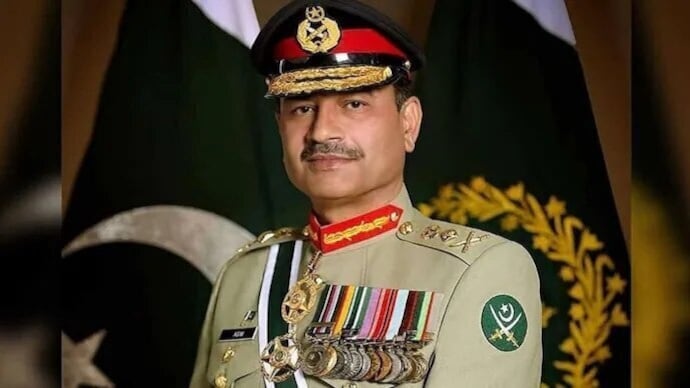

Pakistan asked China for a ‘sea-based nuclear second-strike capability’ in exchange for Chinese access to the Gwadar naval base, says a story broken by a US-based independent news outlet Drop Site News. In a May 18 story, the news outlet says it has reviewed classified Pakistani military documents to make this sensational claim.
The demand was said to have been in 2024 in bilateral negotiations between the Pakistani military (headed by Field Marshal Asim Munir) and China. Early in 2024, Pakistan had given Beijing private assurances that it would permit the transformation of Gwadar into a permanent base for the Chinese military. Later that year, it asked China for a nuclear-armed submarines, which would convert Pakistan’s dyad of air and ground-launched nuclear weapons, into a triad of air, land and sea-based strategic weapons. The demand was deemed unreasonable by China and the talks stalled.
Drop Site first reported this story on December 13, 2025 — but seen with its latest May 18 expose, a top secret cable where a key Biden official pressing for the removal of Imran Khan from office, it paints the picture of nuclear-armed Pakistan driving hard bargains with two strategic partners, China and the US. The May 18 story chronicles the sequence of events that shaped the US- Pakistan relationship over the past five years, bringing Washington and Islamabad from mutual suspicion into a political embrace. Even as it danced with Washington, Pakistan bargained with China for strategic weapon carriers.
Submarines carrying nuclear weapons are of three types — nuclear powered ballistic missile submarines, conventionally powered submarines with cruise missiles (SGNs) or conventionally powered submarines with ballistic missiles (SBNs). The Drop Site News story is not clear which specific capability Pakistan was seeking. But it would not be a surprise if Pakistan pressed China for such a capability.
In the late 1970s and early 1980s, China helped Pakistan build a nuclear bomb. In what is believed to be the first such clandestine transfer of nuclear weapons technology, China not only supplied Pakistan with highly enriched uranium but also bomb blueprints for a weapon, the CHIC-4, a 12-kiloton nuclear fission device first tested in the 1960s. In the 1990s, China also sold Pakistan M-11 intermediate range ballistic missiles to launch these weapons.
Pakistan used these weapons to build a dyad — air and ground launched nuclear weapons. But the third leg of the triad— sea launched nuclear weapons— proved to be beyond Islamabad’s technical and financial capabilities. Nuclear weapons launched from under the sea are powerful second-strike weapons— it allows a country’s assured ability to respond to a nuclear first strike with powerful retaliation against the attacker, even after absorbing significant damage.
Six countries in the world have a sea-based nuclear deterrent on nuclear-powered ballistic missile submarines — the US, Russia, China, France, the UK and India. Israel has a class of conventional submarines carrying cruise missiles (SSGs) while North Korea has a single conventionally powered submarine carrying nuclear-tipped ballistic missiles (an SSB). In 2017, Pakistan claimed to have competed a nuclear triad with the successful test of a submarine-launched cruise missile (SLCM) with a range of 450 kilometres. But given Pakistan’s small fleet of five active conventional submarines, and the short range of the missile, this was an elementary sea-based deterrent.
In December 2014 I had broken a story in India Today magazine about the possibility of Chinese assistance to Pakistan’s second-strike capability.
The assessment by members of India’s security establishment in 2014 was that the $5 billion Hangor class submarine deal — Pakistan’s largest defence deal — would give Islamabad the capability to launch sea-based nuclear weapons. Pakistan ordered eight S26-derived submarines (a Chinese version of the Kilo class submarine). Four to be built in China and four in Pakistan. (The first of the class, PNS/M Hangor was commissioned and inducted into service in Sanya, China, on May 4 this year).
Indian analysts believed then that two of the four submarines would be a special class of ’S-30’ large conventional submarines carrying nuclear weapons. The S-30 submarine based on the Chinese Qing-class SGNs (conventional submarines carrying nuclear-tipped missiles) is a unique conventional submarine capable of carrying nuclear weapons.
It displaces about 4,186 tons surfaced and over 6000 tons when submerged. It uses a conventional diesel-electric propulsion system configured with Air Independent Propulsion (AIP) which can submerge for a maximum of 30 days. It can launch two types of submarine launched ballistic missiles (SLBMs) the Julang-1 and Julang-2 with a range of 1700 and 9,000 km. The submarines were to be built at the Submarine Rebuild Complex (SRC) facility at Ormara, 353 km west of Karachi. A Very Low Frequency (VLF) station at Turbat, in southern Balochistan, was set up to communicate with these submerged strategic submarines.
But going by the Drop Site News story, it would seem that this three-stage deal that would culminate in Pakistan getting a sea-based nuclear deterrent, did not go through. This, despite General Bajwa steering Pakistan towards Beijing and the China-Pakistan Economic Corridor (CPEC). Asim Munir, who took over as army chief in November 2022, moved Pakistan closer to the US and away from Beijing. The military chief deflected China’s concerns over the safety of Chinese personnel building the and allowed the second phase of the CPEC to atrophy.
In August 2025, he publicly claimed that better relations with the US would not be at the cost of ties with China. But the facts show it is otherwise. Trump’s repeated use of the phrase ‘my favourite Field Marshal’ for Asim Munir and Islamabad’s central role in the Iran-US mediation, shows Pakistan drifting away from the Chinese embrace. But as the Drop Site News story shows, Munir in 2024, was still willing to strike a strategic deal with China. The price had to be right.