
What is Artemis-III and why is it Nasa's toughest mission before Moon landing?
Nasa has revealed the astronauts for its next flight, and it can help humans reach the Moon. Here's how Artemis-III will contribute to the planned future Moon landing.
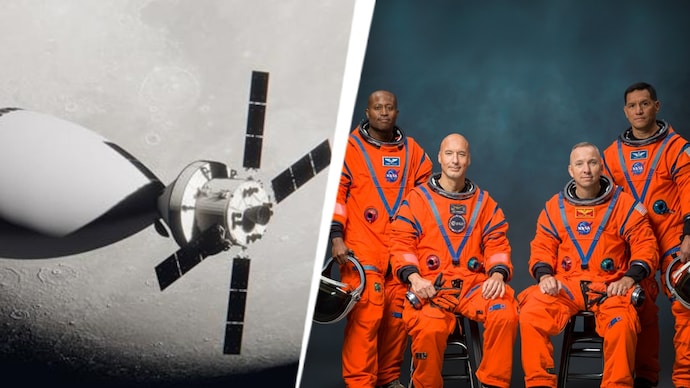

Nasa on Tuesday, June 9, named the four astronauts who will fly the Artemis-III mission.
The crew, as revealed, includes commander Randy Bresnik, pilot Luca Parmitano of the European Space Agency (ESA), and mission specialists Frank Rubio and Andre Douglas, all announced at the agency’s Johnson Space Center in Houston.
With the Artemis-III crew announced, all eyes are on the space agency as it begins the preparations for the launch expected in 2027. While preparations continue, it's only normal to wonder what the mission is about, and how it will take humanity closer to reaching the Moon?
WHAT IS ARTEMIS-III?
Let's begin with a simple fact. Artemis-III will not land on the Moon.
Instead, the latest Artemis mission is planned as a Low Earth Orbit (LEO) rendezvous and docking mission that will test how the Orion spacecraft works with commercial lunar landers.
The LEO lies between 160 km and 2,000 km above Earth's surface, and is where most satellites or any other man-made objects exist in space.
As planned, the Artemis-III crew will test the docking of the Orion capsule with at least one, or possibly both, of the lunar landers.
These landers are where private entities are contributing. One lander has been built by Elon Musk's SpaceX, while the other by Jeff Bezos' Blue Origin.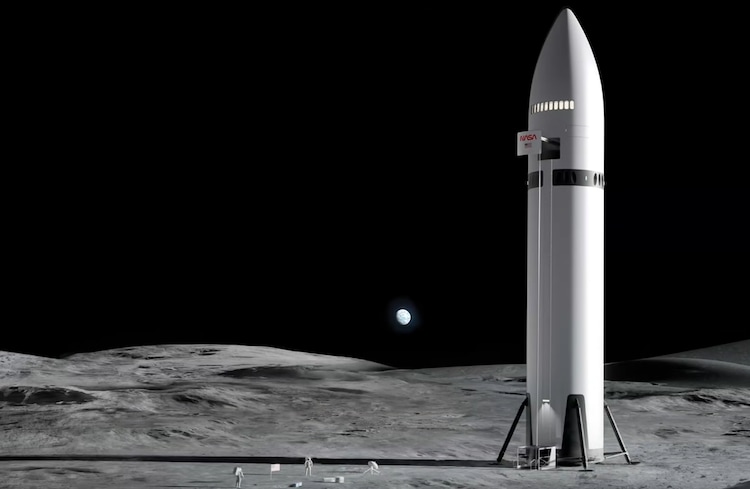
The crew will also test the landers’ propulsion, life support, and communication systems.
The actual crewed Moon landing that everyone is waiting for is scheduled for early 2028, when the Artemis-IV mission could see humans land on the lunar surface.
HOW WILL HAPPEN DURING ARTEMIS-III?
After launching into low orbit, the crew will practice the tricky manoeuvres needed for future Moon landings by rendezvousing and docking with prototype lunar landers.
The crew, while staying safely inside Orion, will use the spacecraft’s thrusters and docking system to carefully approach the waiting landers, align them precisely, and connect. They will also test how well the vehicles communicate and interact with each other through computers and sensors, check seals and connections, and practice transferring crew and equipment between spacecraft.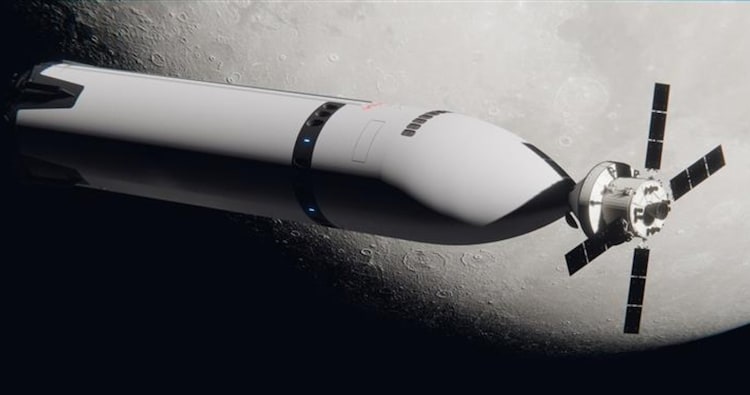
The four astronauts might use the opportunity to also test the new Axiom spacesuits.
These step-by-step tests will last about two weeks and help prove the hardware, software, and procedures work reliably before astronauts attempt an actual lunar landing on the later Artemis-IV mission.
WHY DOES ARTEMIS-III MATTER?
“While this is a mission to Earth orbit, it is an important stepping stone to successfully landing on the Moon with Artemis-IV,” said Jeremy Parsons, Nasa’s Moon-to-Mars acting assistant deputy administrator.
Parsons explained the objective while drawing a comparison to Apollo 9, the 1969 mission that rehearsed docking procedures in Earth orbit before Apollo 11 made history on the Moon.
Artemis-III builds directly on what Artemis-II achieved just two months ago.
In April, Artemis-II launched on a nearly 10-day voyage around the Moon, marking the first crewed flight of Nasa’s Orion spacecraft. It travelled 4,00,000 kilometres from Earth, setting a record for the farthest distance humans have ever travelled in space. But more importantly, the mission proved that Orion can carry a crew safely to lunar distances and back.
Now, Artemis-III must prove the spacecraft can link up with the landers needed to actually get astronauts down to the surface, which is the critical missing piece before humanity returns to the Moon for the first time since 1972.