
India's Chandrayaan-3 wins top global space honour for historic Moon landing
Chandrayaan-3 has received the AIAA's 2026 Goddard Astronautics Award for its Moon landing mission. The recognition underscores India's south pole breakthrough and supports its wider space ambitions.
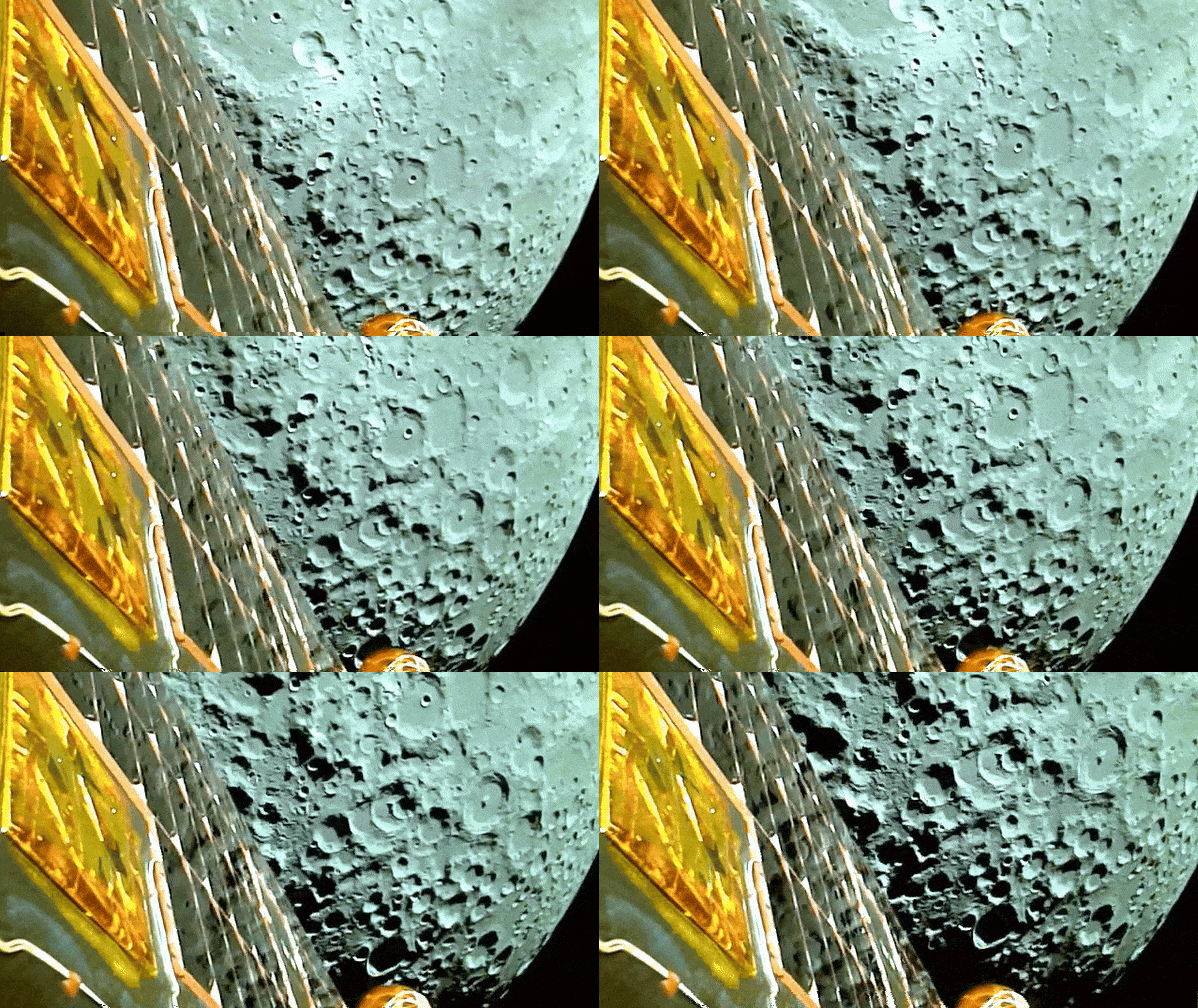

India’s Chandrayaan-3 mission has received one of the highest honours in global space exploration, with the American Institute of Aeronautics and Astronautics (AIAA) awarding it the prestigious 2026 Goddard Astronautics Award for its historic Moon landing mission.
The award recognises Chandrayaan-3’s successful soft landing near the lunar south pole, a feat achieved for the first time in history, as well as its contribution to future exploration of the Moon and deep space missions.
The honour is considered among the most prestigious recognitions in astronautics and places India’s lunar programme alongside some of the world’s most celebrated space achievements.
Launched by the Indian Space Research Organisation in July 2023, Chandrayaan-3 made history on August 23, 2023, when the Vikram lander touched down safely near the Moon’s south polar region.
The mission established India as the fourth country to achieve a soft lunar landing after the United States, Russia and China, while also becoming the first nation to land near the unexplored south pole.
Former Isro chairman S Somanath, under whose leadership the mission was executed, celebrated the recognition and praised the efforts of the Indian space community.
“Proud of the achievements of Isro team and the vision of our Prime Minister to have a meaningful participation of our nation in space exploration through further missions to the Moon, other planets and building BAS,” he said in a statement reacting to the award.
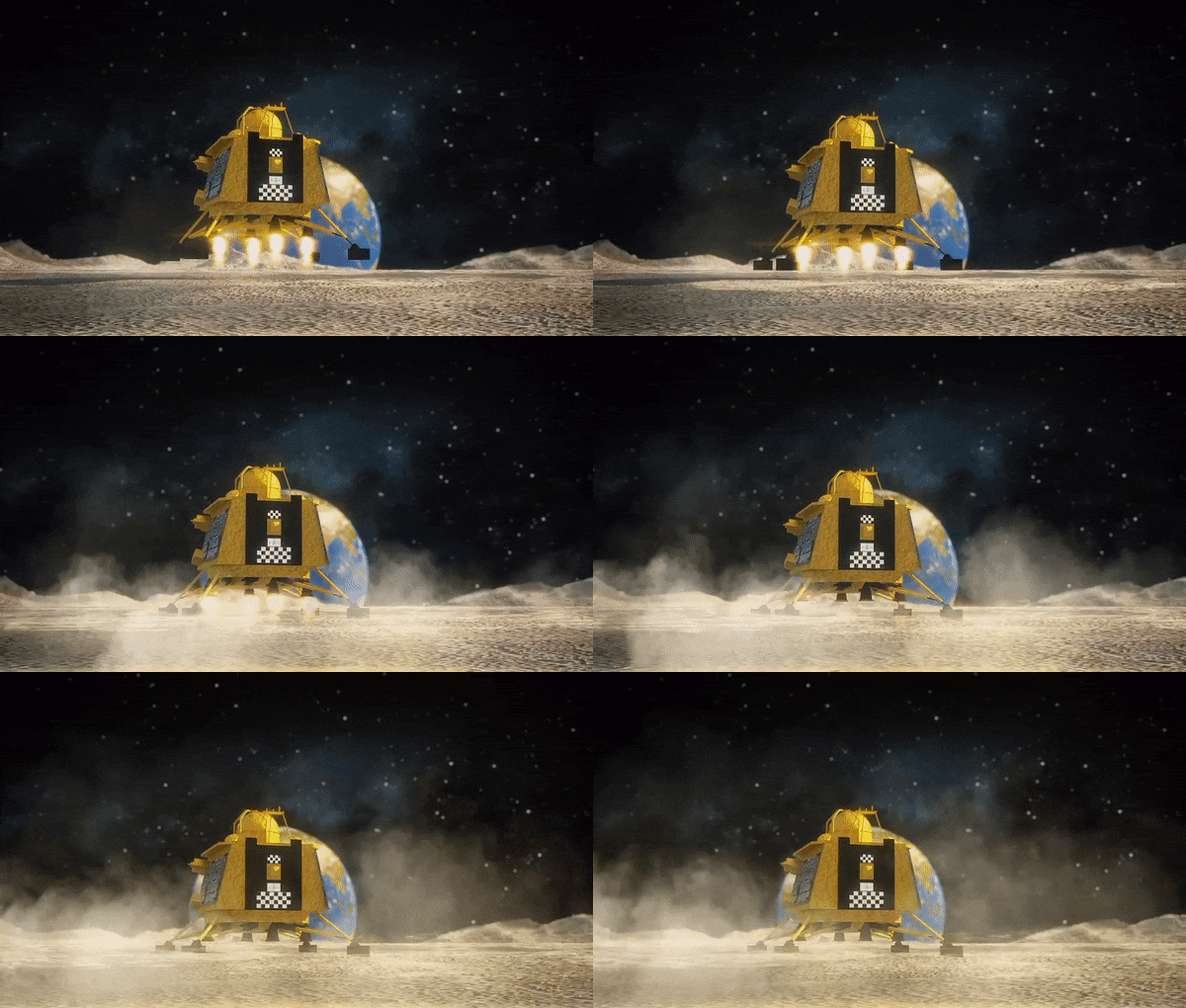
He added that “space research and capabilities are as important as space economy,” underlining India’s growing focus on combining scientific discovery with commercial opportunities in the rapidly expanding global space sector.
Chandrayaan-3 was widely seen as a redemption mission after the Chandrayaan-2 lander crash in 2019. Isro engineers redesigned critical systems, improved landing algorithms and strengthened safety mechanisms to ensure mission success.
The Vikram lander and Pragyan rover conducted experiments on the lunar surface, including studies of temperature, seismic activity and the composition of lunar soil.
Data gathered from the mission is expected to aid future crewed and robotic exploration missions targeting the Moon’s south pole, a region believed to contain water ice deposits.
The AIAA recognition comes as India accelerates its ambitions in space exploration, including the Gaganyaan human spaceflight mission, plans for the Bharatiya Antariksh Station (BAS), and future missions to Venus and Mars.