
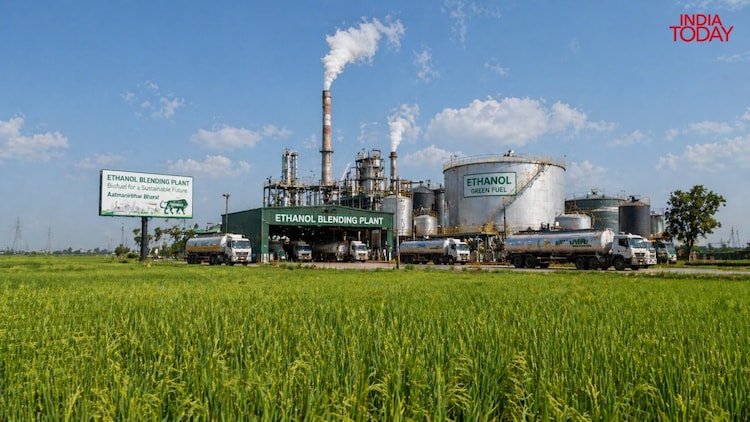
Can ethanol mixed in water burn as Nitin Gadkari claims? Science decoded
Nitin Gadkari has said a stove using ethanol mixed with water can produce cooking flames at lower cost than LPG.
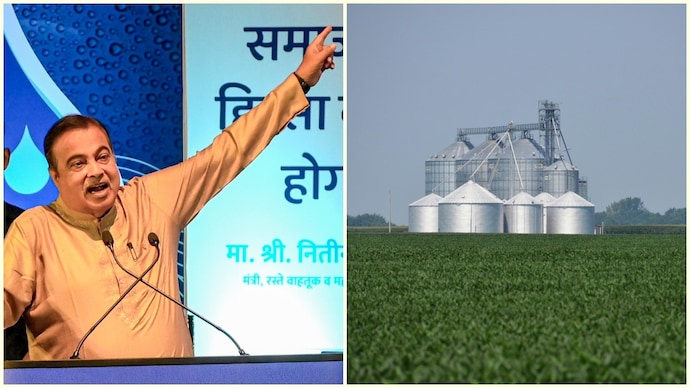
The new statement revives interest in alcohol-based fuels. (Photo: PTI/Unsplash)

New Delhi,UPDATED: May 27, 2026 16:40 IST
Union Minister Nitin Gadkari recently announced an ethanol-based stove technology that he says could provide cooking flames at a lower cost than commercial LPG cylinders.
Gadkari during an event said, "By mixing 7 per cent ethanol in water, stove-like flames are generated, and it is cheaper than cooking gas. It is indigenous to our country."
The new statement revives interest in alcohol-based fuels as an alternative for household kitchens. But can ethanol really replace LPG, and does the science support the claim?
The short answer is yes, but only under specific chemical and engineering conditions.
CAN ETHANOL MIXED WITH WATER BURN?
Ethanol is a flammable alcohol already widely used as a biofuel in automobiles. Unlike LPG, which is a hydrocarbon gas stored under pressure, ethanol is a liquid fuel that burns when enough alcohol vapour mixes with oxygen in air and reaches ignition temperature.
Scientific research shows that the concentration of ethanol is critical. Studies published in the Journal of Loss Prevention in the Process Industries found that low ethanol-water mixtures struggle to sustain combustion because water suppresses evaporation of flammable vapours.
Solutions below roughly 7 per cent ethanol generally fail to maintain a stable flame under normal conditions.
That explains why beverages such as beer, despite containing alcohol, do not catch fire easily.
However, commercial ethanol stoves do not use such dilute mixtures. They typically operate using highly concentrated ethanol, often above 70-90%, allowing sufficient vapour generation for a clean and continuous flame. At these concentrations, ethanol burns with a blue flame similar to LPG.
Scientists say this is entirely consistent with combustion chemistry. Pure ethanol has a flash point of around 13 degrees Celsius, meaning it can release enough vapour to ignite even at relatively low temperatures. But as water content increases, ignition becomes progressively harder because water absorbs heat and reduces ethanol vapour pressure.
Research on ethanol-air mixtures also shows that combustion only occurs when ethanol vapour remains within a narrow flammability range in air. Too little vapour and ignition fails; too much dilution from water prevents sustained burning.
That means Gadkari’s claim is scientifically plausible if the stove uses sufficiently concentrated ethanol and an efficient burner system designed to vaporise fuel properly. Modern ethanol stoves often use pressurised burners, absorbent fuel cartridges or pre-heating systems to maintain stable combustion and improve thermal efficiency.
COULD IT MAKE COOKING FUEL CHEAPER?
The economics depend on fuel pricing, ethanol production scale and distribution infrastructure.
India’s growing ethanol industry, driven largely by sugarcane and agricultural feedstocks, has expanded rapidly due to ethanol blending programmes in petrol. Supporters argue that using domestically produced ethanol for cooking could reduce dependence on imported LPG.
Yet safety and storage standards will remain crucial. Ethanol flames can sometimes be nearly invisible in daylight, and improper fuel concentrations could lead to poor combustion performance.
For now, the science suggests ethanol cooking is possible, but the chemistry has to be right.
- Ends