
Why has China sent three astronauts to live in space for a year?
The Shenzhou-23 spacecraft lifted off from the Jiuquan launch centre in northwest China, sending a crew of astronauts to China's Tiangong space station.
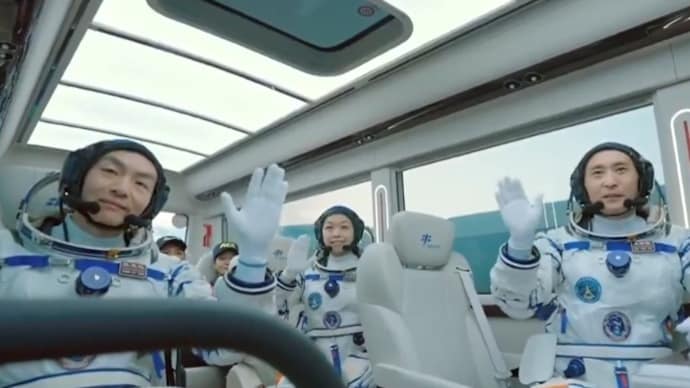

China has sent three astronauts into orbit on a mission designed to push the limits of human spaceflight.
By studying how people cope with very long stays in space and testing key technologies, the country is taking practical steps toward its dream of landing astronauts on the Moon by the end of this decade.
The Shenzhou-23 spacecraft lifted off smoothly on a Long March rocket from the Jiuquan launch centre in northwest China. It carried commander Zhu Yangzhu, pilot Zhang Zhiyuan, and payload specialist Li Jiaying, the first astronaut from Hong Kong. The crew of three are heading to China’s Tiangong space station.
One of the crew members will stay in orbit for up to a full year, marking China’s longest human mission to date.
WHAT WILL CHINA'S ASTRONAUTS DO IN SPACE?
The core goal of Shenzhou-23 is simple and straightforward.
The astronauts are to learn how the human body and mind handle extended time in space. Living without gravity for many months affects bones, muscles, heart health, and even mental well-being.
Scientists will closely monitor these changes to understand the risks and find ways to keep future astronauts healthy.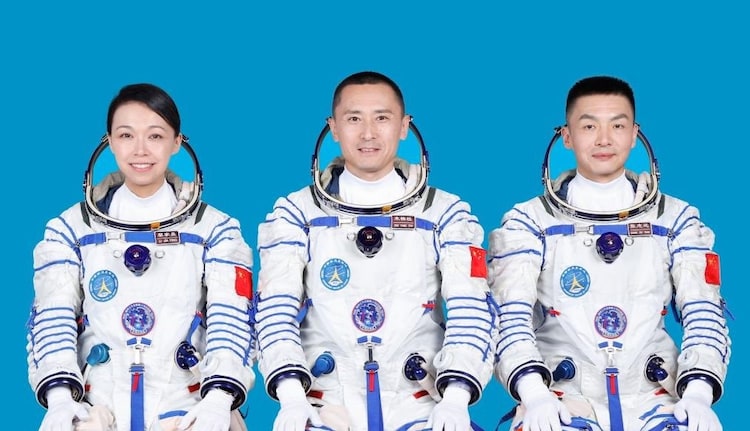
The crew will also test new technologies, especially automated docking systems that allow spacecraft to connect with the station without constant human control. These skills will be essential for more complex missions in the future.
In addition, the team is carrying out scientific experiments, including pioneering work on early-stage human embryo development in microgravity.
Tiangong, China’s own space station, has been continuously occupied since 2022. It serves as a compact orbiting laboratory where crews live and work for months at a time. This mission builds directly on that experience.
WILL CHINA LAND ON THE MOON?
China’s space program has grown rapidly in recent years.
Since sending its first astronaut into orbit in 2003, the country has developed reliable rockets, its own space station, and the ability to carry out regular crewed missions.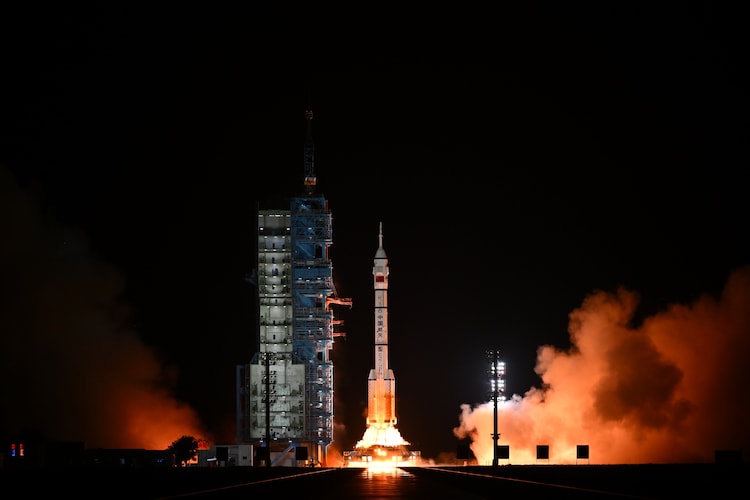
Now it is focusing on longer-duration flights and deeper space exploration.
A year-long stay aboard Tiangong will provide valuable data on radiation exposure, physical fitness, and daily life in space. These lessons are crucial because a round-trip journey to the Moon will take weeks, and future missions could last even longer.
Success here will help China plan safer trips beyond Earth’s orbit. For many people watching from Hong Kong and across China, Li Jiaying’s journey adds special meaning. Her presence highlights how space exploration now includes a broader range of talent from different parts of the country.
While the astronauts carry out their work high above Earth, their mission answers bigger questions: how long can humans stay healthy in space and what we still need to learn before stepping onto the Moon.
With Shenzhou-23, China is methodically gathering those answers, slowly but steadily.