
How climate change is coming for Indian elections, and governments should worry
In 2024 alone, an election year when roughly half the world's eligible voters had the chance to vote, at least 23 elections in 18 countries were disrupted by extreme weather.
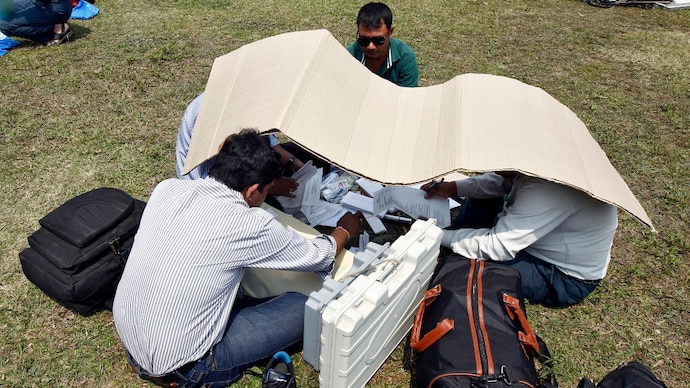

The world's largest democracy ran its 2024 general election across seven gruelling phases that lasted for nearly six weeks. But as millions of Indians queued under a scorching summer sky, the election itself was under threat.
The threat was not from political opponents, but from the climate.
A new report by International IDEA, an intergovernmental organisation, offers the most comprehensive evidence yet of how climate change is eroding the foundations of democratic participation across the globe, and India's exposure is one of the most severe ones.
LARGEST DEMOCRACY UNDER THREAT
India ranks third on the World Risk Index among the 13 countries studied in the report, behind only Indonesia (ranked 2nd) and the Philippines (ranked 1st).
The stakes became noticeably real during the final phases of the 2024 Lok Sabha election, when temperatures soared above 45C across large parts of the country.
On a single day in Uttar Pradesh, several polling officials died from heat-related illnesses. Voters, too, fell ill or died of heatstroke, despite precautionary measures put in place by the Election Commission of India (ECI) and the National Disaster Management Authority (NDMA).
What's more worrying is that this was not an isolated episode.
The study documented several other instances of how the electoral process was undermined by climate change.
In 2019, a tropical storm forced a 21-day postponement of polling in Odisha.
The Bihar state assembly election was battered by floods in 2020, forcing election managers to stretch their already strained capacities to the limit. Then, in 2024, floods hit the state's legislative assembly election.
And last year, in 2025, Punjab's Zila Parishad and Panchayat Samiti elections were delayed by 197 days, nearly half a year, due to flooding.
It's no longer deniable that India's vast, climate-vulnerable geography means that nearly every major election now carries the risk of weather-related disruption somewhere across its territory.
A GLOBAL CRISIS
India's struggles are part of a much wider democratic emergency.
The report, drawing on its Election Emergency and Crisis Monitor, found that since 2006, at least 94 elections and referendums across 52 countries have been affected by natural hazards.
In 2024 alone, an election year when roughly half the world's eligible voters had the chance to vote, at least 23 elections in 18 countries were disrupted by extreme weather.
The numbers cut across regions and income levels.
In Senegal, torrential October rains caused 56,000 people to flee their homes ahead of parliamentary elections. Polling stations in Czechia were moved into tents and shipping containers during Storm Boris.
In Brazil's Rio Grande do Sul, floods killed at least 170 people and displaced 3,86,000, damaged voting machines and threatened municipal elections.
In the United States, Hurricanes Helene and Milton struck just weeks before the presidential election, destroying critical electoral infrastructure across multiple swing states.
The World Meteorological Organisation (WMO) confirmed 2024 as the hottest year on record, with average temperatures exceeding 1.5C above pre-industrial levels for the first time, a threshold scientists had long warned about.
The frequency of weather-related disasters has quintupled over the past 50 years, and the trend shows no sign of reversing.
And the fact that it aligned with one of the most democratically active years leaves one wondering about how many more of such years may follow.
WHAT CAN BE DONE?
The authors of the report did offer some possible solutions.
Among its 11 recommendations, they urged governments to schedule elections outside peak disaster seasons, build legal flexibility for postponements, and ensure that election management bodies coordinate closely with meteorological and disaster relief agencies.
For India, where multiphase elections are a constitutional necessity, this is particularly complex, but it's not impossible.
The Election Commission's existing coordination with the National Disaster Management Authority during the 2024 heat emergency illustrated how democratic frameworks can adapt.
But the root cause remains. Emissions continue to climb and, after a certain point, no adaptation plan or contingencies may be able to stop the erosion of the electoral process around the globe.
Organising free and fair elections will only grow harder.
With each passing year of unchecked emissions and extreme weather events growing in frequency, climate change is not just threatening the environment, but the world order itself.