
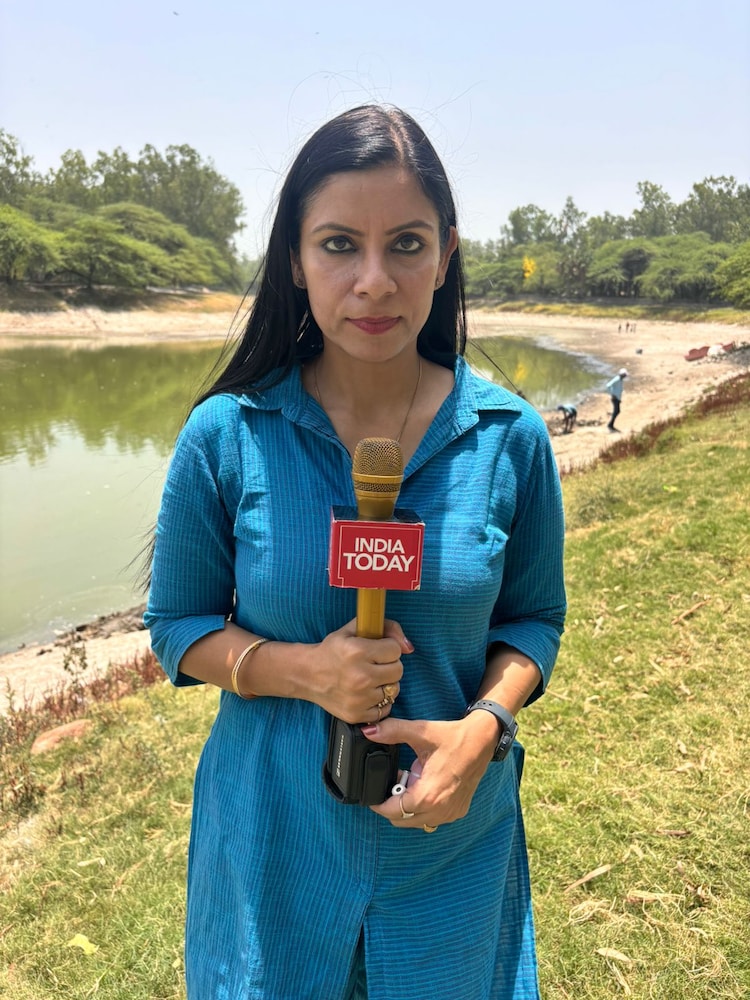
How intense heatwave is turning Delhi's Sanjay Lake into a graveyard for fish
A prolonged heatwave and disrupted water supply have caused mass fish deaths at Sanjay Lake in Trilokpuri, East Delhi. Falling oxygen levels and leaking pipelines from the Kondli treatment plant have triggered a major ecological crisis.

A punishing heatwave and broken water pipeline have turned Delhi’s Sanjay Lake into a graveyard for fish. (Photo: Vikram Gautam/India Today)

Delhi is reeling under a relentless heatwave, with temperatures soaring for consecutive days. This extreme weather has triggered a major ecological crisis at Sanjay Lake in Trilokpuri, East Delhi.
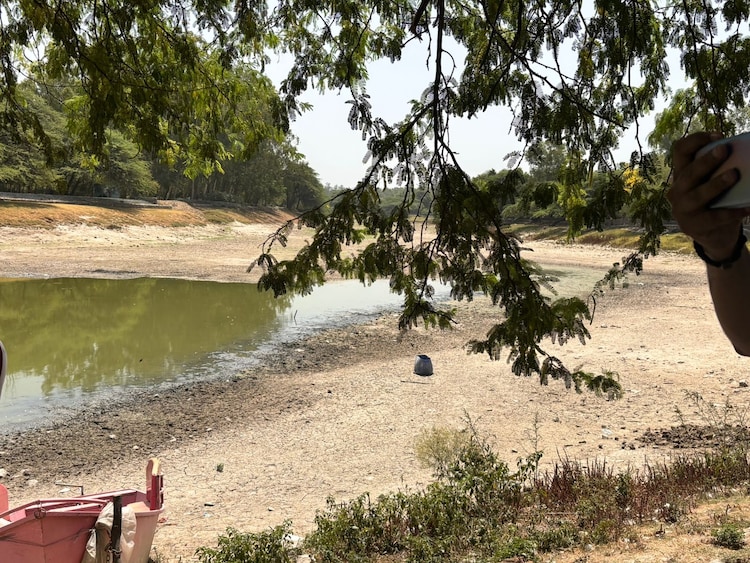
The 52-acre water body, nestled within a larger 187-acre park managed by the Delhi Development Authority (DDA), has transformed into a graveyard for hundreds of fish.
Large-scale fish deaths have alarmed local residents and visitors who regularly frequent the park for respite from the summer heat.
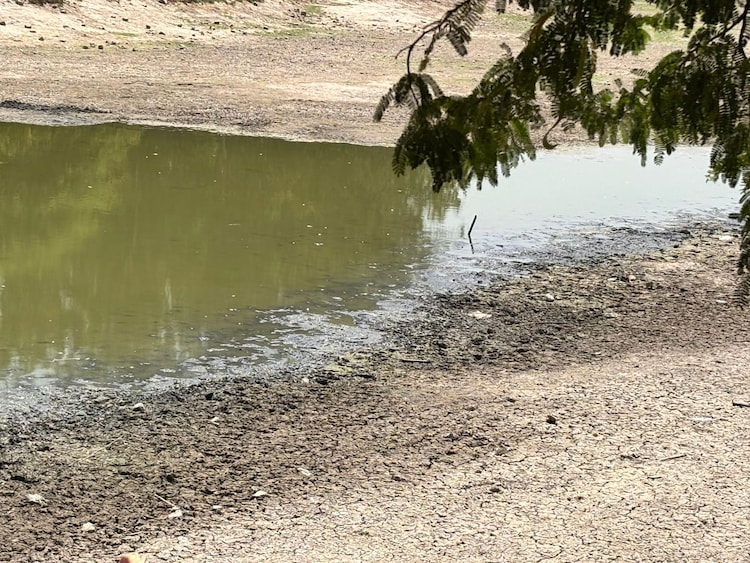
The scene at Sanjay Lake is grim. Stagnant green water, cracked patches of the exposed lakebed, and hundreds of dead fish line the shallow edges.
The mass die-off includes various species, such as small mosquito fish, tilapia, and larger freshwater carp-like fish.
The crisis is a direct consequence of a severe drop in water levels combined with a sharp decline in dissolved oxygen, both accelerated by the punishing summer heat.
TECHNICAL SNAGS HALTING WATER SUPPLY
The environmental crisis at Sanjay Lake has been brewing for months due to disrupted water inflows. The lake relies heavily on treated water supplied via a pipeline from the nearby Kondli Sewage Treatment Plant (STP).
However, this infrastructure has developed major leakages recently and is undergoing extensive repairs.
The disruption in the treated water supply means the lake has been unable to replenish what it loses to high summer evaporation rates.
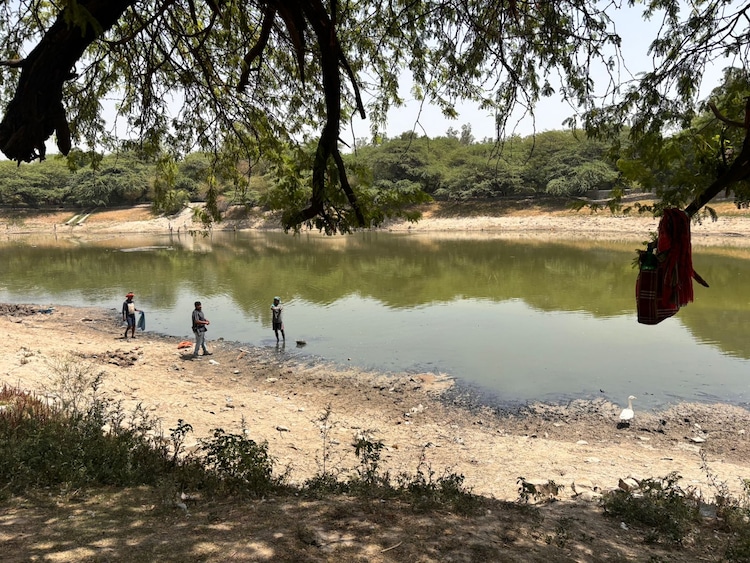
Local visitors note that infrastructure work and slope modification along the lake banks started a few months ago. Since then, the authorities have not restored the original water levels.
Without a steady inflow of fresh, treated water, the lake shrank significantly. The reduced volume has led to zero water circulation, creating a highly stagnant environment where toxins can easily accumulate.
RAPIDLY DECLINING DISSOLVED OXYGEN LEVELS
The combination of shallow, stagnant water and soaring atmospheric temperatures creates a deadly trap for aquatic life. As water temperatures rise, the capacity of the fluid to hold dissolved oxygen decreases rapidly.
Fish require a specific threshold of dissolved oxygen to survive. When the water temperature spikes, the metabolic rate of the fish increases, making them require even more oxygen just as the supply is depleting.
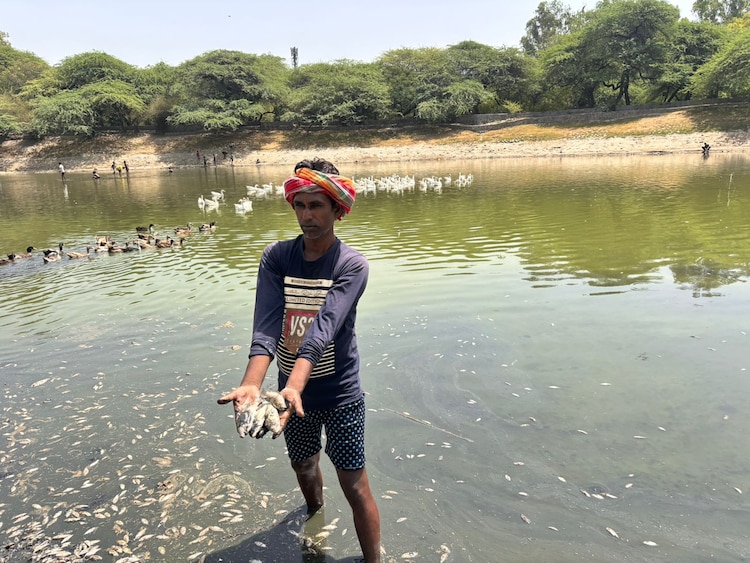
The lack of depth in the receded stretches of Sanjay Lake means the water heats up much faster under the Sun.
Cleaners working at the site report that they have already removed around 2 to 3 quintals of dead fish over a 72-hour period. They express deep concern that the remaining live fish trapped in the shallow pools will also perish if water levels are not immediately raised.
SEVERE BLOW TO THE LOCAL WETLAND ECOSYSTEM
Sanjay Lake is not just an isolated urban pond; it is a vital part of a protected forest zone overseen by the Delhi Forest Department. The mass fish deaths are already causing a ripple effect across the local food chain.
Regular visitors point out that the lake has long been a thriving habitat for various bird species, including domestic ducks and migratory cranes. These birds rely directly on the fish population for sustenance.
With the fish dying out and accumulating along the banks, the birds are losing their primary food source and face the threat of consuming contaminated organic matter.
Furthermore, the decomposition of hundreds of fish has created a powerful, foul smell that blankets the entire surrounding area, ruining the environment for the elderly residents and families who visit the park to escape their everyday struggles.
VULNERABILITY OF DELHI URBAN WATER BODIES
The tragic situation at Sanjay Lake highlights the acute vulnerability of urban wetlands and lakes in the national capital to climate-change-induced weather extremes.
As summers become longer and more intense, the reliance of these artificial and natural water bodies on active human management increases.
Environmentalists warn that inadequate water management, combined with falling groundwater tables and delayed infrastructure repairs, will likely trigger similar ecological disasters across other Delhi lakes during peak summer months.
The incident highlights the urgent need for agencies like the DDA and the Delhi Forest Department to implement climate-resilient strategies, ensure backup water supplies during heatwaves, and accelerate repair work on essential pipelines feeding urban ecosystems.
- Ends