
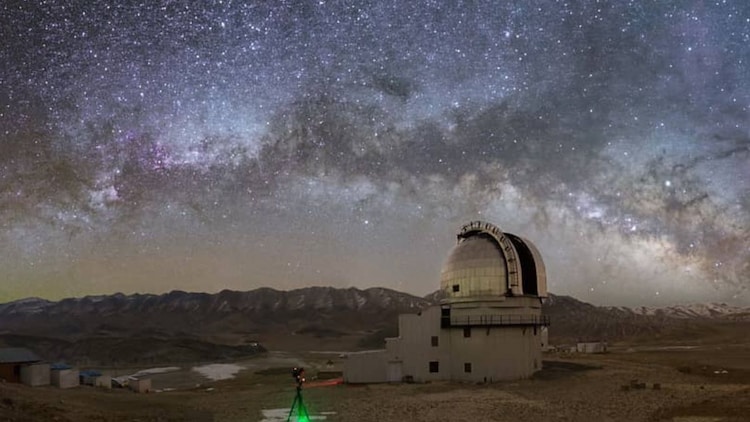
India is losing its celestial heritage. The stars in our skies are fading fast
India's dark sky reserves at Hanle and Pench are working. The science is intact, the wildlife is recovering, and the Milky Way is still visible. But with no national policy on light pollution, everything beyond the reserve boundary is slowly disappearing into the glow.
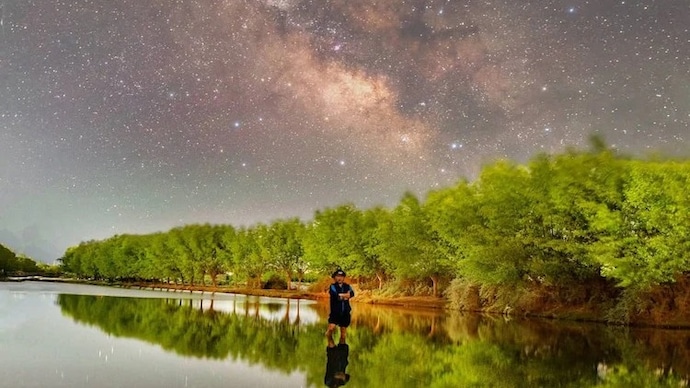
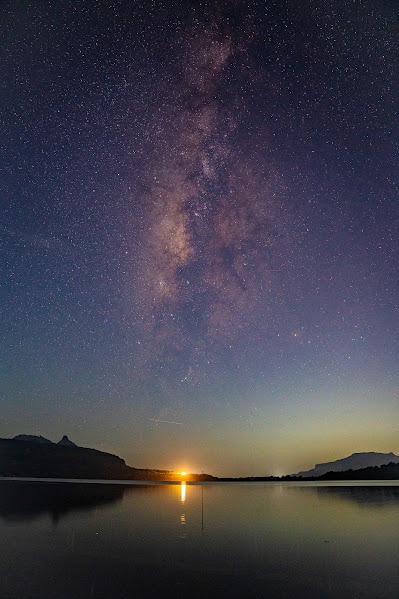
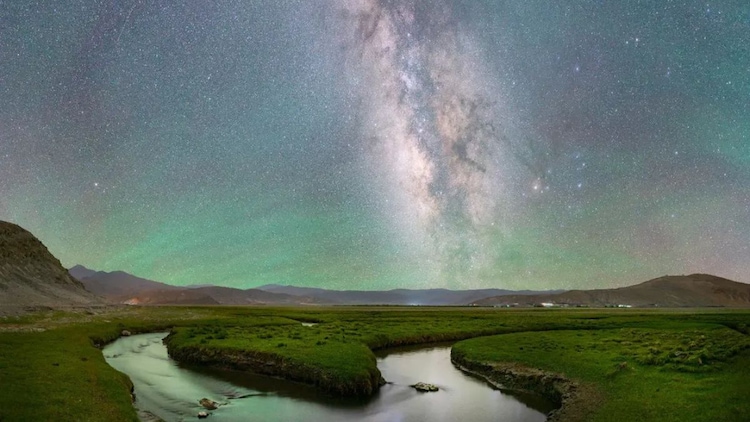
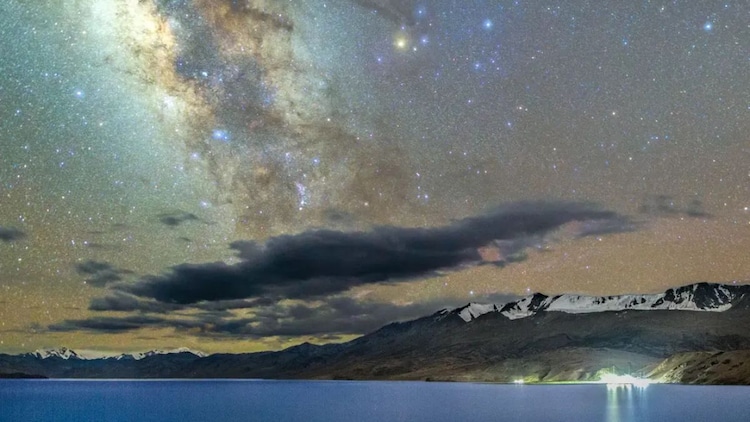
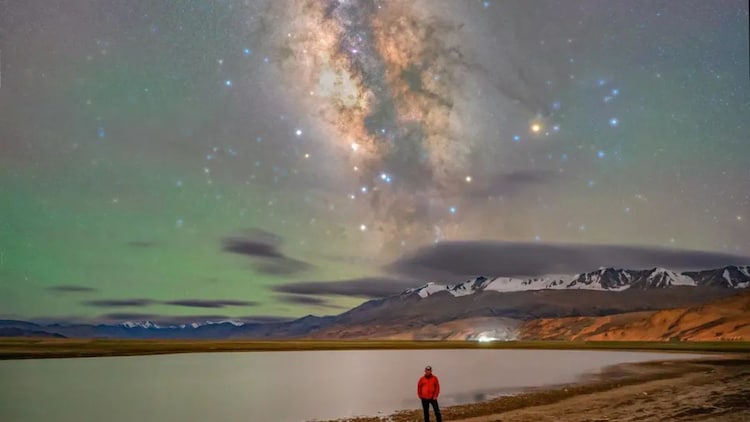
A dazzling display of stars, and their breathtaking reflection on a lake in Ladakh (Photo: Dorje Angchuk)

New Delhi,UPDATED: Mar 30, 2026 14:18 IST
Growing up in Calcutta, I knew the stars only when the power went out.
The city would go dark without warning, and for a few minutes, before the generators started and the candles came out, something else would appear overhead.
Stars. Actual stars. More than I had ever seen, more than I thought the sky could hold. It looked like something out of a dream, or a painting, paradise, or another world entirely.
The first time I saw it clearly, my instinct was that it looked exactly like the planetarium on Calcutta's Jawaharlal Nehru Road, the one with the domed ceiling and the projector that threw the whole universe onto it.
I did not understand, then, that the planetarium had been built to look like the sky. I thought the sky looked like a planetarium. The real thing had become a copy of its own imitation.
The power would come back. The stars would go. And for years, I assumed that a sky full of stars was the exception, a lucky accident that required a blackout to produce.
It was not an exception. It was what the sky had always looked like, before we lit it away.
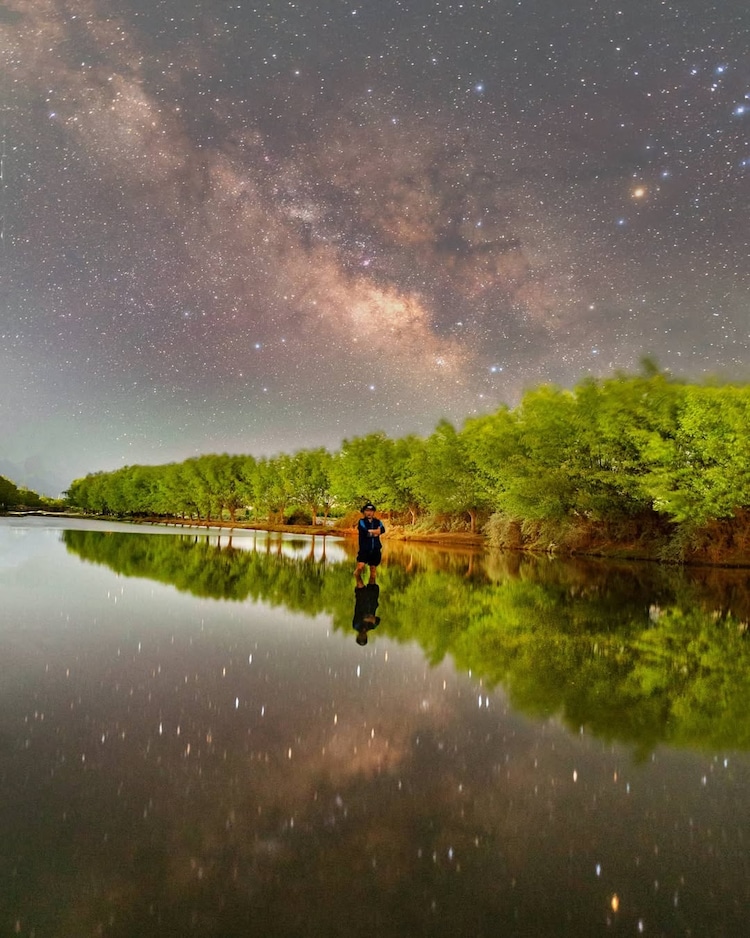
Aniket Sule, Associate Professor at TIFR-HBCSE in Mumbai, shares an anecdote about a similar experience. The Homi Bhabha Centre for Science Education (HBCSE) is a National Centre of the Tata Institute of Fundamental Research (TIFR) in Mumbai.
In the early 1990s, as a child in Vangani, a village on the outskirts of then-Bombay, Dr Sule had stood beneath what he felt was the real sky.
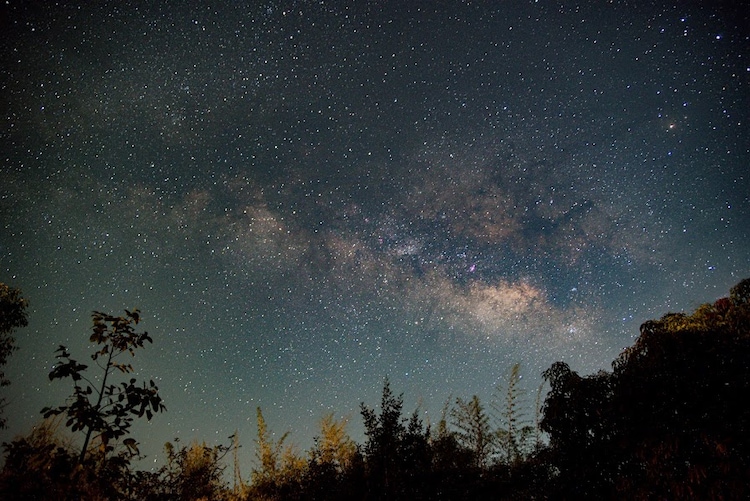
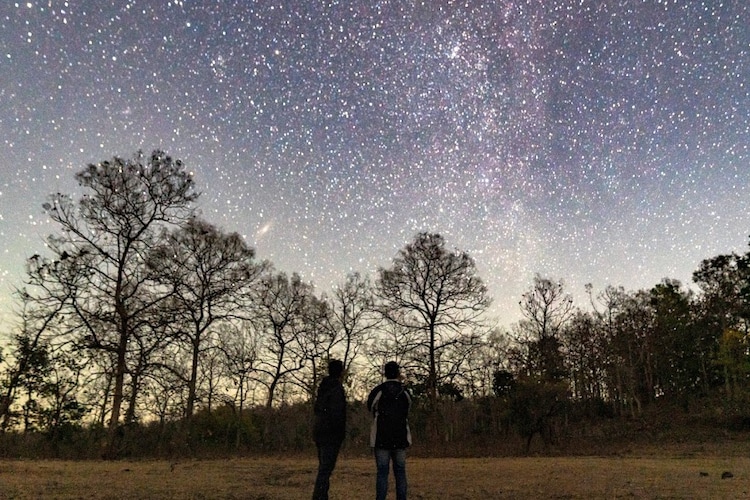
The Milky Way crossed the sky from one horizon to the other, a river of white light so dense and so present that it cast faint shadows on the ground. He understood immediately, in the way that a child knows something without being taught it, why human beings had named the galaxy what they did.
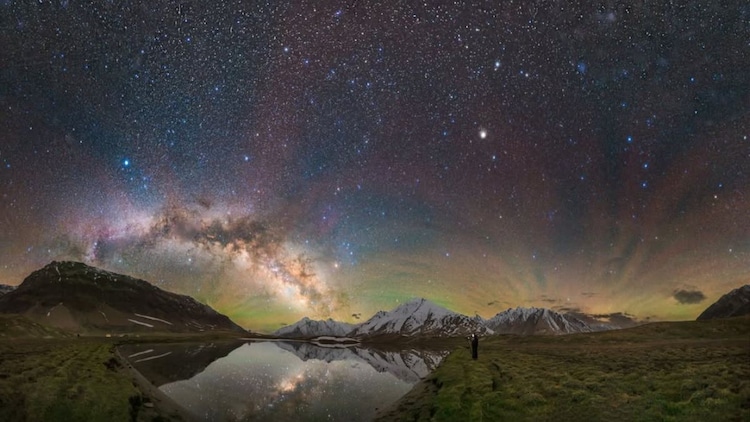
He went back to Vangani recently. The sky above it now looks exactly like Mumbai.
“It is deeply saddening,” Dr Sule tells indiatoday.tech. “That shows what our kids have lost.”
That is what India has lost. Not the stars. The stars are still there. What has been lost is the ability to look up and recognise them.
SOMEWHERE BETWEEN HANLE AND DELHI, THE STARS RAN OUT
To understand what India has built and what it is still missing, there is one number worth knowing.
Astronomers measure how dark or bright a night sky is, by using the Bortle scale as a reference. It is named after American astronomer John Bortle who devised it in 2001. Think of it as a report card for the night sky, running from 1 to 9.
A score of 1 implies the darkest sky achievable on Earth, where the Milky Way is bright enough to cast shadows on the ground, and galaxies millions of light years away are visible without any equipment at all.
A score of 9 means what hangs above most Indian cities at night: a flat, orange, featureless haze in which stars are reduced to imagination.
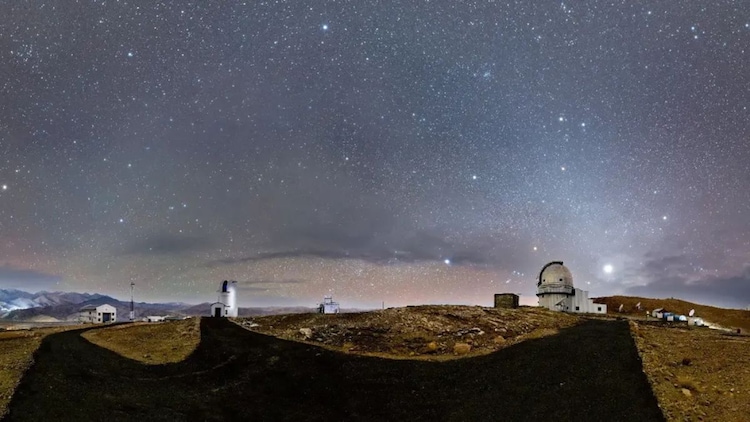
Hanle, in the cold flat plains of eastern Ladakh at 4,500 metres above sea level, scores 1. Delhi scores 9. Mumbai, where India trains its future astronomers, scores 8. Between those numbers lies everything India stands to lose.
In December 2022, the Government of Ladakh drew a formal boundary around the darkness at Hanle, designating a 22-kilometre radius around the Indian Astronomical Observatory as India’s first Dark Sky Reserve.
It is operated through an agreement between the Union Territory of Ladakh, the Ladakh Autonomous Hill Development Council, and the Indian Institute of Astrophysics.
On January 11, 2024, the Pench Tiger Reserve in Maharashtra was designated as India’s first International Dark Sky Park, certified by the International Dark-Sky Association, becoming the fifth such park in Asia.
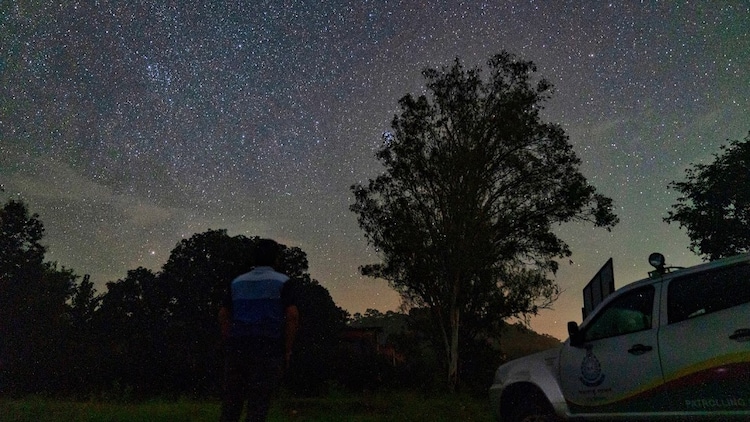
A dark sky site has recently been inaugurated in Tamil Nadu.
On paper, this is progress. On the ground, it is considerably more complicated, and the complication begins the moment you step outside the designated boundary.
IN DELHI, EVEN THE POWER CUTS CANNOT BRING THE STARS BACK
Sneh Kesari knows the Delhi sky the way a doctor knows a patient in long, slow decline, with a precise reckoning of everything that has already been lost.
He is the Director of AstroPhile Education Services, a Delhi-based organisation promoting astronomy and space science.
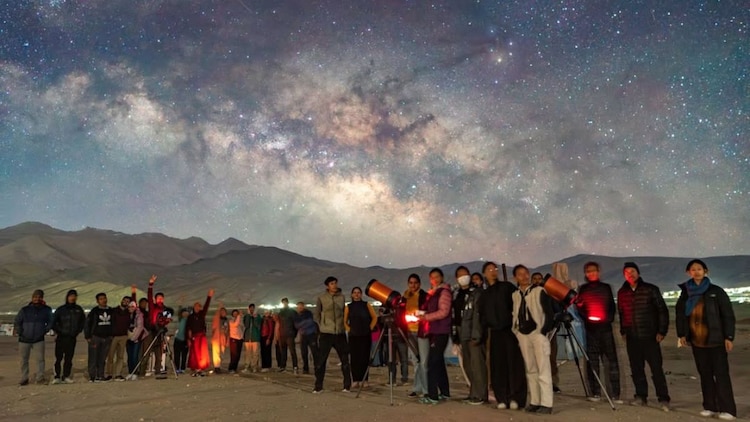
A committed amateur astronomer, Kesari is part of a small and determined community that organises 10 to 12 stargazing excursions across North India every year, loading telescopes into cars and driving until the orange glow of the capital finally fades behind them.
“From Delhi, a magnitude 0 or +1 star is visible,” Kesari tells indiatoday.tech. “Ideally, from cities across Europe and the US, a +4 star is easily visible.”
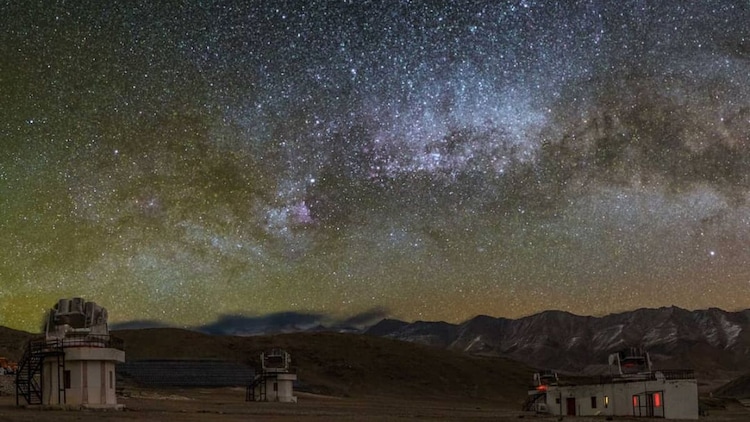
In places which are shrouded in light pollution, only the very brightest stars are visible to the naked eye on a clear night, objects so luminous they can cut through almost any haze. Everything else is gone.
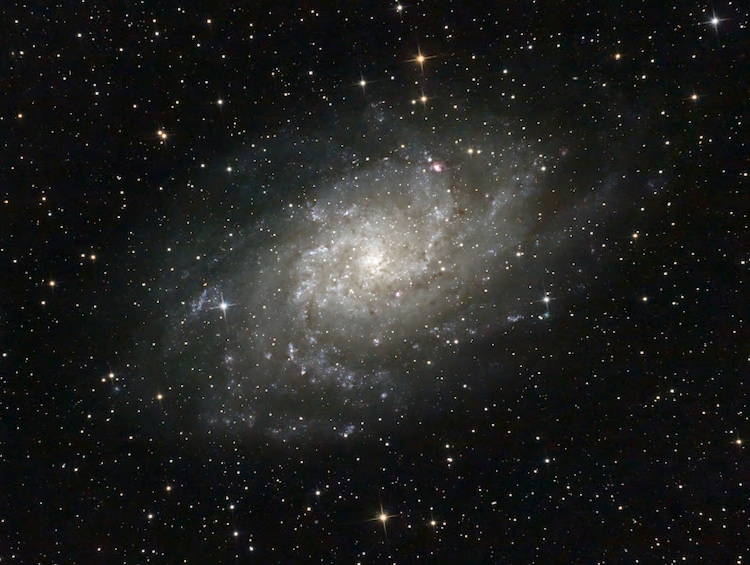
The Milky Way, the Andromeda Galaxy and the Orion Nebula, all plainly visible to the naked eye from a genuinely dark location, are completely invisible from the national capital, Kesari says.
For a decent night sky, you need to travel 100 to 150 kilometres from Delhi. To see a great sky, one needs to travel 250 to 300 kilometres. For a sky like Hanle, you might as well be on another planet.
“Earlier, power cuts would reveal several stars which would have been hidden otherwise in the light pollution,” Kesari says. “Now they have all vanished.”
The loss is not just about stargazing. “Technology, which created the problem of light pollution in cities, is not offering solutions which are accessible to anyone other than the rich and passionate,” the amateur astronomer says.
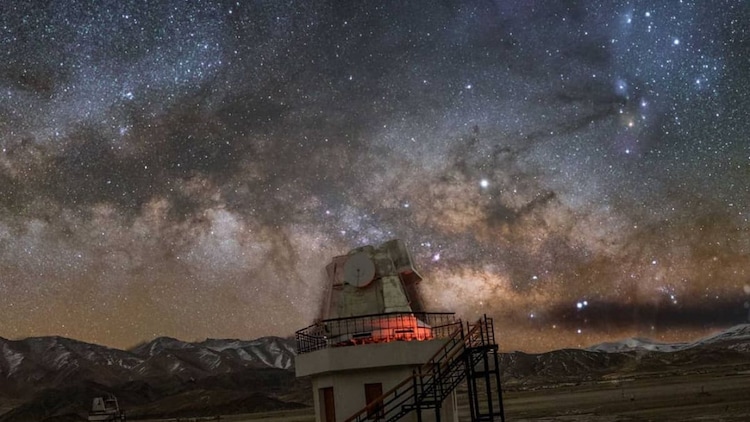
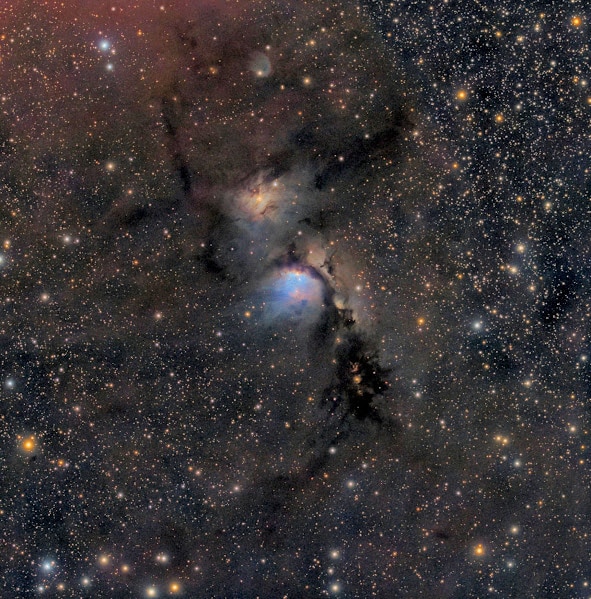
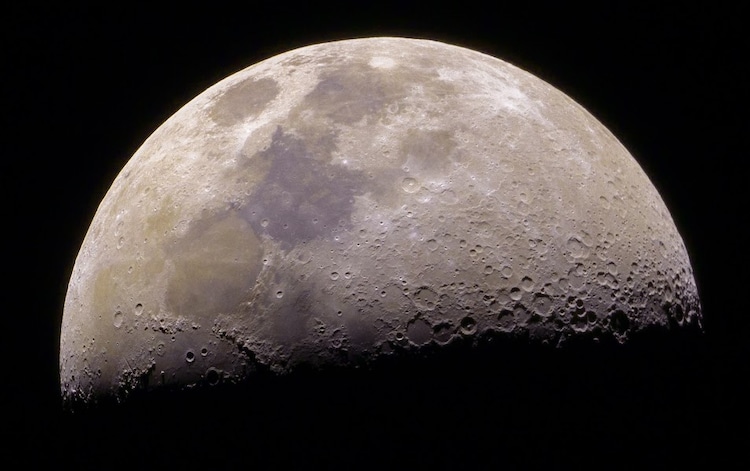
Urban stargazers in India have no hope of seeing the Milky Way. They are confined to the Moon and the planets, objects bright enough to survive the orange wash, or the orange-coloured haze in the night sky caused by artificial light pollution in the cities. For everything beyond, they must drive.
The global picture gives this local loss its full weight. A landmark study published in the journal Science, based on more than 50,000 observations by citizen scientists across the world, found that the average night sky grew brighter by 9.6 per cent every year between 2011 and 2022.

The brightness of the night sky is doubling every eight years. A child born today in a place where 250 stars are visible would see only 100 stars in that same sky on their 18th birthday. India, with its rapidly expanding cities, new highway lighting, and accelerating rural electrification, is not standing apart from this trend. It is driving it.
Dr Sule points to a detail most people overlook entirely. The damage done by Indian street lights, he says, is not primarily about whether the bulb is white or yellow. It is about where the light goes.
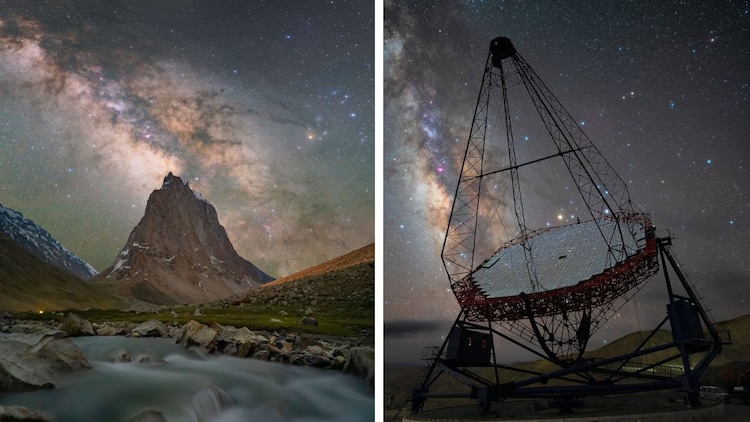
“Most of the light is shot straight up because of the angle of placement, due to which the skies are illuminated for ground-based observers,” he says.
Most Indian fixtures are installed at angles that send a substantial portion of their output light directly upward into the atmosphere, where it scatters and returns as the familiar orange wash above every Indian city at night.
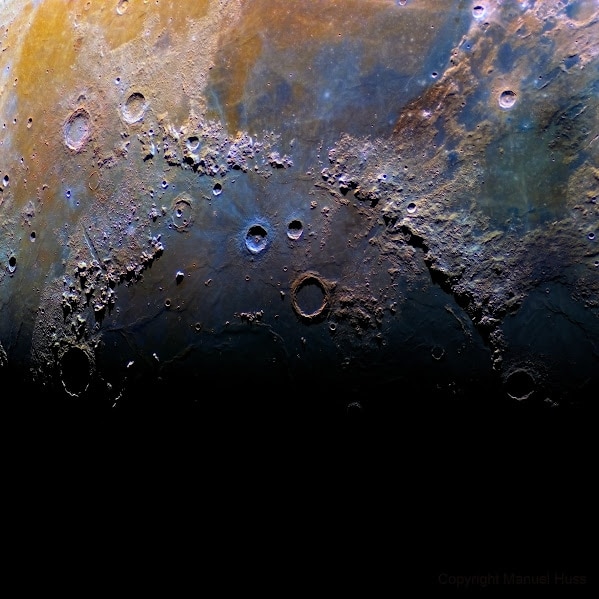
Correct the angle, fit a downward shade, and the same bulb lights the road while leaving the sky alone. The fix is not complicated. But no Indian regulation mandates it.
The consequences of this extend into places one might not expect. Ironically, TIFR-HBCSE in Mankhurd, Mumbai, which is the nodal centre for India’s Astronomy Olympiad programme, could not escape the clutches of light pollution.
Every year, the country’s brightest young astronomy students gather there for their national training camp.
Dr Sule, who runs the programme at TIFR-HBCSE, faces a question that has troubled him for over a decade.
“How do we train students to use telescopes and identify constellations if we don't see enough stars from our location?” Sule asks a question that has troubled him for over a decade.
The city that houses India’s most prestigious astronomy training programme has made that training nearly impossible.
THE TOURISTS BEHAVED. THE STREET LIGHTS DID NOT
At Pench Tiger Reserve, an expert who worked closely on the dark sky reserve project is unequivocal. Light pollution at Pench has risen by 10 to 20 per cent over three years. Not one percentage point of that rise came from tourists.
The tourists, it turns out, are the well-behaved ones. Stargazing safaris at Pench are capped at a strict maximum of 30 visitors per night, spread across five vehicles, all following tight guidelines on light use.
The forest department has given resorts near the reserve precise specifications for outdoor lighting, fixtures that direct light downward onto the ground rather than outward into the sky.
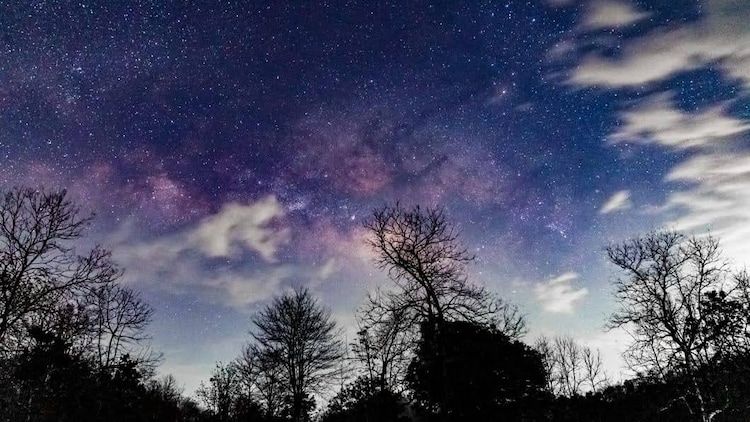
“The light has not increased due to astrotourism,” the expert tells indiatoday.tech on condition of anonymity. “It has increased due to the local villages and other things.”
After a year of sustained community outreach, some village families near the reserve have begun turning their lights off at night. Wildlife has responded.
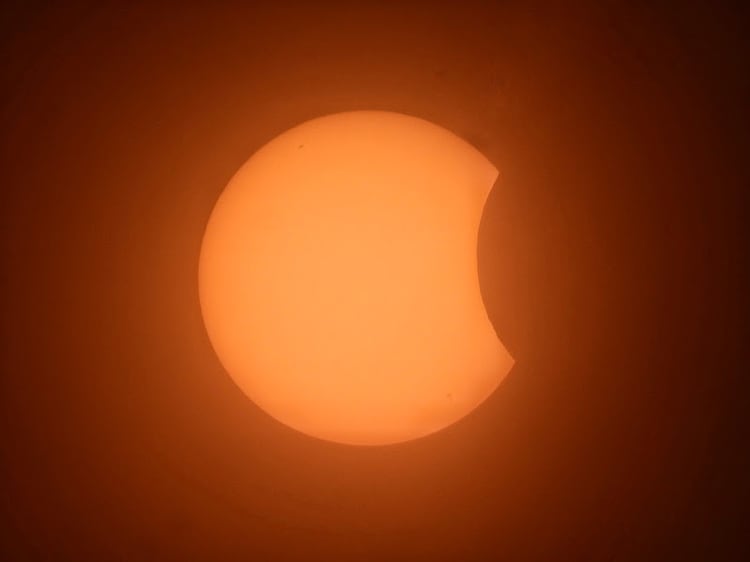
Nocturnal animals, migratory birds, and creatures whose entire biology is calibrated to genuine darkness are recovering. The darkness inside the fence is holding.
The light creeping into Pench is coming from outside it. From the villages and small towns that sit just beyond the forest boundary, whose street lights answer to the gram panchayat and not the forest department.
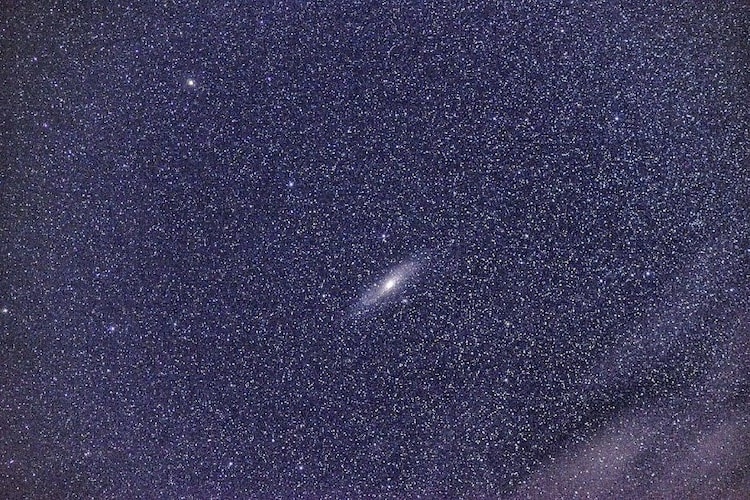
Two government bodies, one shared sky, and no formal mechanism for either to tell the other what to do about the glow rising from just beyond the fence.
“Since most tourists coming to dark sky parks come to enjoy the night sky, I have faith that they won’t do anything to jeopardise the very objective that brought them there,” Dr Sule says.
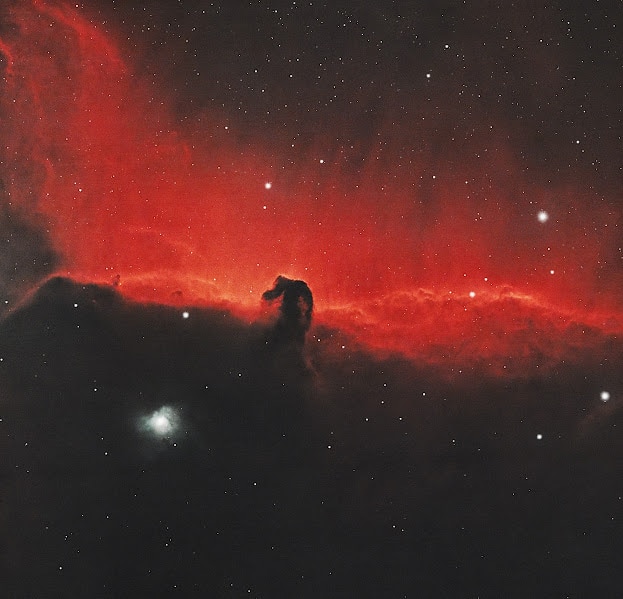
People who travel hours to see a dark sky, Dr Sule says, are not the ones who will destroy it.
They have a direct stake in protecting the very thing that brought them there. The rules inside dark sky parks, if strictly enforced, are enough. The problem lies entirely outside the boundary where no rules apply.
Dorje Angchuk, Engineer-in-Charge at the Indian Astronomical Observatory in Hanle, describes the same tension from 1,500 kilometres away. The sky quality measurements at Hanle are stable.
The skies are holding. In 2024, the reserve recorded nearly 10,000 visitors, and 25 local youths, including 18 women, have been trained as Astronomy Ambassadors, conducting night sky tours and telescope demonstrations for tourists while earning a livelihood from the very darkness they now have reason to protect.
But Angchuk is candid about what threatens the reserve. It is not organised tourism and it is not the community. It is the handful of reckless night travellers who drive through with their high beams blazing for hours.
“There are a handful of senseless wanderers who tend to keep driving and riding all through the night,” Angchuk tells indiatoday.tech. “The transparency of Hanle is very good but elsewhere, the high-beam lights are definitely travelling quite far and disturbing the whole scientific and astrotourism activities.”
At Hanle, where the atmosphere is so clear and dry that light travels farther than almost anywhere else in India, even a single set of high beams is enough to compromise a scientific observation already underway. No rule requires them to switch off.
The expert at Pench is equally clear about something else. Simply creating a dark sky site which is not actively protecting against light pollution or reducing it is not ideal, he says.
An area designated as a stargazing point, an awareness exercise rather than a conservation one, may contribute to light pollution. Designating a place and protecting it are not the same thing. India has not yet fully understood the difference.
TWO DEPARTMENTS. ONE SKY. ZERO ACCOUNTABILITY
In a country of enormous and competing environmental priorities, light has never made it onto the list of things that require official monitoring or regulation.
There is no national policy on light pollution in India. There is no law governing the angle at which a street light must point. There is no authority whose mandate includes ensuring that a gram panchayat near a protected sky installs shielded fixtures rather than open ones.
Debarati Chatterjee, Professor at the Inter-University Centre for Astronomy and Astrophysics (IUCAA) in Pune, frames the human dimension of this gap with care.
Dr Chatterjee, who leads LIGO – India Outreach, the educational wing of the upcoming gravitational-wave observatory in Hingoli, Maharashtra, tells indiatoday.tech that astrotourism can only succeed if done responsibly. “It can be sustainable when the infrastructure is limited by the capacity of the local communities with minimal environmental impact.”
Dr Chatterjee, the first woman to be appointed as a full professor at IUCAA in Pune, also says that the authorities, local communities as well as tourists all need to contribute to preserve the dark skies.
“This requires development of proper awareness by educating the travellers, use of infrastructure and equipment that do not disrupt the environment, and training and collaborating with local residents to develop sustainable ecotourism,” she explained.
Astrotourism can only succeed when travellers arrive educated rather than oblivious, and when authorities, communities, and tourists all understand themselves to be jointly responsible for protecting the resource they are there to experience.
It is a reasonable framework. It is also one with no legal structure in India requiring anyone to honour it.
Protecting a dark sky reserve also means something India has so far been unwilling to fully confront: limiting development and artificial lighting in and around its boundary. That directly affects the local populations living nearby.
Dr Sule is direct about what happens if this is handled badly. If the local population loses out economically, no dark sky reserve can sustain itself. These sites, he says, are India’s last line of defence for pristine skies. Lose the communities and you lose the reserves. Lose the reserves and there is no coming back.
Dr Chatterjee says this is a problem not just limited for astronomers to solve. Dark sky preservation is essential for optical astronomy because there are fewer and fewer places on Earth where the sky remains suitable for ground-based scientific observation.
But it is equally vital for the survival of nocturnal wildlife. The insects, birds, marine creatures, and forest animals whose entire biology evolved in genuine darkness must not be inconvenienced by permanent artificial light.
They are threatened by it at a level that no awareness campaign can substitute for. And the boom in astrotourism, Dr Chatterjee adds, is proof of something older and more stubborn than any policy: a basic human curiosity about the night sky that no amount of urban glow can entirely extinguish.
THE FENCE ENDS HERE. THE LIGHT DOES NOT
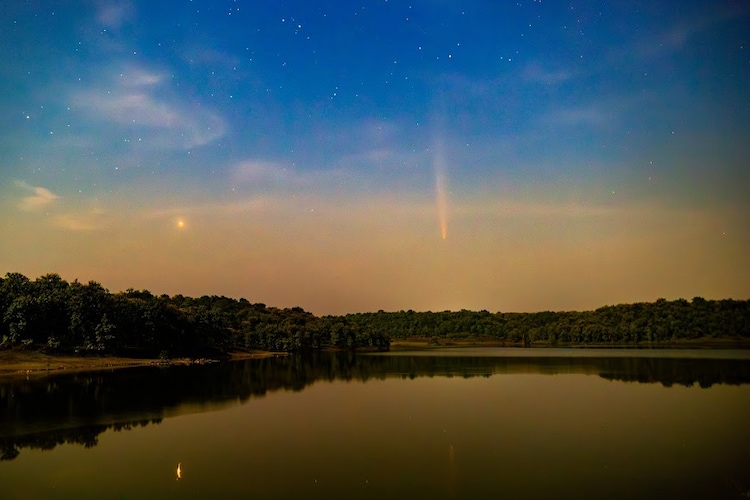
You can still see the Milky Way from India’s dark sky reserves. For now. And those two words carry the full weight of everything in this story.
The reserves are working within their carefully drawn boundaries. The science at Hanle continues. The wildlife at Pench is recovering. The IIA has distributed lamp shades, blackout curtains, and warm-tone bulbs to local households near Hanle.
Outdoor lighting is regulated, and no white or blue light is permitted during stargazing events. These are genuine achievements built through real effort, and they deserve to be named as such.
But the light is still rising. Slowly, measurably, from every direction beyond the fence.
The gram panchayat will install more street lights. The highways will be widened and lit. The towns will grow. And the sky, which brightens globally by nearly 10 per cent every year, will not spare India simply because India has drawn two circles on a map and written the words Dark Sky Reserve inside them.
I thought about those Calcutta power cuts when I reported this story. The sky that appeared in the blackout, the one I mistook for a planetarium ceiling, was not a special sky. It was just the sky. The ordinary, unremarkable sky that human beings had lived beneath for all of recorded history, until we built enough light to make it disappear.
Somewhere in India tonight, a child will look up at a real sky full of stars and think it looks like a planetarium. The child will not know it is disappearing.
Dr Sule has not forgotten the boy he himself once was, standing in a field in Vangani, seeing the Milky Way for the first time and feeling the universe land on him all at once.
“Science is best learnt through experiencing it first hand,” Dr Sule says. “Why we named our galaxy the Milky Way does not remain a question if the kids can actually see it in the sky and appreciate that to the naked eye, it appears exactly like a path marked in milky white colour.”
That sky is gone from Vangani now. The village that made him a scientist has lost the very thing that did it.
The dark sky reserves drew a line around what remains. For now, it is holding.
Beyond that line, the towns will grow, the highways will be lit, and the sky will get a little brighter every year. The stars have survived for billions of years. They will survive this too. But survival is not the same as being seen.
And somewhere in India tonight, another child is looking up, seeing only the glow, and deciding if this is simply what the sky looks like.
It is not. But nobody is turning the lights off.
- Ends