
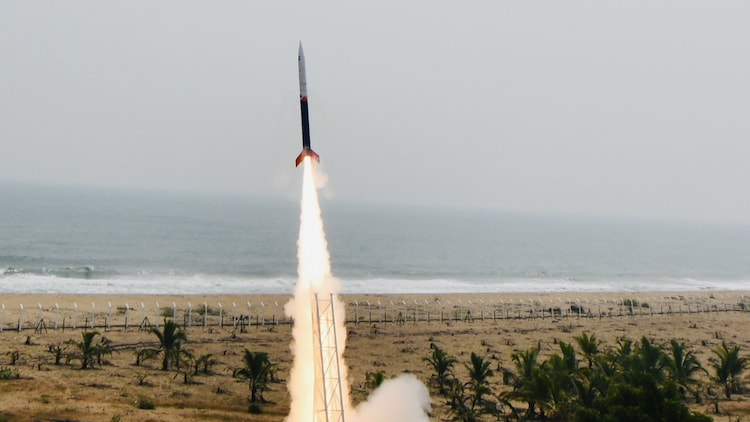
May 2026 may have changed India's space future forever and no one paid attention
A rush of announcements in May 2026 put India's private space companies in sharp focus. Together, they suggested the sector was moving from support roles to strategic and commercial scale.
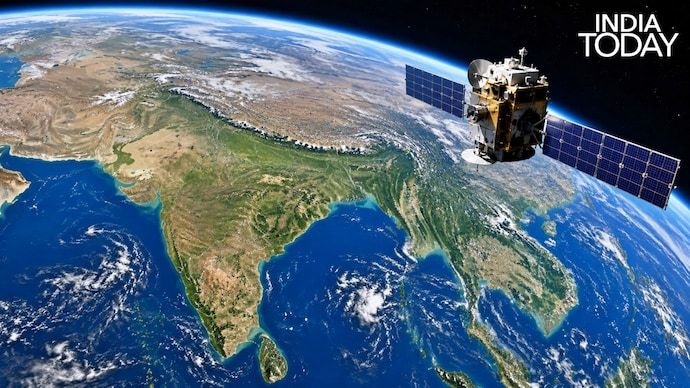
Individually, each announcement represented a technological leap. (Photo: India Today)

New Delhi,UPDATED: May 23, 2026 10:00 IST
India’s private space sector may have just entered its defining moment.
In a matter of weeks during May 2026, Indian space startups unveiled a string of breakthroughs that signalled a dramatic shift in the country’s commercial space ambitions, from rockets and satellites to orbital AI infrastructure, defence applications and constellation-scale manufacturing.
At the centre of this momentum was Skyroot Aerospace, which became India’s first space-tech unicorn, cementing the rise of a private ecosystem that was almost non-existent just a few years ago.
The flurry of announcements also included Pixxel unveiling plans to develop AI-powered orbital data centres with Sarvam AI, alongside new hyperspectral imaging contracts from the United States. Meanwhile, Agnikul Cosmos successfully conducted a cluster firing of four 3D-printed rocket engines, marking another milestone in indigenous propulsion technology.
At the same time, Dhruva Space secured Rs 105 crore in Research, Development, and Innovation Fund (RDIF) backing for “Project Garud,” aimed at developing India’s private-sector 500-kilogram class satellite capability for constellation-scale missions.
A PIVOTAL MOMENT FOR INDIAN SPACE AMBITIONS
Individually, each announcement represented a technological leap.
Collectively, they signalled something larger: India’s private space ecosystem is no longer trying to merely support the Indian Space Research Organisation (ISRO). It is beginning to evolve into an independent strategic and commercial force capable of competing globally.
For decades, India’s space ambitions revolved almost entirely around ISRO. But reforms opening the sector to private participation, combined with new foreign direct investment rules and growing investor confidence, a brand new space policy have transformed the landscape.
“The whole space environment in India had a transformative change when the Government decided to open space to private players,” said Lt Gen A K Bhatt, Director General of the Indian Space Association. “The new liberal policy, along with inflow of capital has boosted this change.”
Industry leaders now believe India is entering a phase where private companies are building complete space ecosystems, not just components.
Pixxel founder and CEO Awais Ahmed told indiatoday.tech that Indian startups are increasingly developing “full-stack capabilities: satellites, software, analytics, manufacturing, and AI-led infrastructure versus just components or services for someone else’s value chain.”
That transition is critical because the next global space race is expected to be driven not only by launches, but by space-based intelligence, AI-powered infrastructure and sovereign technological capabilities.
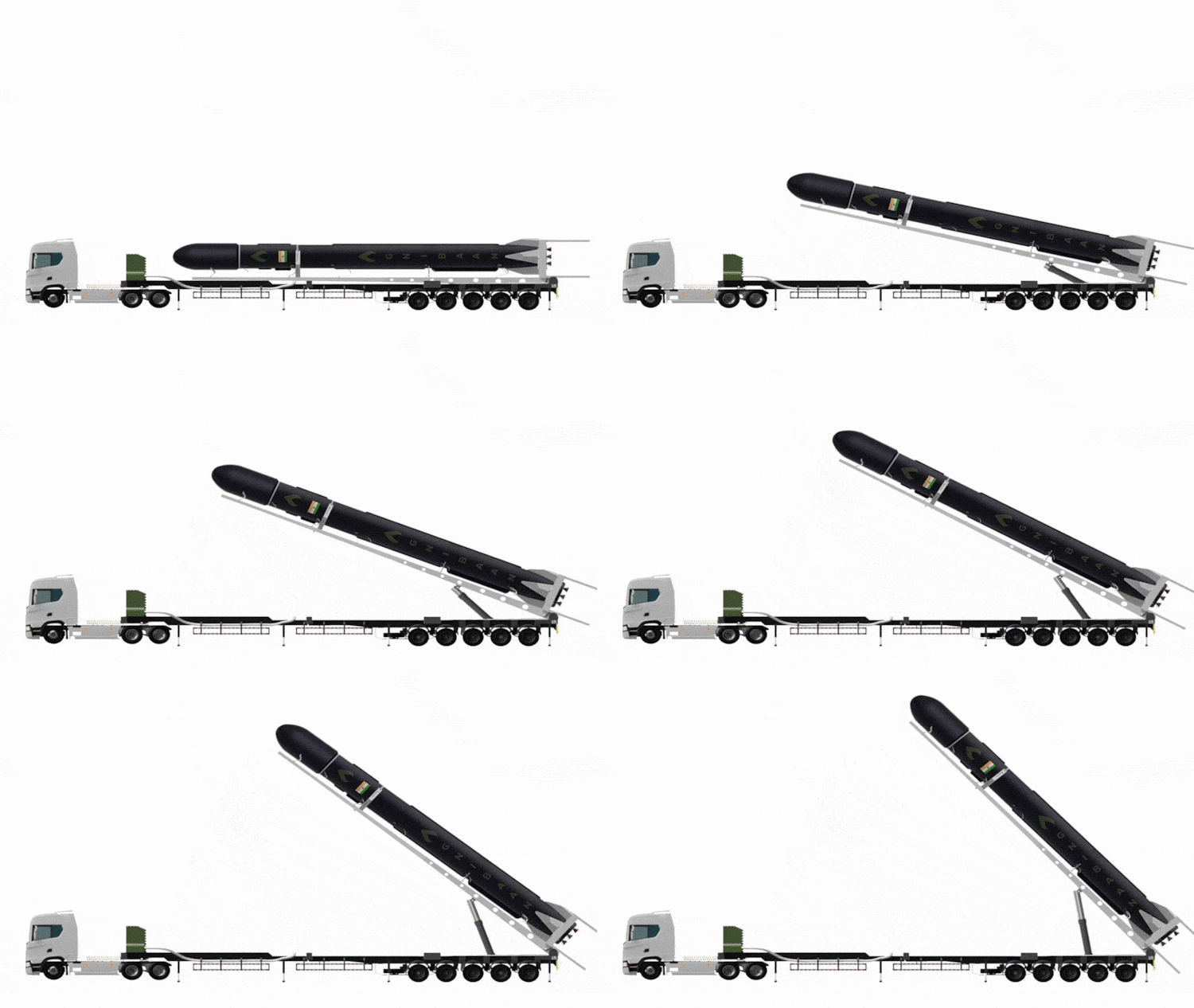
Pixxel’s orbital data centre plans reflect that shift. Rather than simply imaging Earth, future satellites could process massive volumes of data directly in orbit using AI systems, reducing transmission delays and enabling faster intelligence generation.
“Orbital data centres are still an emerging category globally, but the rationale is becoming clearer,” Ahmed said. “As satellites generate complex datasets, it becomes more valuable to process intelligence closer to where the data is generated.”
BUILT FOR INDIA
The implications extend far beyond commercial use. Satellite intelligence now underpins agriculture, climate monitoring, disaster response, border security and defence operations.
Lt Gen Bhatt believes defence applications and climate intelligence will become two defining sectors of India’s future commercial space economy.
“One is being given impetus by the current geopolitical instability and growing relevance of space for defence, while climate intelligence is most critical for handling huge climate changes which affect mankind,” he said.
The rise of Indian private space is also changing how global investors view the country.

Previously, Indian startups were often perceived as low-cost engineering partners. But technologies such as hyperspectral imaging, OptoSAR systems, satellite constellations and reusable launch systems are beginning to reposition India as a deep-tech innovator.
“The ecosystem is not asking whether Indian private space can exist, but how large and globally influential it can become,” Ahmed said.
That confidence is increasingly backed by hardware milestones. Agnikul’s successful cluster firing of four 3D-printed engines demonstrated advances in rapid rocket manufacturing, while Skyroot’s upcoming orbital launch is expected to become another watershed moment for the sector.
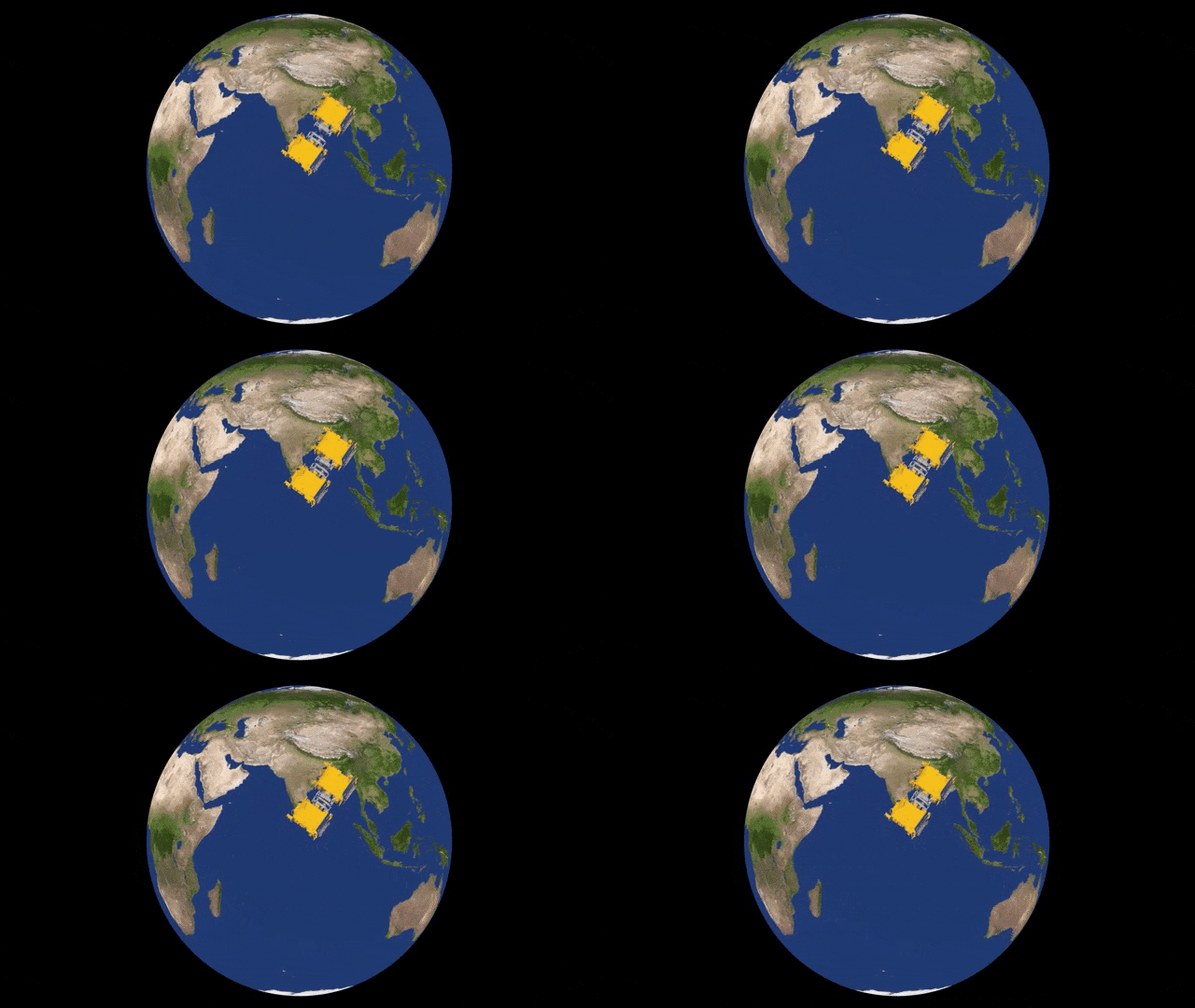
"The importance of strategic autonomy in launch capability is becoming increasingly clear globally," says Pawan Kumar Chandana, Co-founder and CEO, Skyroot Aerospace, adding that there is an acknowledgement across the world that access to space is no longer a nice-to-have, but a strategic capability that will factor into several sectors, including communications, disaster and crisis management, shipping and logistics, and national security.
At the same time, Dhruva Space’s constellation-focused satellite programme points toward India’s ambitions in high-volume satellite manufacturing — a capability expected to dominate the next decade of the global space economy.
The broader strategic implications are enormous.
As countries increasingly rely on satellite infrastructure for communications, surveillance, navigation and AI-driven intelligence, space capability is rapidly becoming intertwined with geopolitical influence and technological sovereignty.
As technologies like IoT, climate monitoring, and Earth observation scale globally, demand for Low Earth Orbit satellite constellations will continue to rise. Since these satellites typically have operational lifespans of only five to eight years, there will also be a continuous need for replenishment launches.
“For any nation to have a credible security posture, the importance of space-based assets and space capabilities becomes an imperative,” Lt Gen Bhatt said.
MONEY IS NOT AN ISSUE ANYMORE
India’s private space surge is also arriving at a moment when the global space economy is projected to cross $1 trillion within the next decade. The country is betting that startups, not just state agencies, will help capture a share of that opportunity.
When the private space ecosystem began sproting companies did face a dearth of investments.
"The first hurdle Skyroot faced was capital. When we started in 2018, there were hardly any venture capital funds with a space thesis, as India at the time did not even have a policy in place for space-tech," sais Pawan. But that time is in the past.

He adds that investors are now recognising the market opportunities and that the impact Indian space-tech companies present are global-scale. "This is also reflected in our latest funding round, which was co-led by GIC, Singapore's sovereign wealth fund, and Sherpalo Ventures, founded by Ram Shriram, one of the earliest investors in Google who continues to serve on the board of Alphabet Inc," Pawan said.
India is rapidly emerging as a formidable space power, backed by world-class engineering talent, decades of spaceflight expertise, increasing private-sector participation, and an ability to build highly sophisticated systems with exceptional efficiency.
If May 2026 is remembered as a turning point, it may not be because of one rocket test, one satellite or one funding round. It may be remembered as the moment India’s private space industry stopped emerging and started arriving.
- Ends