
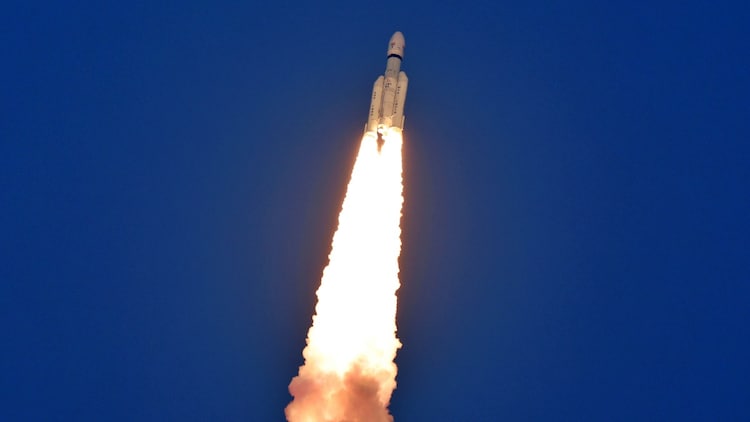
Isro's Bahubali LVM3 that launched Chandrayaan-3 to be handed to private sector
IN-SPACe has invited Indian companies to take over the end-to-end realisation, operation and commercialisation of Isro's LVM3 rocket.
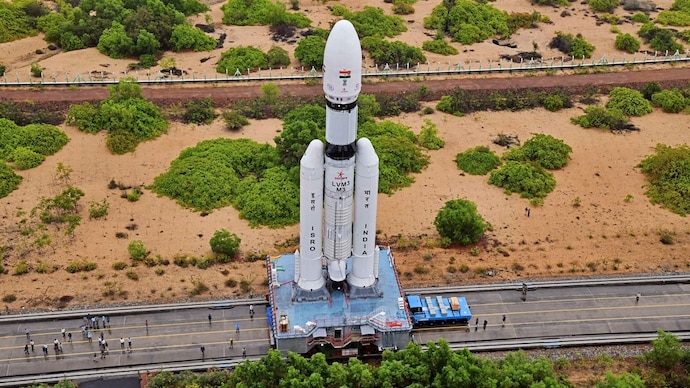
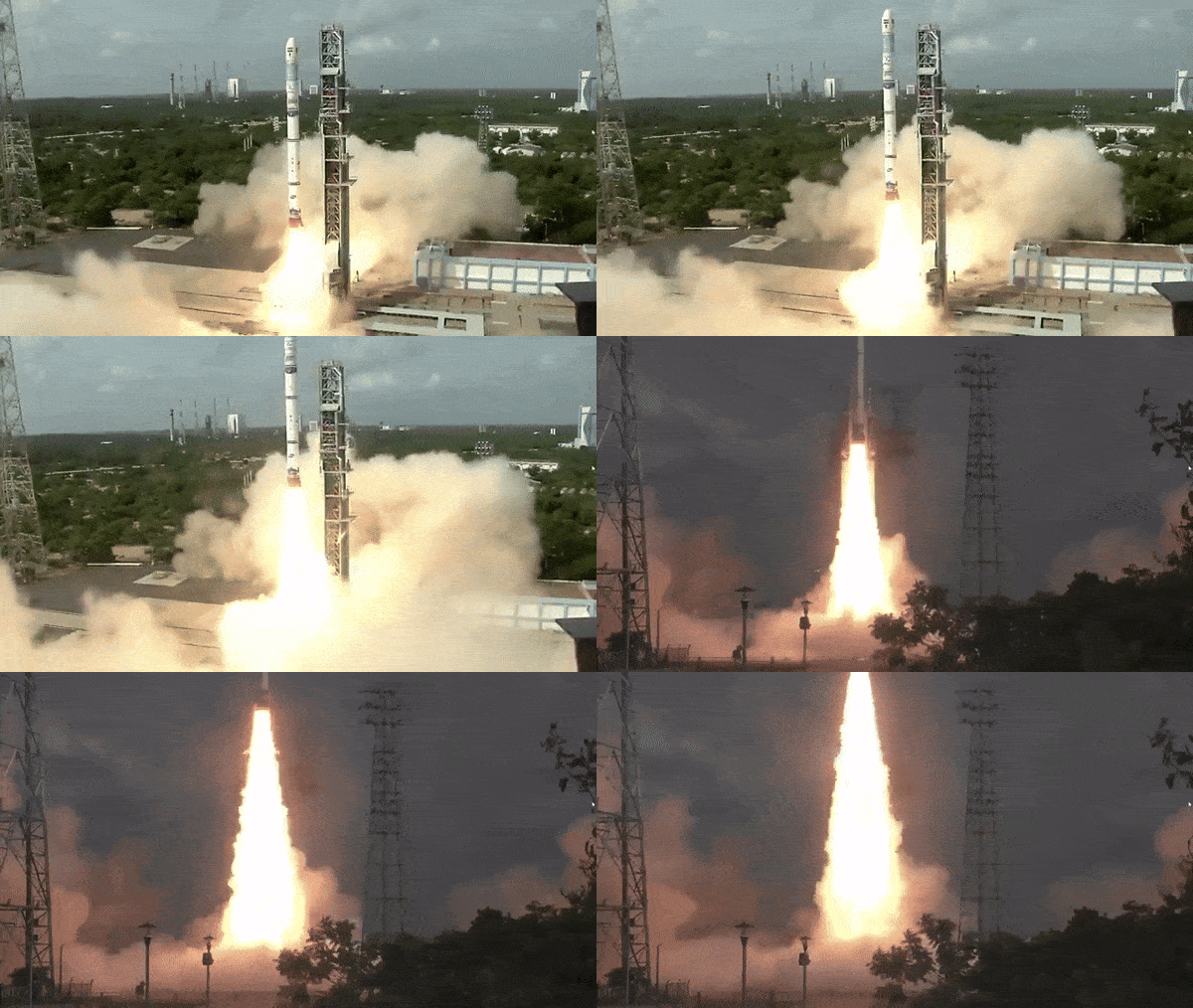
Government has issued an Expression of Interest (EOI) inviting Indian companies to take over LVM3. (Photo: Isro)

New Delhi,UPDATED: Jun 10, 2026 11:29 IST
India’s heaviest rocket, the Launch Vehicle Mark-III (LVM3), which powered the historic Chandrayaan-3 Moon landing mission, is set to enter a new phase as the government initiates the process of transferring the rocket’s technology and operations to the private sector.
The Indian National Space Promotion and Authorisation Centre (IN-SPACe), the government’s nodal agency for promoting private participation in the space sector, has issued an Expression of Interest (EOI) inviting Indian companies to take over the end-to-end realisation, operation and commercialisation of the LVM3 launch vehicle.
The move marks one of the most significant reforms in India’s space programme, signalling a gradual transition of mature launch systems from the Indian Space Research Organisation (Isro) to industry while allowing the national space agency to focus on ambitious future missions.
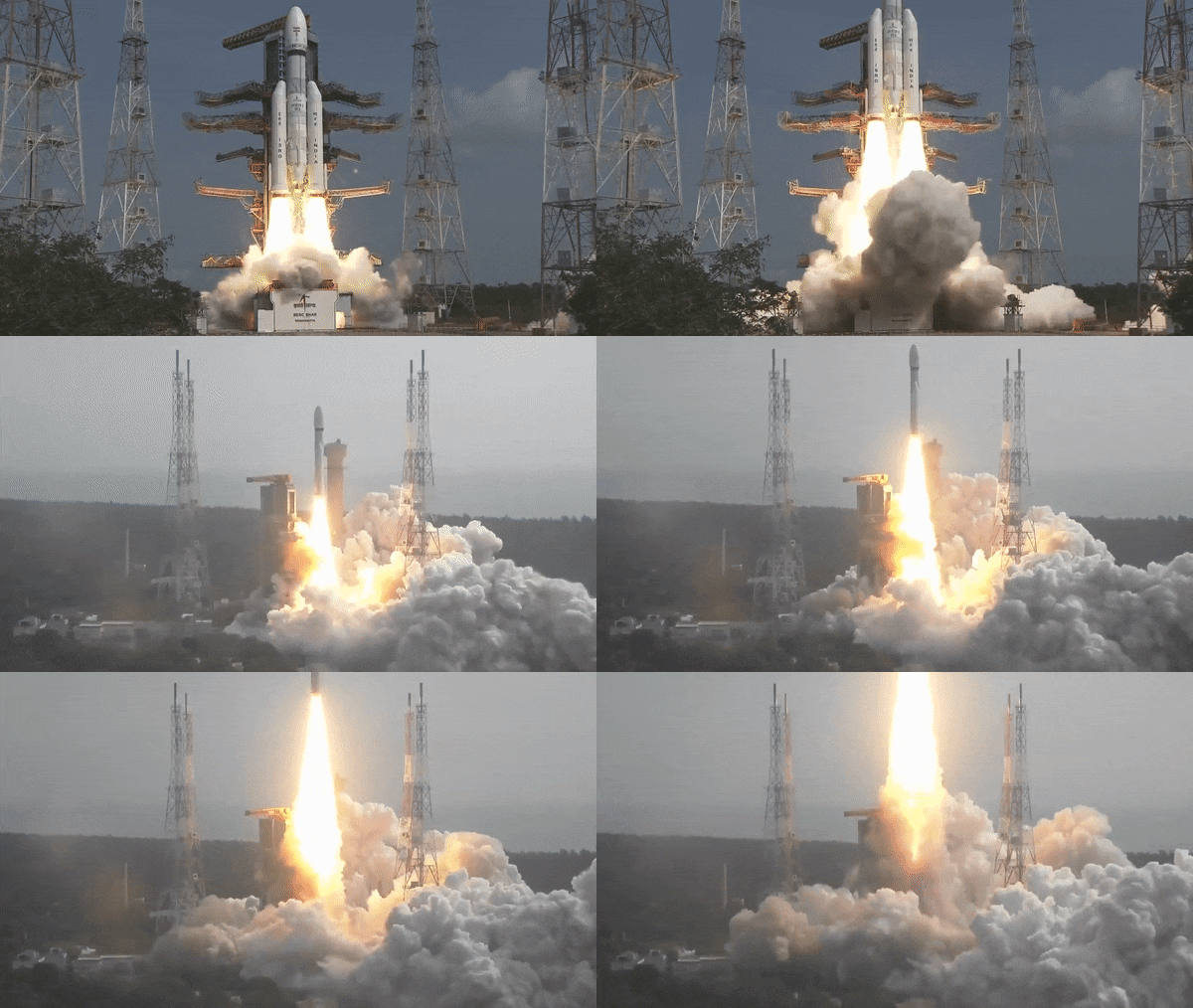
IN-SPACe had earlier transferred the Small Satellite Launch Vehicle (SSLV) to the Hindustan Aeronautics Limited (HAL) for end-to-end realisation.
WHAT IS LVM3?
LVM3, often described as India’s “Bahubali” rocket because of its massive payload-lifting capability, has established itself as a reliable heavy-lift launcher.
The three-stage vehicle has successfully deployed numerous Indian and international satellites and gained global recognition after carrying Chandrayaan-3 to the Moon in 2023.
It was also used to launch the OneWeb satellite constellation missions, demonstrating its commercial potential in the international launch market.
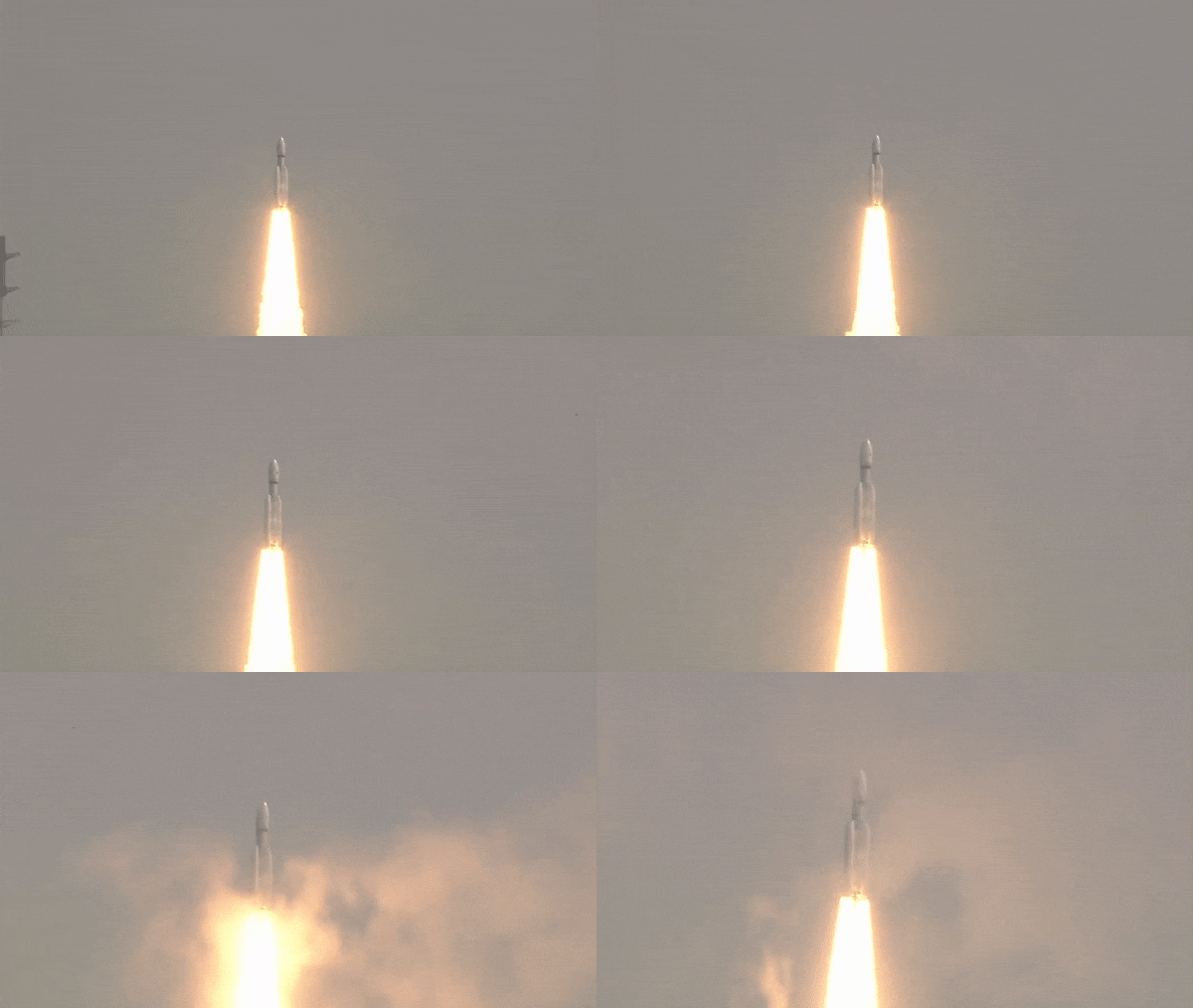
WHAT IS ISRO LOOKING FOR TO TRANSFER LVM3?
According to the EOI document, IN-SPACe aims to transfer the technology to a suitable private industry partner capable of manufacturing, operating and marketing the launch vehicle commercially.
The selected company or consortium will receive extensive support from ISRO for a defined period of 42 months or until it successfully realises and launches two LVM3 rockets, whichever comes first.
The initiative comes amid growing demand for satellite launches worldwide and India’s efforts to capture a larger share of the rapidly expanding global space economy.
By enabling private firms to independently offer launch services, the government hopes to increase launch frequencies and strengthen India’s position in the competitive heavy-lift launch market currently dominated by international players.
Eligibility norms outlined in the EOI indicate that only established Indian entities can participate. Applicants must be privately owned Indian organisations operating for at least seven years, with a minimum of five years of experience in the space or aerospace sector.
Companies must also demonstrate strong financial credentials, including an average annual turnover exceeding Rs 800 crore over three of the last five years or a valuation of at least Rs 2,000 crore.
Industry participants are expected to have experience handling large multidisciplinary turnkey projects and substantial procurement operations, reflecting the complexity involved in manufacturing and operating a launch vehicle of LVM3’s scale.
It is worth mentioning that the human-rated version of the LVM3 will be used to launch Gaganyaan astronauts to space. However, there is little clarity on whether that modified version of the rocket will also be transferred or not.
WHY ISRO IS TRANSFERRING LVM3 TO PRIVATE SECTOR?
The decision to hand over LVM3 aligns with the Centre’s broader strategy of redefining ISRO’s role.
Rather than spending resources on the routine production and operation of mature launch systems, the agency is expected to focus on next-generation programmes such as the Gaganyaan human spaceflight mission, future lunar exploration initiatives, advanced Earth observation systems and interplanetary missions.
"The plans align with the National Space Policy to bolster the private space ecosystem in the country and to ensure Isro is free to focus on bigger and bolder missions, which include launching Gaganyaan, Chandrayaan-4 and 5 and the Venus missions," Lt Gen A K Bhatt, DG, Indian Space Association, told indiatoday.tech.
Space sector reforms announced in recent years have sought to create a vibrant private ecosystem capable of independently building satellites, rockets and space-based services.
Officials view the transfer of LVM3 as a critical step toward achieving that vision, allowing the Indian industry to become a major player in commercial launch services.
If successful, the transition could transform LVM3 from a government-operated launcher into India’s flagship commercial heavy-lift rocket, opening a new chapter in the country’s rapidly evolving space economy.
- Ends