
Over 62,000 litres water dumped: What's fuelling Himachal Pradesh's forest fires
A rapidly spreading blaze in one of Himachal Pradesh's most scenic hill towns forced an urgent response from firefighters and the armed forces before it could turn into a much bigger disaster.
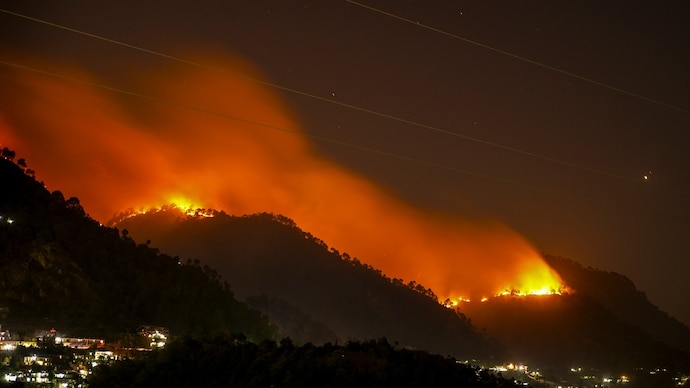

Kasauli, a colonial-era hill station in Himachal Pradesh known for its pine-covered slopes and pleasant views, suddenly found itself battling a fierce forest fire this week.
On May 26, flames erupted in the dry forests and quickly spread through areas like Gilbert Trail and Upper Mall, prompting quick response from multiple teams, and warranting over 62,000 litres of water to be dropped from the air to douse the flames.
What started as a spark turned into a serious threat, pushing right up against the local Air Force station and nearby homes.
WHAT CAUSED THE FOREST FIRE IN KASAULI?
Himachal's mountains are no stranger to forest fires, especially in the dry summer months.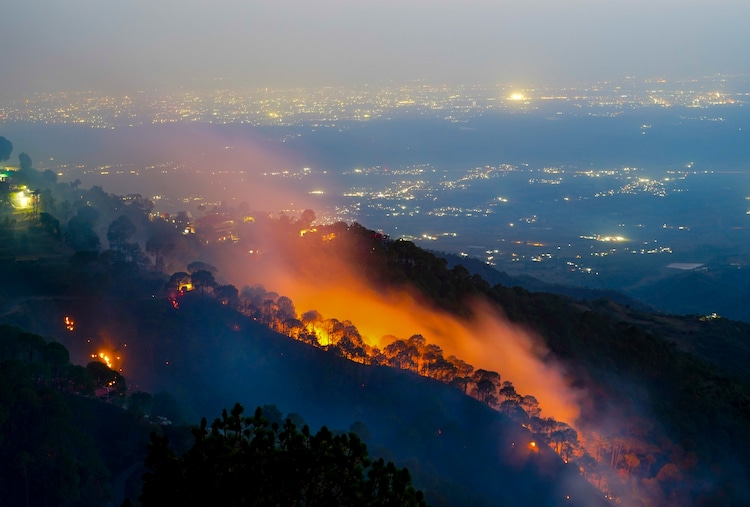
The region often goes months without rain, leaving the ground covered in a thick carpet of fallen pine needles. These needles are full of resin which can easily catch fire in the summer heat, making them burn fast and hot once a fire starts.
This time, a combination of soaring temperatures from the ongoing heatwave, low humidity, and strong winds fanned the flames, allowing the fire to race across steep, hard-to-reach slopes.
Officials have said that nearly 90% of such fires in the state often trace back to human causes. It could be something as simple as an unattended campfire, a discarded cigarette, or even arson.
With over 200 fires reported across Himachal this season already scorching around 3,000 hectares of land, the Kasauli blaze was part of an alarming pattern made worse by climate trends and dry weather.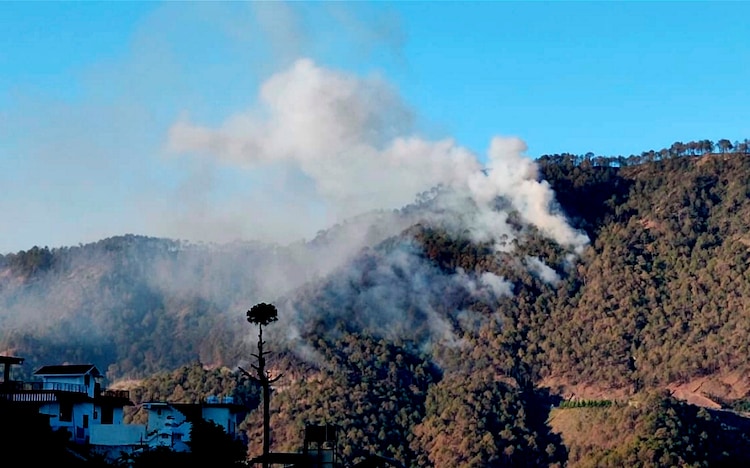
BATTLING THE BLAZE
Ground teams from the Indian Army, local fire services, and cantonment authorities worked tirelessly through smoke and tough terrain to contain the flames that raged beyond control for close to 27 hours.
But what really came in handy was a massive amount of water.
The Indian Air Force stepped in with helicopters, flying repeated missions day and night. Using a simple but effective method, the choppers dipped large buckets into Sukhna Lake near Chandigarh, about 30 km away from the site of the fire, and dropped thousands of litres of water precisely onto the burning areas.
According to Sanjay Sood, the head of forest force, the fires have been one of the most significant ones this season, beginning near an Air Force base in the Solan region before spreading further.
“Air Force helicopters were deployed because the fire had spread close to the Air Force Station. The situation is now fully under control and there has not been any major damage,” Sood told news agency ANI, adding that the total estimated loss from these fires is around Rs 67 lakh.
Over 40,000 litres of water was dropped over the burning forests, the Air Force said on Wednesday, May 27.
Reports from the operation suggest even higher totals with dozens more drops in the full effort, bringing the total amount to over 62,500 litres of water.
The blaze was eventually contained without any reported loss of life or major damage to property. Heritage spots and homes were protected, though large stretches of forest were charred.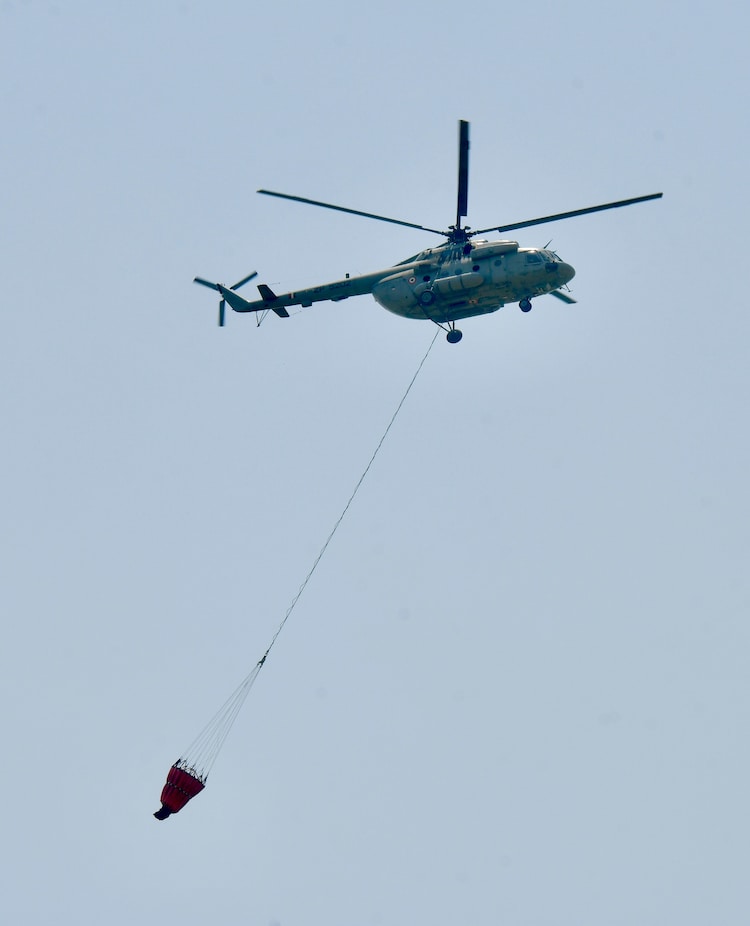
A BURNING REMINDER
This incident, like many similar episodes in recent times, highlights the fragility of the forests sitting on the hills.
While the immediate danger has passed and teams continue monitoring for flare-ups, the need for greater care could not be more obvious. That would require clearing dry debris, stricter rules on fire use, and better awareness among locals and visitors.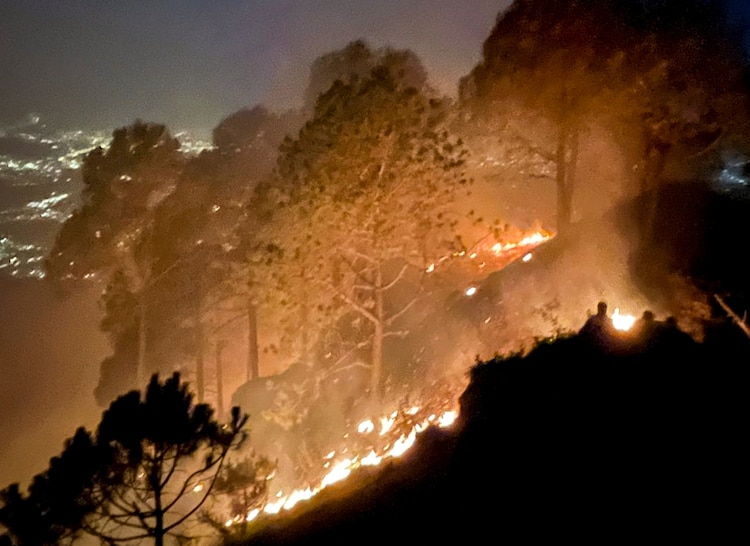
For now, Kasauli is breathing easier, thanks to the quick and collective efforts of the armed forces and firefighters who turned a potential disaster into a story of effective teamwork.
As summer heat continues to linger and monsoon remains delayed, these hills remind us how tranquillity has become prone to simply turning into ash as temperatures rise.