
Heatwave rising: Will it lead to higher UV radiation, and should you be worried?
Think heatwave and the risks of dehydration and heat strokes immediately come to mind. But what about the invisible risk of UV rays? Are you at an increased risk on hotter days? Here is what you need to know.
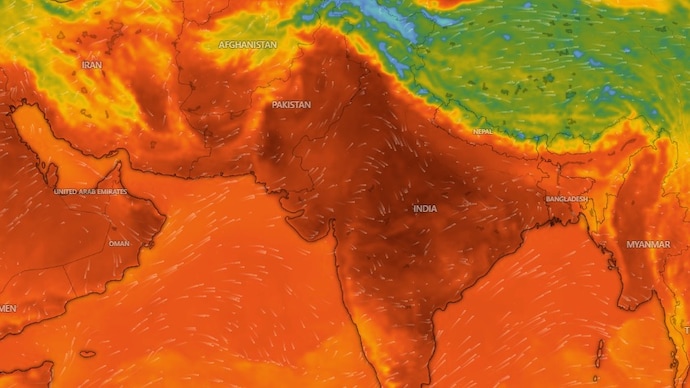

Kerala's health authorities issued advisories just weeks ago, warning residents about extremely high ultraviolet (UV) radiation levels being recorded across the state, even on days when the sky appeared overcast.
The warnings came as temperatures in several parts of Kerala climbed well above seasonal norms, with the broader Indian subcontinent in the grip of one of its most intense pre-monsoon heat waves in years.
On Monday, May 18, UV radiation levels across major Indian cities painted a clear picture of how intense the summer is.
According to AQI.in, New Delhi recorded UV radiation levels of 7.2 at around 3:15 pm on Monday, May 18. Mumbai recorded "very high" levels of 8.5; Thiruvananthapuram came in at a "high" 6.9.
But while most heatwave advisories focus on dehydration and heat stroke, the invisible energy beaming down from the Sun is a separate, compounding threat that often goes unacknowledged.
WHAT IS UV RADIATION?
UV radiation is a form of energy emitted by the Sun that is invisible to the naked eye.
The radiation sits just beyond the violet end of the visible light spectrum and is broadly divided into three types: UVA, UVB, and UVC.
Of the three, UVC is almost entirely absorbed by the Earth's atmosphere before it reaches us. UVA and UVB, however, reach the surface and both cause harm.
And out of the two types reaching us, UVB is the more immediately dangerous of the two.
UVB is responsible for sunburn, direct DNA damage in skin cells, and is the primary driver of skin cancer.
UVA, on the other hand, penetrates deeper into the skin, accelerates ageing, and contributes to long-term cellular damage.
Critically, UV radiation does not feel like anything. You cannot sense it the way you sense heat, and by the time your skin turns red or feels tender, the damage has already happened.
The UV Index, which is the internationally used scale to measure radiation intensity, runs from 0 to 11+.
Above 8 is classified as very high, and above 11 is classified as extreme.
During peak summer months, large parts of India regularly record UV Index values between 10 and 13, with southern states like Kerala, Tamil Nadu, and coastal Andhra Pradesh among the worst affected due to their proximity to the equator and the near-vertical angle at which the sun strikes the ground.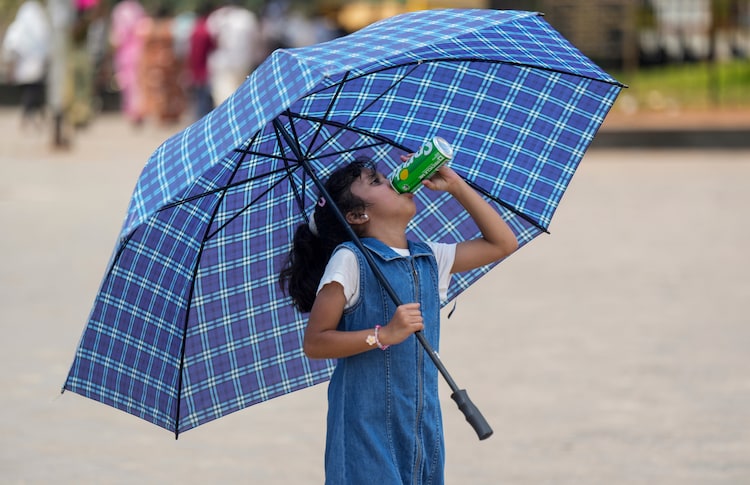
In other words, India is often a receptor of the harmful radiation that arrives abundantly during summer which is already growing longer and more intense.
WHY IS INDIA AT RISK?
India sits almost entirely within the tropics, meaning the Sun is overhead or very close to it, for much of the year.
This geometry matters enormously when it comes to what regions face impacts and which ones stay relatively safe.
When the sun is directly overhead, UV radiation travels a shorter path through the atmosphere, losing less energy before it hits the ground. Compare this to a country in Northern Europe where the Sun sits low on the horizon and radiation passes through a far thicker slice of atmosphere.
Additionally, India's monsoon-adjacent seasons create a false sense of safety.
On hazy or partly cloudy days, UV levels can still be dangerously high, as clouds block visible light and heat more effectively than they block UV.
A cool, overcast morning in May can carry UV Index readings of 9 or above, exposing people who step outside without protection under the mistaken belief that it is safe.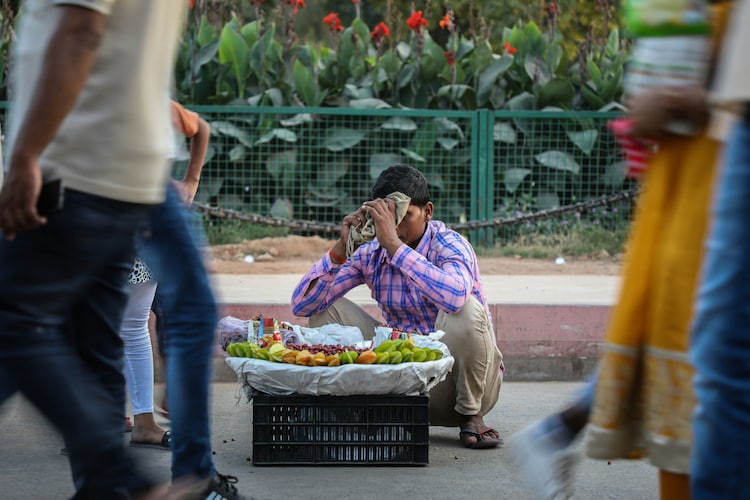
India also has a large outdoor working population that includes farmers, construction workers, street vendors, rickshaw pullers, and daily wage labourers, who spend hours in direct sunlight with little to no protection.
This population bears a disproportionately high burden of UV-related health risk, yet is the least aware of it.
HOW HARMFUL IS UV RADIATION?
The immediate effects of UV overexposure are commonly experienced. They include sunburn, redness, and peeling skin.
But the longer-term consequences are far more serious and concerning.
Repeated UV exposure damages the DNA inside skin cells over time, increasing the risk of skin cancers. It also causes cataracts, a clouding of the eye's lens that is already among the leading causes of blindness in India.
The World Health Organisation (WHO) estimates that up to 20% of cataract cases globally are caused by UV exposure.
Beyond the skin and eyes, UV radiation suppresses the immune system, reducing the body's ability to fight off infections at the very moment it is already under stress from extreme heat.