
The Sun will not set in this city for the next 84 days. What city is it and why?
Utqiagvik has entered its Midnight Sun period after the season's final sunset on Saturday. The 84-day stretch of continuous daylight reflects the extreme seasonal shifts caused by Earth's axial tilt.
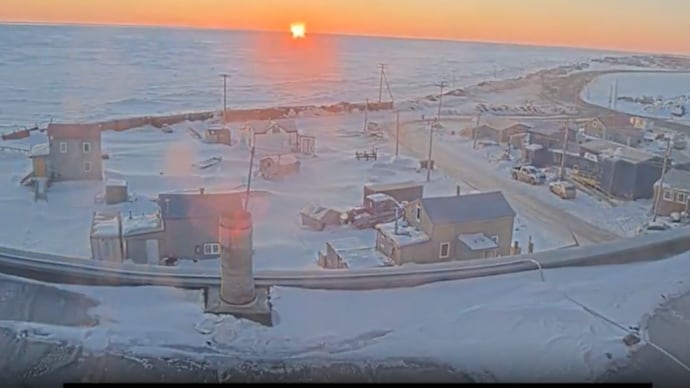

In the remote Arctic city of Utqiagvik, the Sun has officially stopped setting.
Residents of the northernmost city in the United States witnessed their final sunset of the season on Saturday as the Sun dipped below the horizon for the last time before beginning an extraordinary 84-day stretch of continuous daylight.
The Sun rose again at 2:57 am local time and will now remain above the horizon until August 2, plunging the city into what is known as the “Midnight Sun” period, a natural phenomenon seen in regions close to Earth’s poles.
Located more than 500 kilometres north of the Arctic Circle, Utqiagvik experiences some of the planet’s most extreme daylight cycles.
While the city now enters nearly three months of uninterrupted sunlight, the opposite occurs during winter, when the Sun disappears entirely for over 60 days in an event called the “polar night.”
The phenomenon is driven by Earth’s axial tilt and its orbit around the Sun. Earth is tilted at an angle of about 23.5 degrees relative to its orbital plane. As the planet revolves around the Sun, this tilt causes different regions of Earth to receive varying amounts of sunlight throughout the year.
During the Northern Hemisphere’s summer months, the North Pole tilts toward the Sun. This means areas above the Arctic Circle remain continuously illuminated because the Sun never dips low enough below the horizon to set.
Instead, it circles the sky at a shallow angle, creating daylight even at midnight.
Conversely, during winter, the Northern Hemisphere tilts away from the Sun. Regions like Utqiagvik then remain in darkness for weeks because sunlight cannot reach them directly.
The closer a location is to the poles, the more dramatic these seasonal light shifts become. At the exact North Pole, the Sun rises only once a year during the March equinox and sets once during the September equinox, resulting in roughly six months each of daylight and darkness.
For scientists, these extreme cycles offer valuable insight into Earth’s orbital mechanics, atmospheric behaviour, and even human adaptation to unusual environmental conditions.
For residents of Utqiagvik, however, the Midnight Sun is simply a remarkable part of everyday Arctic life, where summer nights glow endlessly under an unsetting Sun.