
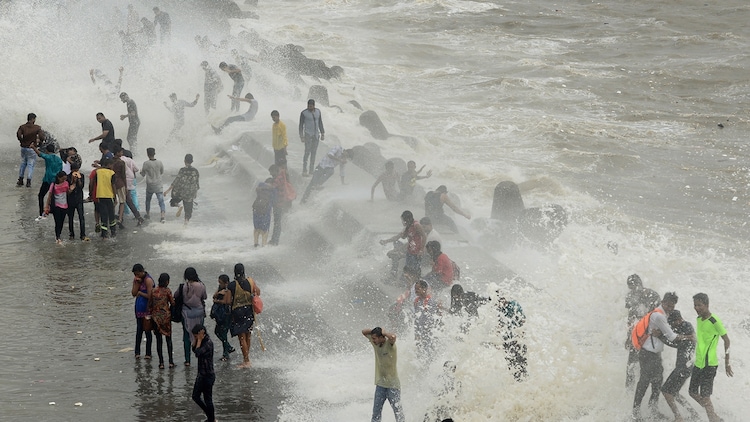
These Indian cities at high risk of heat, rain and flooding as weather turns
An Azim Premji University assessment says India's coastal cities face rising heat, heavier rain, flooding and sea-level risks by 2040. The findings point to growing pressure on livelihoods, infrastructure and ecosystems, with urgent adaptation needed.
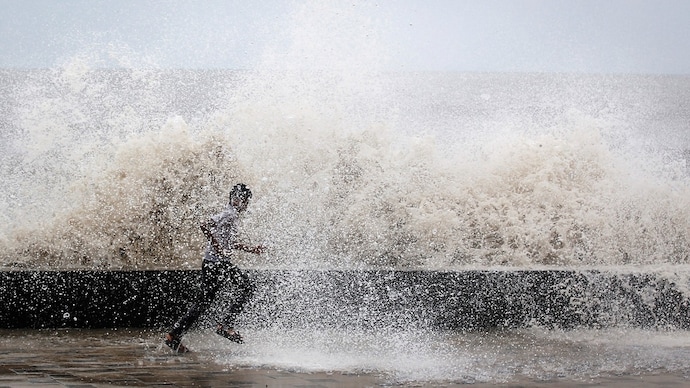
A school boy runs to get drenched in a large wave during high tide at a sea front in Mumbai. (Photo: Reuters)

New Delhi,UPDATED: Jun 1, 2026 15:44 IST
India's climate is undergoing a profound churn as rising global temperatures reshape weather patterns across the country, and India's coasts are not immune.
India's major coastal cities could face significantly higher risks from flooding, extreme rainfall, rising temperatures and sea-level rise by 2040, according to a new climate assessment of the country's 11,000-kilometre coastline.
The report, released by researchers at Azim Premji University, warns that climate impacts are no longer distant threats but are likely to intensify within the next 15 years, affecting millions of people living in coastal districts.
WHAT IS HAPPENING TO INDIA'S CLIMATE?
Heatwaves in India are becoming longer and more intense, while extreme rainfall events are increasing even in regions that traditionally receive moderate rain.
Cyclones in the Arabian Sea and Bay of Bengal are growing stronger, glaciers in the Himalayas are retreating, and sea levels are rising along India's vast coastline.
The result is a climate marked by greater unpredictability, long dry spells interrupted by cloudbursts, frequent floods, worsening droughts, and increasing risks to agriculture, infrastructure, ecosystems and millions of livelihoods.
THESE INDIAN COASTAL CITIES AT HIGH RISK

Among the cities identified as highly vulnerable are Mumbai, Chennai, Kochi, Visakhapatnam, Kolkata, Surat, Mangaluru and several urban centres along the coasts of Odisha, Andhra Pradesh, Tamil Nadu and Kerala.
Mumbai is expected to face a dangerous combination of sea-level rise, storm surges and extreme rainfall events. The city, which already experiences severe monsoon flooding, could see more frequent inundation of low-lying neighbourhoods as higher sea levels reduce the ability of rainwater to drain into the sea.
Chennai and other parts of the Tamil Nadu coast are projected to experience stronger cyclones, heavier rainfall and worsening urban floods. Coastal erosion and saltwater intrusion into freshwater sources are also expected to become more common.
On the eastern coast, cities such as Visakhapatnam and Kakinada in Andhra Pradesh, along with Puri and Paradip in Odisha, could face increasing cyclone intensity and storm surge flooding.

These areas are already among the most cyclone-prone regions in India and are expected to become more vulnerable as ocean temperatures rise.
Kerala's coastal cities, including Kochi and Kozhikode, are projected to experience heavier rainfall events, flooding and accelerating coastal erosion. Scientists also warn of increasing "wet-bulb" temperatures, where high heat combines with humidity to create dangerous conditions for human health.
The report highlights the Sundarbans region and the Bengal coast as some of the most vulnerable areas in the country. Rising sea levels and repeated cyclones could threaten settlements, agriculture and fragile ecosystems. Kolkata and Haldia may face greater flooding risks linked to both coastal and riverine processes.
Meanwhile, cities along the Gujarat coast, including Surat, Bhavnagar and Porbandar, are expected to see rising heat stress, flooding and stronger cyclone impacts from the Arabian Sea.

WHAT WILL BE THE IMPACT ON INDIA?
Researchers say the changing climate could disrupt fisheries, agriculture, tourism, ports and other coastal industries that support millions of livelihoods.
Infrastructure such as roads, power systems, ports and housing may also come under increasing pressure from more frequent extreme weather events.
The report calls for urgent adaptation measures, including improved flood management, climate-resilient infrastructure, coastal ecosystem restoration and better urban planning.
Without action, India's coastal cities could face a future marked by heavier rain, deeper floods and dangerous heat by 2040.
- Ends