
How a powerful blast left the Sun and then mysteriously fell back
Astronomers tracked a powerful solar eruption that rose like a coronal mass ejection before collapsing back onto the Sun. The observations show how magnetic reconnection and strong surrounding fields can halt such blasts and may explain hidden stellar eruptions.
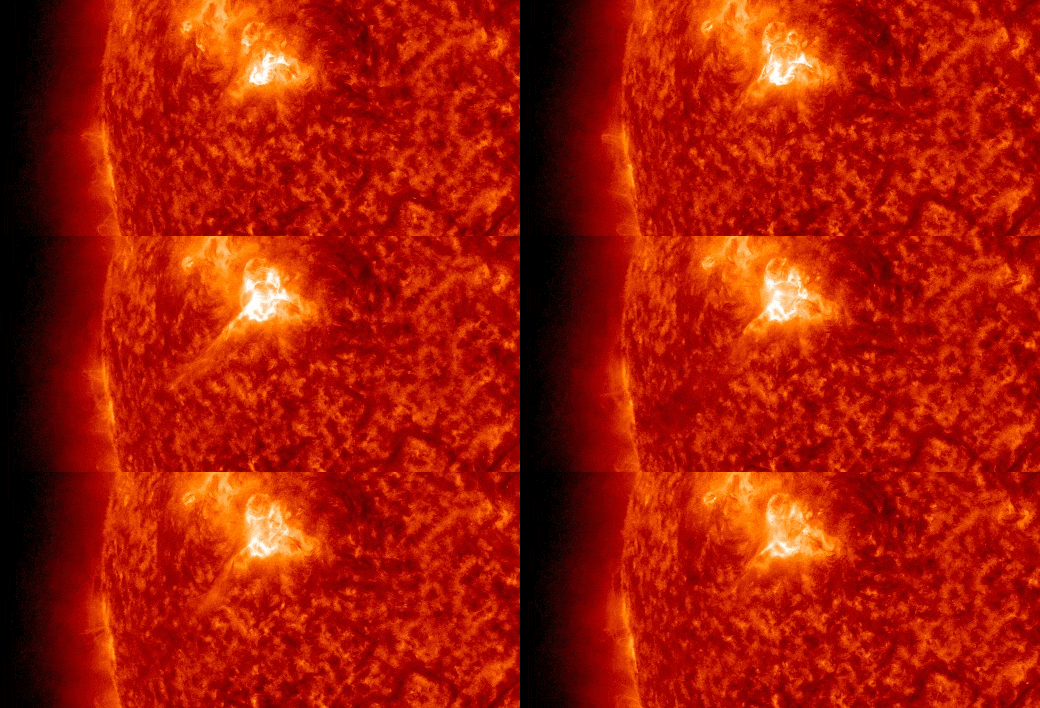

Scientists have captured one of the clearest and most detailed observations ever of a massive solar eruption that failed spectacularly, a powerful blast from the Sun that began like a dangerous coronal mass ejection but suddenly collapsed back onto the solar surface.
The rare event, recorded in March 2024, is helping astronomers solve a long-standing mystery about why some violent solar eruptions escape into space while others die moments after they begin.
The eruption began with an intense solar flare erupting from a highly active and magnetically tangled region of the Sun. A giant prominence, a dense ribbon of relatively cool solar gas suspended by magnetic fields, rose dramatically above the Sun’s surface.
Under normal circumstances, such eruptions often evolve into coronal mass ejections (CMEs), giant explosions that hurl billions of tonnes of charged plasma into space. Powerful CMEs directed toward Earth can disrupt satellites, GPS systems, radio communications and power grids.
But this eruption never made it out.
“This strong flare should have produced a big eruption,” said lead author Tingyu Gou, an astronomer at the Smithsonian Astrophysical Observatory (SAO), part of the Center for Astrophysics, Harvard & Smithsonian. “Instead, we saw that the eruption stalled and collapsed shortly after its initiation.”
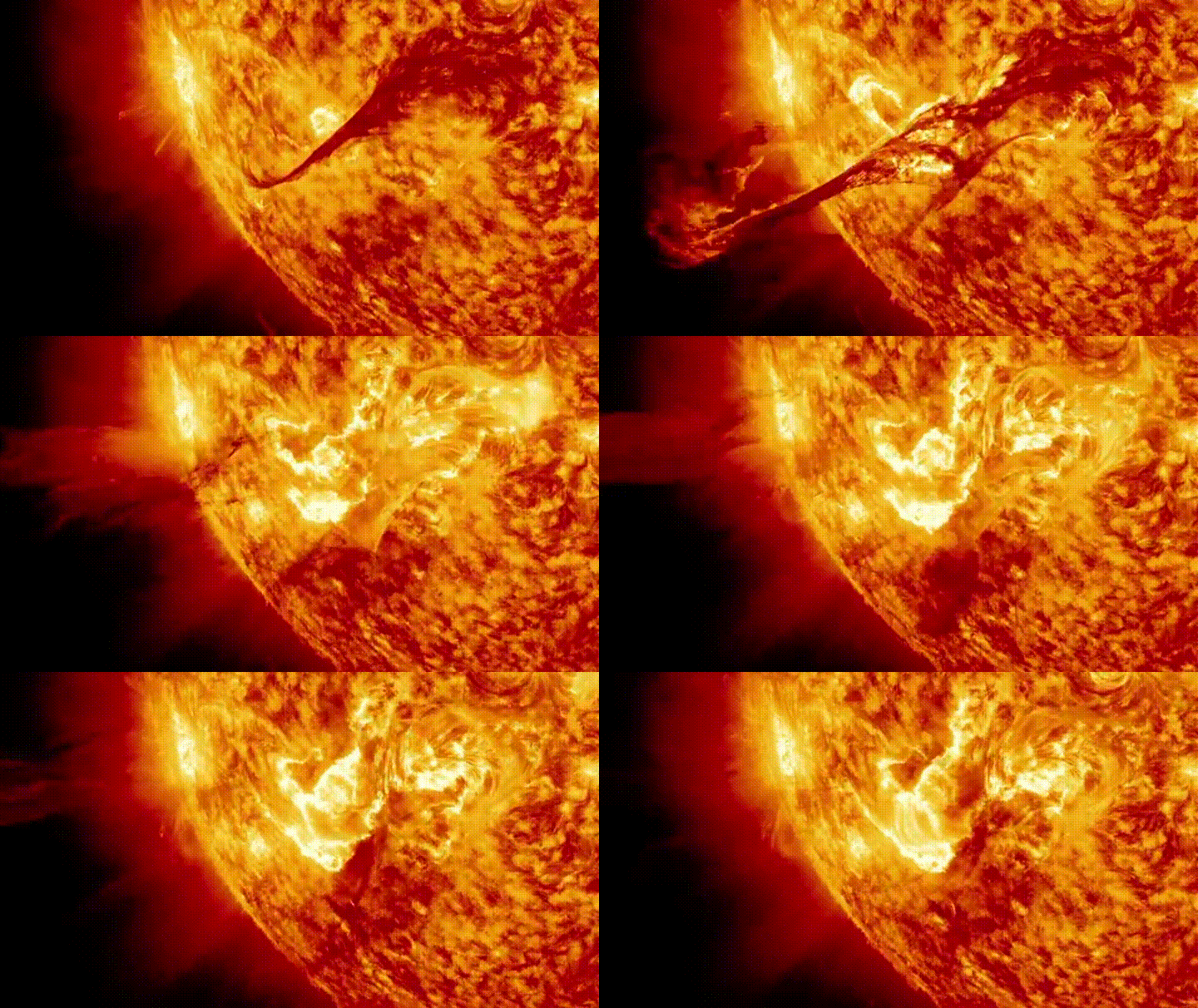
Failed eruptions have been observed before, but scientists still do not fully understand what stops them. To investigate, researchers used an unusually powerful combination of spacecraft and telescopes observing the Sun simultaneously from multiple angles.
Nasa’s Solar Dynamics Observatory and Japan’s Hinode spacecraft watched the eruption from Earth’s direction, while the European Space Agency’s Solar Orbiter viewed it from the side. Additional ultraviolet and radio observations came from Nasa’s IRIS mission and ground-based observatories.
This “multi-messenger” view allowed scientists to map both the superheated plasma and the cooler prominence material in unprecedented detail, while also tracing the magnetic fields controlling the eruption.
The team discovered that magnetic reconnection, the snapping and reconnecting of twisted magnetic field lines, was happening at two separate locations simultaneously.
One reconnection event beneath the eruption pushed the solar material upward, helping launch the flare. But another reconnection process above the rising structure effectively cut into the top of the eruption itself.
“That upper reconnection weakened the forces that were driving the eruption, which helped to shut it down,” explained SAO astronomer Katharine Reeves, coauthor of the study.
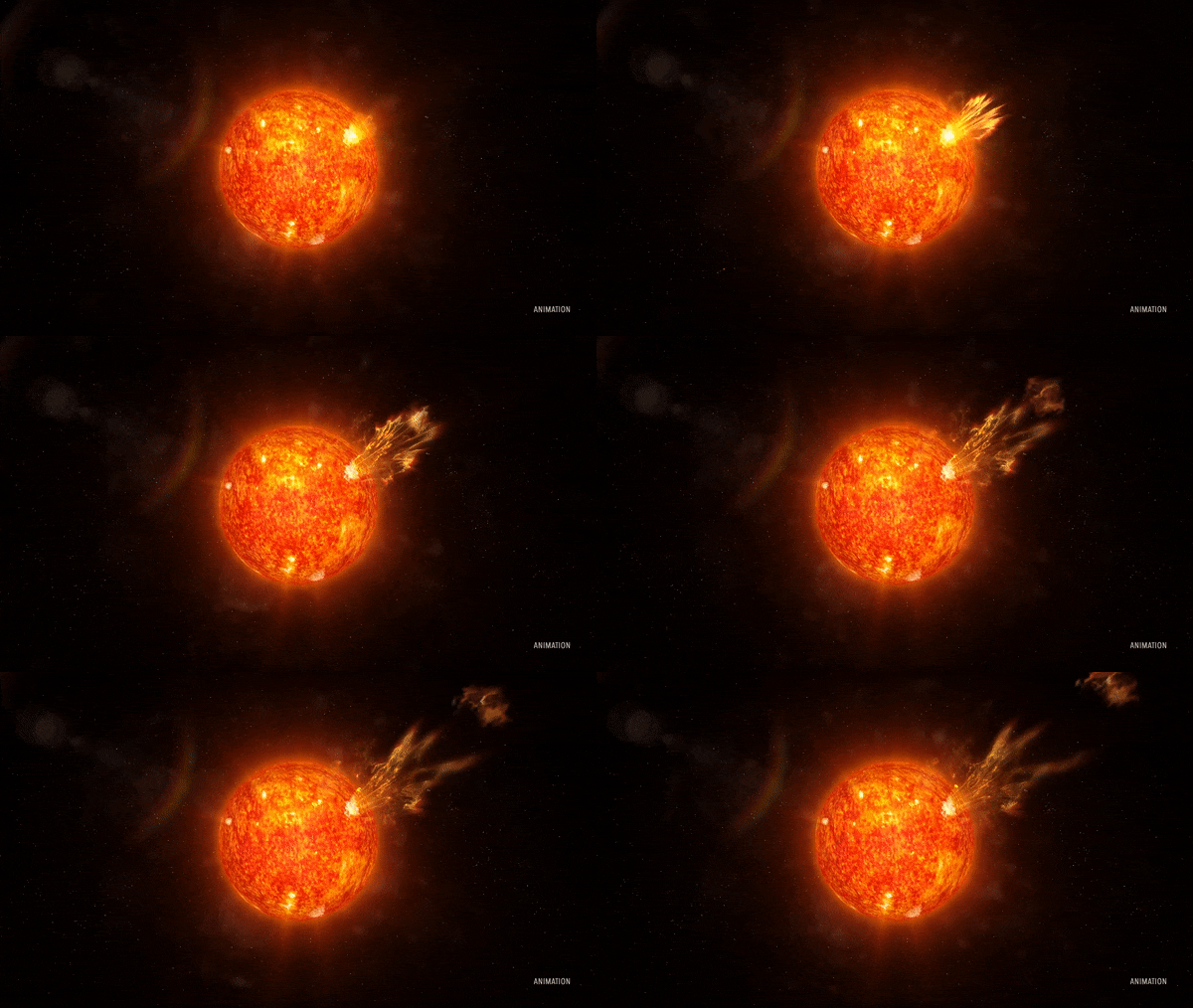
At the same time, extremely strong magnetic fields surrounding the eruption acted like a giant invisible cage, preventing the solar material from escaping into space. Because these outer magnetic fields weakened too slowly, the eruption never became unstable enough to break free.
Scientists say the findings may help explain a broader cosmic mystery: why astronomers observe frequent flares on distant Sun-like stars, but far fewer clear signs of massive stellar eruptions.
If powerful magnetic fields often trap eruptions close to stars, many stellar CMEs may remain hidden from telescopes.
“By watching this failed eruption on our own Sun in detail, we gain a window into how flares and eruptions may work throughout the galaxy,” Gou said.