
SpaceX fuels biggest Starship Super Heavy: No leaks, all eyes on May 15 launch
SpaceX completed a full wet dress rehearsal of Ship 39 and Booster 19 at Starbase's new Pad 2. The test clears a major pre-launch milestone as the company targets a possible first Starship V3 flight on May 15.
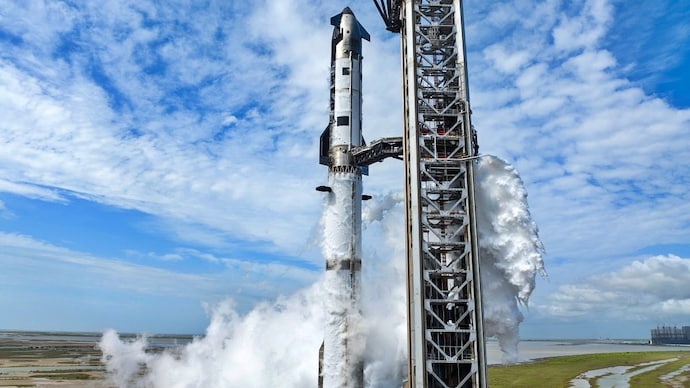

SpaceX has successfully completed a full wet dress rehearsal (WDR) for the biggest-ever version of its Starship-Super Heavy launch system, clearing a major milestone ahead of a possible launch attempt on May 15.
The test involved Ship 39 stacked atop Booster 19, collectively designated S39/B19, and marked the first-ever wet dress rehearsal conducted on the company’s newly built Pad 2 at Starbase, Texas.
It was also the first WDR for the upgraded Starship Version 3 architecture, which SpaceX hopes will significantly improve payload capability and reliability for future missions to the Moon and Mars.
WHAT HAPPENED DURING STARSHIP WDR?
During the rehearsal, SpaceX carried out a flight-like countdown sequence while loading more than 5,000 metric tonnes, over 11 million pounds, of supercooled liquid methane and liquid oxygen into the fully integrated launch vehicle.
The fueling operation replicated conditions expected during an actual launch campaign and is considered one of the most critical tests before flight.
The WDR is designed to validate the rocket’s fueling systems, plumbing, software, ground support equipment, and countdown procedures without igniting the engines or lifting off.
By completing the operation, SpaceX demonstrated that both the giant launch vehicle and the new launch infrastructure can handle the enormous thermal and mechanical stresses associated with a real mission.
The Starship system used in the test represents the largest and most powerful rocket configuration ever assembled.
Standing nearly 150 meters tall when fully stacked, the upgraded Version 3 vehicle incorporates structural refinements, revised propellant systems, and changes intended to support rapid reusability.
The successful rehearsal follows months of intense preparation work at Starbase, including upgrades to Pad 2, cryogenic testing, engine installations, and repeated static checkouts of the vehicle systems.
Industry watchers had closely monitored the campaign, as the new pad and redesigned rocket represent a major leap in SpaceX’s long-term ambitions for deep-space transportation.
Attention is now shifting to a possible launch attempt on May 15, though SpaceX is still awaiting final regulatory clearances and weather assessments before confirming the date.
If the mission proceeds as planned, it would mark the first flight of the Starship V3 configuration and another major step in SpaceX’s efforts to develop a fully reusable heavy-lift rocket capable of carrying astronauts and cargo to the Moon under Nasa’s Artemis programme, and eventually to Mars.