
At 48.2°C, Sri Ganganagar in Rajasthan is hottest in the world today: Here's why
Sri Ganganagar recorded 48.2°C on Wednesday, making it the world's hottest place. Meteorologists linked the spike to desert winds and warned of stormy relief from Thursday evening.
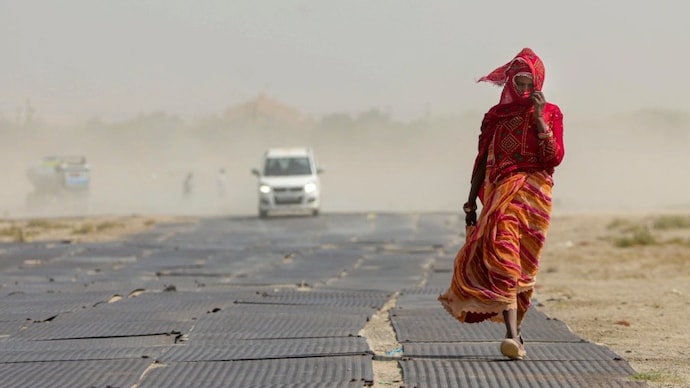

Rajasthan's Sri Ganganagar became the hottest place in the world on Wednesday after recording a blistering maximum temperature of 48.2 degrees Celsius, matching the peak temperature earlier recorded in Banda, Uttar Pradesh, during May.
The furnace-like conditions across northwest India continued on Wednesday as several cities in Rajasthan, Haryana and Delhi remained trapped under an intense heat dome.
Bikaner and Rohtak recorded 46.6°C each, while Jaisalmer and Churu touched 46.4°C. Jhansi reached 46°C, Hisar touched 45°C and New Delhi recorded 44.6°C.
Meteorologists say temperatures are likely to remain in a similar range for another day before thunderstorms and dust storms begin sweeping across north and central India from Thursday evening onwards.
But why has Ganganagar emerged as India’s hottest hotspot this year?

WHY IS SRI GANGANAGAR THE HOTTEST PLACE IN THE WORLD?
Weather experts point to a combination of geography, dry desert winds and atmospheric conditions. Located in northern Rajasthan close to the India-Pakistan border, Ganganagar sits on the edge of the Thar Desert, where intense solar heating during late May rapidly raises land temperatures.
The region is currently being affected by strong northwesterly winds blowing in from the arid desert interior of Rajasthan and Pakistan.
These winds are extremely dry and hot, allowing temperatures to spike sharply during the afternoon. The lack of moisture in the atmosphere also means there is little cloud cover to block incoming solar radiation.
At this time of year, the Sun is positioned almost directly overhead across parts of north India, leading to maximum daytime heating. Dry soil conditions further worsen the heat because less solar energy is used in evaporation and more is converted directly into heating the ground and surrounding air.
Meteorologists also note that pre-monsoon heatwaves intensify when there are no active western disturbances or rain-bearing systems over northwest India. For several days, stable atmospheric conditions and clear skies have allowed heat to accumulate continuously over Rajasthan, Punjab, Haryana and Delhi.
Interestingly, despite being known for canal irrigation and agriculture, Ganganagar can still experience extreme temperatures because surrounding desert regions strongly influence its weather patterns.
Relief, however, may finally be approaching. Forecasts indicate scattered thunderstorms, gusty winds and dust storms could develop from Thursday evening onward, potentially bringing temperatures below 40°C in several parts of northwest India over the weekend.
But forecasters warn the cooling may come with dangerous weather. Severe thunderstorms capable of producing damaging winds, lightning and localized disruptions are expected as the atmosphere transitions from extreme heat to unstable storm conditions.
For now, Ganganagar remains at the centre of India’s brutal summer heat map.