
SC clears Vinesh Phogat for Asian Games trials, but with a stern message
Vinesh Phogat can compete in the Asian Games trials after the Supreme Court refused to stay a Delhi High Court order, though it sharply questioned the reasoning behind the ruling.
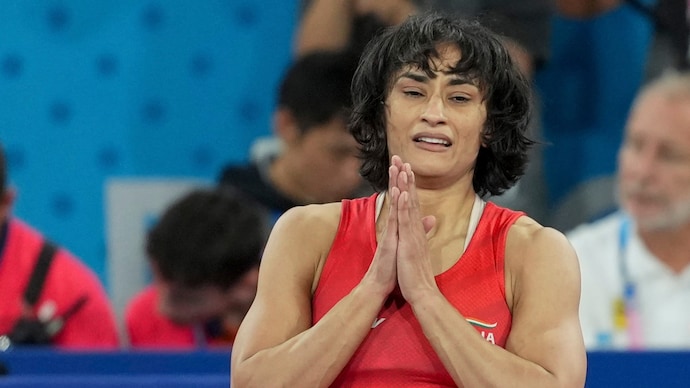

Vinesh Phogat will be allowed to participate in the Asian Games selection trials after the Supreme Court refused to stay a Delhi High Court order granting her permission to compete. However, the apex court made it clear that its decision should not be seen as an endorsement of the High Court's reasoning, repeatedly questioning several observations made in the order and raising concerns about Phogat's compliance with anti-doping requirements.
A bench of Justices P S Narasimha and Alok Aradhe heard the Wrestling Federation of India's (WFI) challenge to the High Court verdict on Friday, May 29. With the trials scheduled to begin on May 30, the court decided against disrupting the process at the last minute, effectively allowing Phogat to take part.
HIGH COURT'S APPROACH QUESTIONED
Throughout the hearing, the bench expressed reservations about the manner in which the Delhi High Court had dealt with the matter. The judges questioned how the WFI's policy could be termed "exclusionary" when the eligibility criteria applied to all wrestlers equally.
The court also took exception to some of the observations made regarding motherhood and gender discrimination, noting that such issues could not become the sole basis for judicial intervention in sports administration.
"Country first" was a recurring theme during the hearing, with the bench observing that athletes representing India must meet all eligibility and compliance requirements.
At the same time, the court acknowledged Phogat's stature in Indian sport, describing her as "not an ordinary athlete" and recognising her achievements as a world champion and Olympian.
DOPING AND ELIGIBILITY CONCERNS RAISED
The Supreme Court also examined concerns relating to anti-doping compliance and participation requirements.
During the hearing, the bench referred to records indicating that Phogat had missed doping tests and had issues relating to whereabouts filings. The judges observed that such matters could not be brushed aside lightly, especially when an athlete is competing for a place in the national team.
The court noted that under international anti-doping regulations, repeated failures relating to testing and whereabouts requirements could have serious consequences.
Questions were also raised regarding Phogat's participation in qualifying tournaments and whether she had fulfilled the federation's eligibility criteria ahead of the trials.
WHY THE DISPUTE REACHED SUPREME COURT
The controversy stems from the WFI's revised selection policy, which restricted participation in the trials to wrestlers who met specific eligibility requirements, including participation in designated tournaments.
Phogat challenged the policy after being declared ineligible following her return from maternity leave. Her legal team argued that the federation's criteria unfairly disadvantaged an accomplished athlete attempting to resume her career after childbirth.
Senior advocate Madhavi Divan, appearing for Phogat, argued that the federation had ignored her exceptional past achievements and effectively shut the door on her return. She contended that the selection framework had become overly rigid and failed to account for iconic athletes returning to competition.
The WFI, however, maintained that the rules applied equally to all wrestlers and warned that relaxing the criteria for one athlete would be unfair to others who had complied with the selection process.
TRIALS NOW TAKE CENTRE STAGE
Despite its criticism of the High Court's reasoning, the Supreme Court ultimately decided that it would be inappropriate to stop Phogat from participating with the trials just hours away.
The court observed that the situation should not have arisen in the first place and called for stronger institutional mechanisms to deal with athlete-related issues outside the courtroom.
With the legal hurdle cleared for now, attention will shift to the mat. Phogat will get the opportunity to prove her credentials in the trials, while the wider debate over athlete welfare, maternity breaks and sporting regulations is likely to continue long after the competition concludes.