
A software engineer wins religious exemption from using AI at work, writes code by hand instead
A North Carolina software engineer secured approval to avoid AI tools at her tech job on religious grounds. The case reflects widening questions over AI's environmental costs, ethics and workplace acceptance.
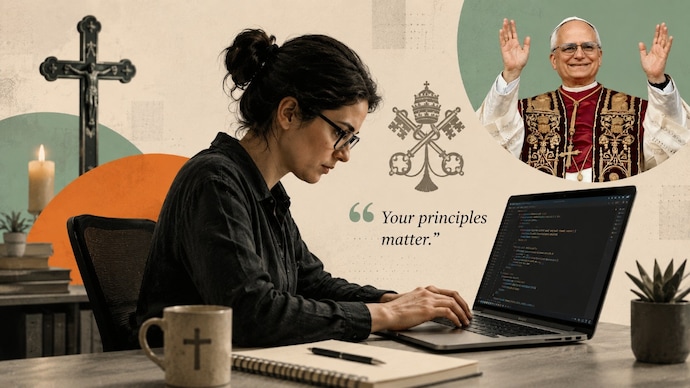

For many office workers today, AI has become a bit like email. You may not love it, but your company probably expects you to use it. Some firms are even ranking employees based on how often they use AI tools. So imagine the surprise when a woman working at a tech company successfully convinced her employer to let her do the exact opposite: not use AI at all. And no, it wasn't because she disliked chatbots or struggled with technology. It was because of her religious beliefs.
The 34-year-old software engineer from North Carolina argued that using AI conflicted with her faith as a Unitarian Universalist, a belief system that recognises that advances in technology should be guided by an ethical understanding of humanity.
In April, she formally requested an accommodation allowing her to avoid AI tools at work. She cited concerns about AI's environmental impact, including its energy, water, and land requirements, as well as ethical concerns about workers being replaced by the technology.
To strengthen her case, she consulted both an employment lawyer and a minister from her local congregation.
A month later, she got the approval.
Writing code the old-fashioned way
The accommodation means she can continue doing something that is becoming increasingly unusual in the AI era: writing and reviewing code herself.
"I'm writing my code and reviewing my code by hand, which seems crazy to say," she told Business Insider.
Then she pointed out something many programmers might find amusing.
"Just two years ago, how else would you do it?"
In a tech industry increasingly obsessed with AI assistants, her workflow has become almost a throwback to a simpler time. And according to her, avoiding AI has not slowed her down. She said she recently completed a coding task at the same speed as a colleague who used AI for a nearly identical assignment.
"AI doesn't really seem to be this game changer," she said. "Your principles matter."
A sign of growing AI backlash?
Her case arrives at a time when resistance to AI is becoming more visible. At some college graduation ceremonies this year, students reportedly heckled speakers who praised AI. Across the United States, residents have opposed the construction of AI data centres over environmental concerns.
Criticism of AI is also coming from unexpected places.
Recently, Pope Leo XIV warned that AI could deepen inequality, fuel conflict, and undermine human dignity if it is driven primarily by profit rather than human values. The warning was part of the Pope's first encyclical on AI, titled Magnifica Humanitas, which discusses both the benefits and risks of technologies such as ChatGPT, Claude, and Gemini.
The AI future nobody predicted
The software engineer's exemption may be unusual, but it highlights a broader shift. As AI becomes more deeply woven into workplaces, the debate is no longer just about what the technology can do. It's also about whether everyone wants to use it in the first place.