
Got an NDMA alert SMS? Don't panic, India is testing new disaster warning system
NDMA has begun pan-India testing of cell broadcast alerts on mobile phones. The exercise is meant to check reliability before nationwide emergency use.
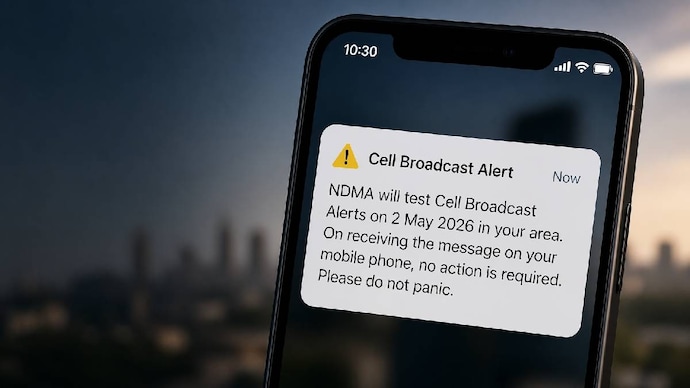

India is building its own alert-system to safeguard its citizens when nature strikes. The system, which is called Cell Broadcast Alert, is currently under pan-India testing so if you happen to have received a flash SMS message from the NDMA – short for National Disaster Management Authority – it is okay. You’re not alone.
Update: India on Saturday tested a new system as the government formally launched its indigenous Cell Broadcast emergency alert system.
One such message reads like this: “NDMA will test Cell Broadcast Alerts on 2 May 2026 in your area. On receiving the message on your mobile phone, no action is required. Please do not panic.”
Essentially, the government wants to provide timely information in case of any eventuality, and what better option than direct alerts on mobile phones. As a part of its preparedness to deal with emergency situations, the government has developed an indigenous cell broadcast system and is currently testing the system pan-India.
While the government has tested the system a few times in the past, these alerts are currently being conducted to assess the system’s performance and reliability prior to nationwide rollout of this system.
These test alerts will be sent by the National Disaster Management Authority, which is the apex body for disaster management in India.
The test messages will only be received on mobile phones that have their Cell Broadcast test channels enabled. You can enable or disable alerts by navigating to Settings Safety and emergency Wireless emergency alerts Test alerts. The test alerts are part of the government’s strategy to ensure the proper functioning of the entire mobile network infrastructure before any disaster strikes.
What happens when you get the alert
When the alert arrives, it makes the phone ring rather loudly with a sharp alarm tone and a flashing message.
The system aims to deliver disaster and emergency-related alerts in situations such as tsunamis, earthquakes, lightning strikes, and man-made emergencies like gas leaks or chemical hazards via SMS to mobile users within the targeted areas.
Nationwide rollout plan
According to the government, these alerts will be delivered by the indigenous Integrated Alert System (SACHET), which is developed by the Centre for Development of Telematics (C-DOT). The system is based on the Common Alerting Protocol (CAP), which is recommended by the International Telecommunication Union.
After the testing, the system will be operationalised across the country and will disseminate emergency alerts in multiple Indian languages across all mobile handsets—regardless of test channel settings. This will ensure alerts reach a wider audience during actual emergencies.
These messages are part of a planned nationwide testing exercise and do not require any action by the recipients.