Markets end marginally higher as FMCG, banks gains cushion profit booking
The BSE Sensex rose 64.42 points, or 0.09%, to close at 73,983.18. However, the NSE Nifty50 slipped 27.15 points, or 0.12%, to settle at 23,214.95.

The Reserve Bank of India (RBI) is the country’s central bank, responsible for managing monetary policy, regulating banks and maintaining financial stability. Its decisions on interest rates, inflation control and liquidity directly affect loans, savings and economic growth. RBI policies also shape currency management and digital payments. This topic page tracks key announcements, policy updates, expert views and their impact on markets, banks and consumers.
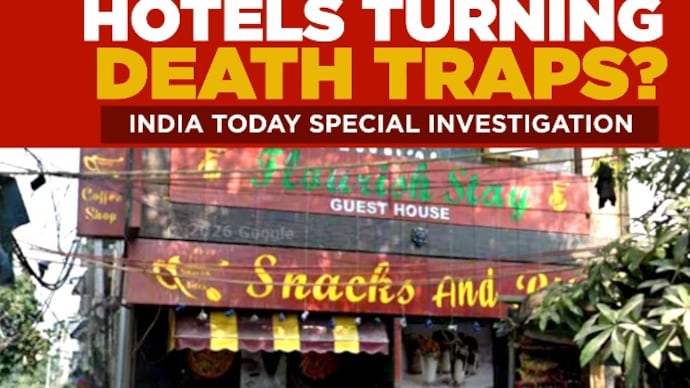
In this edition of 5 Live, watch India Today's reality check from across Delhi, Lucknow, and Mumbai that has exposed widespread fire safety violations, including blocked exits and missing equipment, days after Delhi's Malviya Nagar hotel fire that claimed 21 lives.
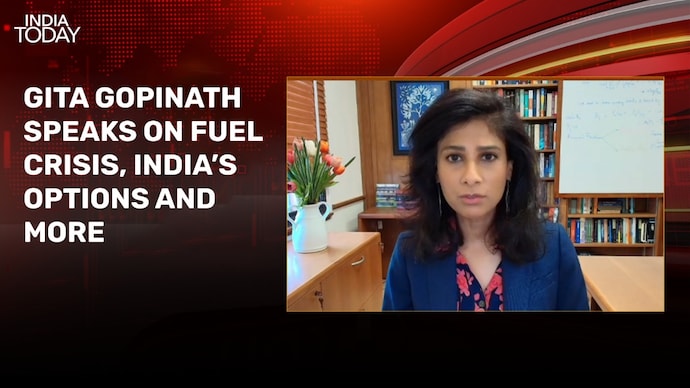
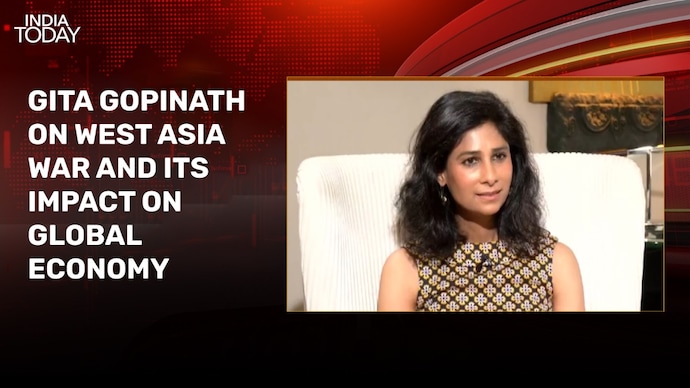
In an exclusive interview with India Today, Gita Gopinath, Professor of Economics at Harvard University, discusses the impact of the West Asia conflict and rising oil prices on the Indian economy.
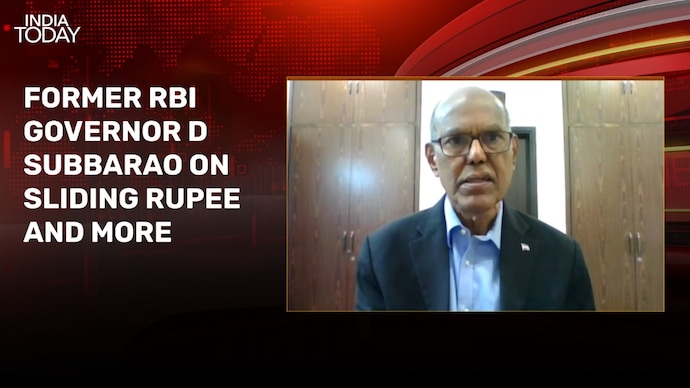
In an exclusive interview with India Today, former Reserve Bank of India (RBI) Governor Duvvuri Subbarao said that the rupee's depreciation is a matter of concern, but there is no need to get alarmed about it.
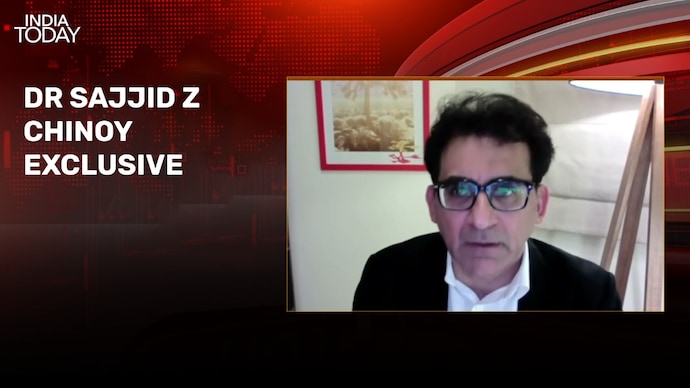
In an interview with India Today, Dr Sajjid Z Chinoy, Chief India Economist at JP Morgan, discussed the global energy shock and its impact on the Indian economy following the recent hikes in commercial LPG and anticipated domestic fuel price increases.
In an exclusive interview with India Today Consulting Editor Rajdeep Sardesai, Harvard University professor and former IMF Deputy Managing Director Gita Gopinath discussed the economic implications of the ongoing Iran conflict.
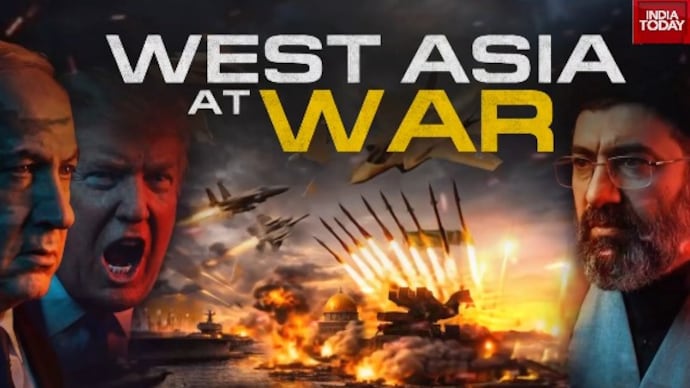
The conflict in West Asia has escalated as US military strikes under Operation Epic Fury destroyed the B1 bridge in Karaj, Iran, with President Donald Trump warning that electric power plants are the next targets.
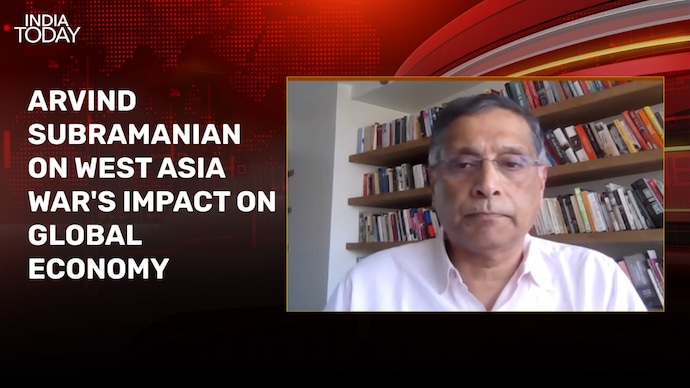
Former Chief Economic Advisor Dr Arvind Subramanian warns that India faces a stagflationary shock due to the US-Iran war and the disruption of the Strait of Hormuz.
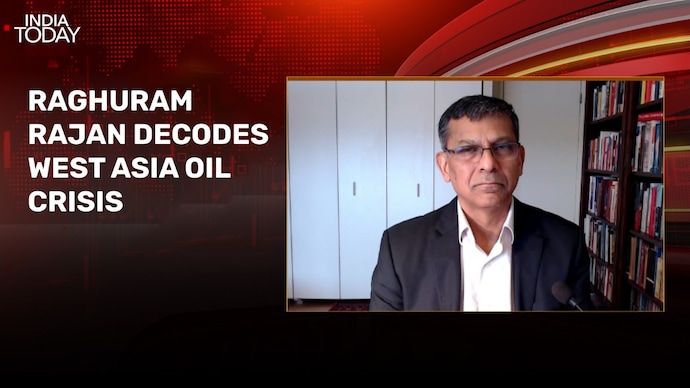
Former RBI Governor Raghuram Rajan warned that if the US-Israeli war against Iran continues beyond a month, oil prices could surge to $150-$200 per barrel, potentially triggering a global recession.
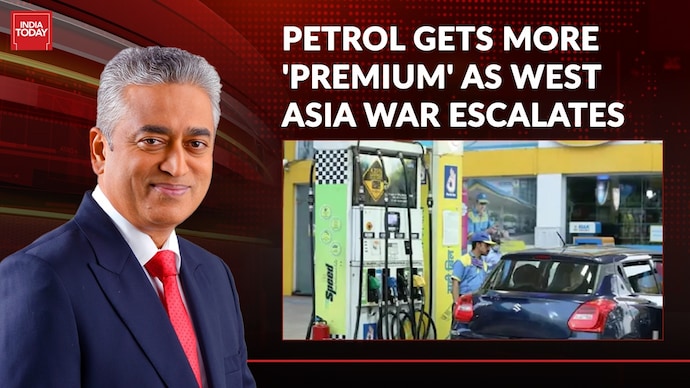
Premium petrol prices in India have been hiked by rupees two per litre while regular fuel rates remained unchanged amid escalating West Asia tensions.
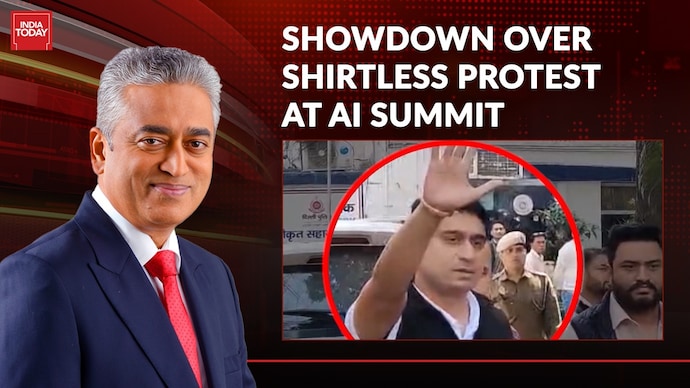
The big talking point of this episode of News Today is the arrest of Indian Youth Congress President Uday Bhanu Chib following a shirtless protest at the AI summit.
On this Special Report, host Siddharth Zarabi leads a high-level panel discussion following the tabling of the Economic Survey in Parliament. Joined by top economists including Sajid Chinoy and Sonal Verma, Zarabi explores the 'Reform Express' roadmap mentioned by Prime Minister Narendra Modi. The discussion highlights critical macroeconomic indicators, with Zarabi noting that the survey provides 'clues into the mind of what finance ministry mandarins are thinking' ahead of Finance Minister Nirmala Sitharaman’s upcoming budget presentation. The panel analyzes India's 7% GDP growth projection, the challenges of a hostile global trade environment, and the strategic debate over rupee depreciation as a shock absorber. Experts also discuss the impact of Chinese excess capacity on domestic manufacturing and the necessity of rationalizing customs duties to boost export competitiveness. The programme concludes with expectations for fiscal prudence and a strong narrative on AI-driven digital infrastructure to sustain India's current economic momentum.
Ahead of Finance Minister Nirmala Sitharaman’s ninth Union Budget, this News Today special edition brings together leading economists to discuss India’s economic priorities amid global uncertainty.
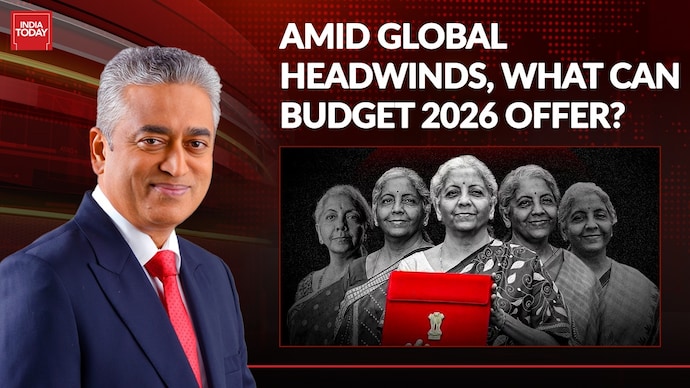
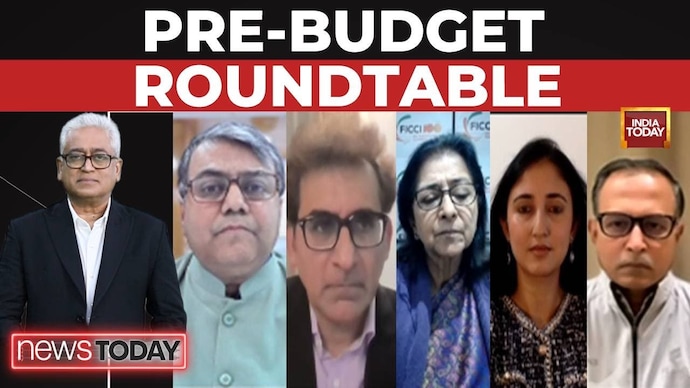
This India Today Special Report, hosted by Rajdeep Sardesai, features a pre-budget roundtable ahead of Finance Minister Nirmala Sitharaman's ninth consecutive Union Budget. The panel, including economists Neelkanth Mishra and JP Morgan’s Sajid Chinoy, analyzes the 2026 Union Budget challenges amidst global headwinds and geopolitical uncertainty. Key discussion points include fiscal consolidation, job creation, and the necessity of private investment to drive long-term economic growth. Sajid Chinoy advocates for strategic trade shifts, suggesting the easing of Press Note 3 to attract Chinese Foreign Direct Investment (FDI) for local job creation and technology transfer. The experts debate India's potential entry into the CPTPP and the impact of rupee volatility on macroeconomic stability. The program examines the balance between fiscal discipline and structural reforms required to boost labor incomes. This comprehensive analysis explores how global financial instability and fragmented trade environments influence India's growth trajectory as the nation approaches its demographic peak in 2047, emphasizing the urgency of a fast-paced reform agenda.
This India Today special report features a pre-budget roundtable hosted by Rajdeep Sardesai, focusing on the Union Budget 2026 and the challenges facing Finance Minister Nirmala Sitharaman. Top economists, including Neelkanth Mishra, Sajid Chinoy, and Naina Lal Kidwai, analyze India's strategy amidst global geopolitical shifts and the 'fog of uncertainty.' Key discussion points include the 4.4% fiscal deficit target, the impact of 'Operation Sindoor' on defense spending, and the necessity of structural reforms to boost manufacturing. Experts deliberate on easing Press Note 3 to attract Chinese FDI, the role of the 16th Finance Commission, and tax clarity for Global Capability Centres. The panel provides a GDP growth forecast for FY27 between 6.5% and 7%, emphasizing the urgency of micro-reforms in urban infrastructure and agriculture. The report highlights the tension between fiscal consolidation and the need for private investment to jumpstart the economy, exploring trade relations with ASEAN and the importance of export-led growth in a fragmented global order.
On this Special Report, host Siddharth Zarabi leads a panel of top economists to decode the Economic Survey 2026-27 tabled in Parliament. Joining the discussion are Sajid Chinoy of JP Morgan, Sonal Verma of Nomura, Anubhuti Sahay of Standard Chartered, and Tanvi Gupta Jain of UBS Securities. The panel analyzes the 'reform, perform and transform' mantra mentioned by Prime Minister Narendra Modi. Siddharth Zarabi notes that the survey 'contains a lot of nuggets of information and data that gives us some clues into the mind of what finance ministry mandarins are thinking' regarding the upcoming budget. The experts discuss India's 7% GDP growth projection, the necessity of rupee depreciation as a shock absorber against global volatility, and the impact of Chinese excess capacity on domestic manufacturing. The conversation also covers fiscal consolidation targets, the surge in gold imports, and the urgent need for rationalising customs duties and enhancing the speed of doing business to maintain India's economic momentum.
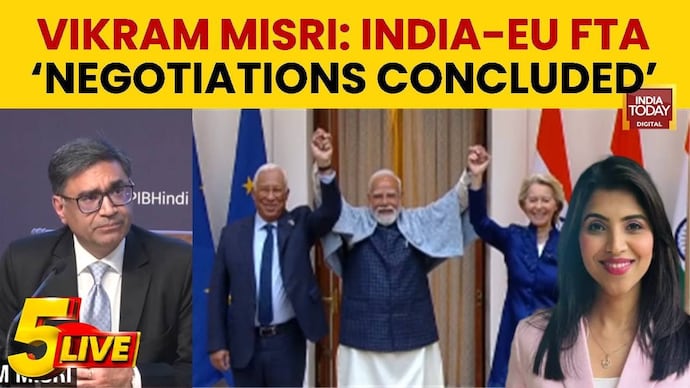
On this Special Report, Foreign Secretary Vikram Misri briefs the media on the historic outcomes of the 16th India-EU Summit held in New Delhi. Misri announced the successful conclusion of negotiations for a landmark India-EU Free Trade Agreement (FTA), stating, 'The FTA that was - whose negotiations were concluded and announced today will have a transformative role beyond boosting bilateral trade.' He highlighted that the EU is one of India's largest trading partners, with bilateral trade reaching nearly $136 billion in 2024-25. Beyond trade, the summit marked the signing of a first-of-its-kind India-EU Security and Defense Partnership and a memorandum on mobility for professionals and students. The Foreign Secretary also noted the launch of a roadmap titled 'Towards 2030' to guide strategic ties across technology, innovation, and connectivity. The briefing emphasized that these agreements create a 'blueprint for shared prosperity' between the world's second and fourth largest markets.
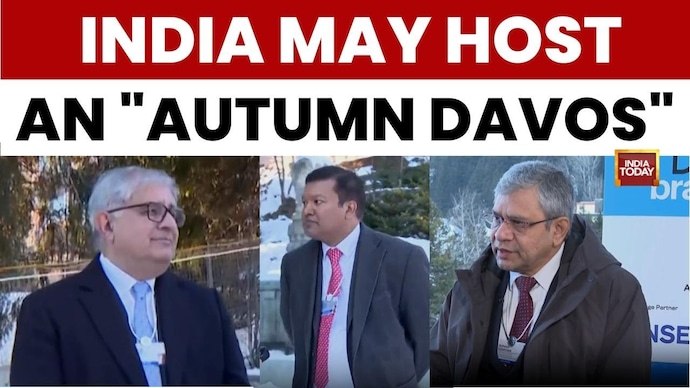
At Davos 2026, Union Minister Ashwini Vaishnaw outlined India's economic roadmap, targeting 7-nanometer chip production by 2030 and 3-nanometer by 2032. Vaishnaw cited GST reforms, labor changes, and the opening of the nuclear sector as primary investment drivers. He also noted that Indian Railways has achieved 99.6% electrification. Axis Bank MD and CEO Amitabh Chaudhry addressed the resilience of the banking sector and export industries despite global trade uncertainties and US tariffs. Chaudhry stated that current interest rates support growth, reducing the immediate need for further cuts. The report also documented the Indian rupee reaching a record low of 91.74 against the US dollar due to geopolitical tensions. Deloitte South Asia CEO Romuald Shetty and Bharti Enterprises Vice Chairman Rajan Mittal discussed India's potential as a global AI hub and the necessity of new Free Trade Agreements to manage market volatility. These leaders emphasized a shift toward product innovation and strategic trade diversification to maintain India's growth trajectory amidst global economic shifts.
On this Special Report, anchor Akshita Nandagopal examines the escalating political face-off in Tamil Nadu following the AIADMK's manifesto release. The AIADMK has promised ₹2000 monthly assistance for women, doubling the current ₹1000 provided by the ruling DMK. Akshita Nandagopal notes, 'I think this kind of competitive populism is not healthy for the state,' highlighting concerns over the state's rising debt, which has reportedly crossed ₹10 lakh crore. The programme features a heated debate between DMK's Dharani Dharan and AIADMK's Kovai Sathyan regarding financial management and the efficacy of social welfare schemes versus 'freebies'. While the DMK defends the multiplier effect of cash handouts on the economy, the AIADMK accuses the ruling party of 'bribing' voters ahead of the 2026 assembly polls. The report also touches upon the impact of these promises on the state exchequer and the suspension of previous welfare schemes like the free laptop initiative.
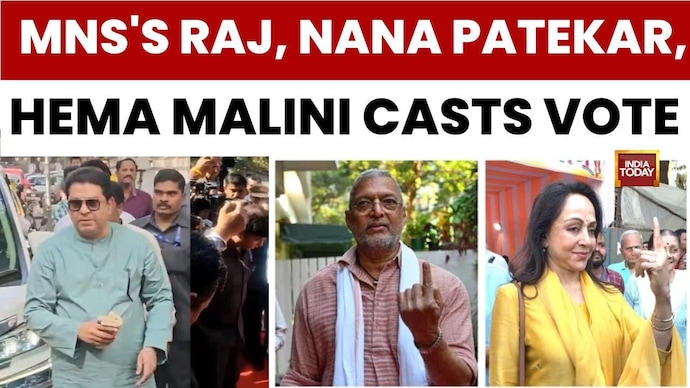
This report covers the ongoing elections for the Brihanmumbai Municipal Corporation (BMC), described as India's richest civic body. An unidentified speaker notes that 'India's richest civic body, which is going to polls today,' highlighting the significance of the election for Mumbai's infrastructure and governance. The transcript details the arrival of political figures at polling stations, including Balmohan Vidya Mandir in Dadar, a stronghold for the local identity movement. Key issues discussed include the consolidation of Marathi votes and the challenges facing the city, such as traffic congestion, pothole-free roads, and water supply. The speaker emphasizes that as the national financial capital, Mumbai deserves better living conditions and improved infrastructure to match its status as a commercial hub hosting major industrial houses and institutions like the RBI.
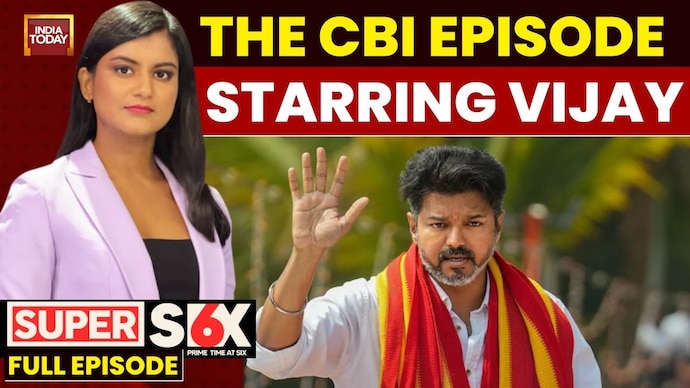
The Central Bureau of Investigation (CBI) questioned actor and Tamilaga Vettri Kazhagam (TVK) chief Vijay for seven hours in Delhi regarding a stampede at his party's event in Karur that resulted in 41 deaths. Vijay reportedly denied his party's role, stating that TVK functionaries were not responsible and that the Tamil Nadu police failed to maintain law and order. He claimed he left the venue to prevent further chaos. The CBI is corroborating his statement with video evidence as the probe unfolds during a crucial election season, with debates pointing to negligence or alleged political sabotage by the ruling DMK. Former IPS officer Sanjay Sahay noted it was a case of "atrocious" crowd management. The report also highlights another political controversy involving MNS chief Raj Thackeray, who revived the divisive 'hatao lungi, bajao pungi' slogan against Tamilians ahead of Mumbai's BMC elections.