How Modi’s two-day Varanasi visit has a clear political messaging
At the heart of the prime minister’s visit is the ‘Jan Aakrosh Mahila Sammelan’, in which an estimated 50,000 women are expected to participate

The Women’s Reservation Bill, first introduced in September 1996 by the H.D. Deve Gowda government, marked a long-standing effort to improve women’s representation in Indian politics. Despite repeated attempts by successive governments, the bill remained pending for nearly 27 years. It was finally cleared in September 2023 during a special session of Parliament, signaling a major step toward gender inclusion.
Currently, women’s representation in India’s Parliament remains limited. The Lok Sabha has 78 women MPs, accounting for just about 14% of the total strength, while the Rajya Sabha has only 32 women members. In several state legislative assemblies, women’s participation is even lower, often falling below 10%.
The bill had earlier seen partial success in 2010, when the UPA government managed to pass it in the Rajya Sabha, but it failed to secure approval in the Lok Sabha. Initially introduced as a proposed Constitutional Amendment, it also faced political resistance and was referred to a joint parliamentary committee.
Globally, many countries have adopted reservation or quota systems to enhance women’s political participation. Nations like Pakistan, Bangladesh, Nepal, and the UAE have reserved seats for women, aiming to ensure more inclusive and balanced governance.
Prime Minister Narendra Modi, who addressed Bharatiya Janata Party workers in Delhi on the party's superb performance in assembly elections, said that with a victory in West Bengal, 'lotus' has bloomed from Gangotri to Gangasagar.
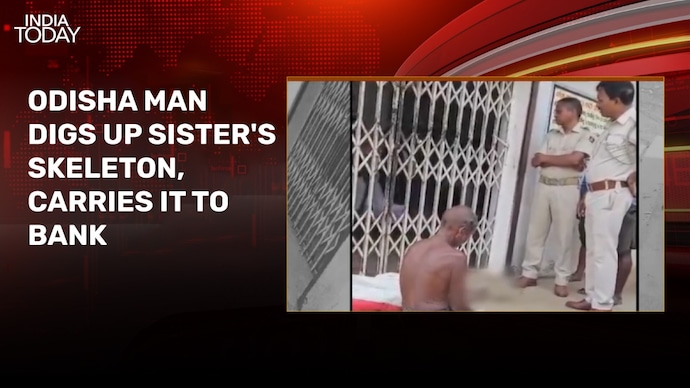
In Odisha’s Keonjhar district, a daily wage labourer carried his sister's skeletal remains to a rural bank to claim her savings after being denied access without a death certificate.
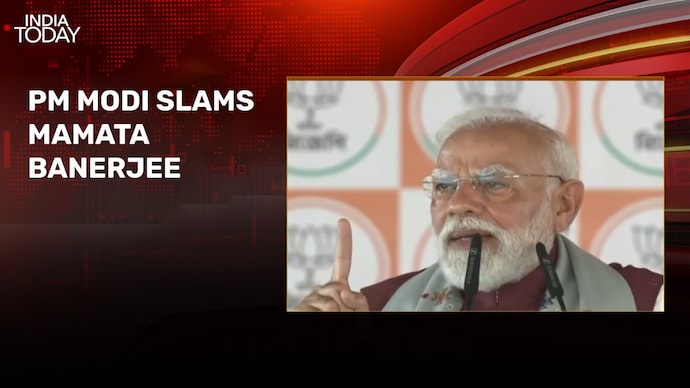
Prime Minister Narendra Modi criticised the Mamata Banerjee-led Trinamool Congress government during his election campaign in West Bengal.
This edition of News Today focusses on escalating tensions in West Asia following Iran's seizure of two vessels, including an India-bound ship, in the Strait of Hormuz.
A massive traffic jam in Mumbai triggered by a political protest rally led to a confrontation between a stranded woman commuter and a Maharashtra minister.
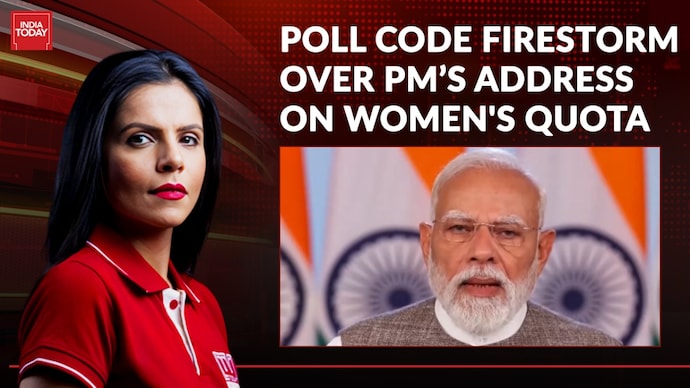
A massive political controversy has erupted over PM Modi's prime-time national address on Saturday on the state broadcaster on women's quota.
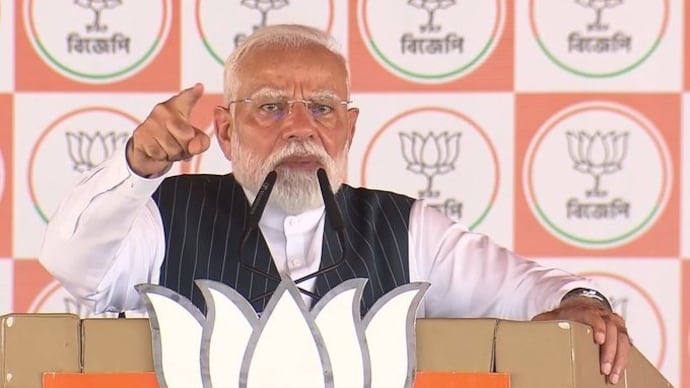
Ahead of the first phase of polling in West Bengal, the Prime Minister launched an attack on the Trinamool Congress and the Congress party, accusing them of betraying the women of the state. Addressing a public gathering, the Prime Minister alleged that both parties conspired to ensure the failure of the Women's Reservation Bill in Parliament, preventing women from securing thirty-three percent reservation. The Prime Minister claimed the ruling state party does not want women to become Members of Legislative Assembly or Members of Parliament as they challenge the current administration. Highlighting the national ruling party's focus on women's empowerment, the Prime Minister outlined several financial promises, including thirty-six thousand rupees annually under the Matrushakti Bharosa Card, twenty-one thousand rupees for pregnant women, and fifty thousand rupees for daughters' education. Furthermore, the Prime Minister accused the state government of breaking laws to benefit infiltrators and attempting to provide reservations based on religion, thereby undermining the Constitution.
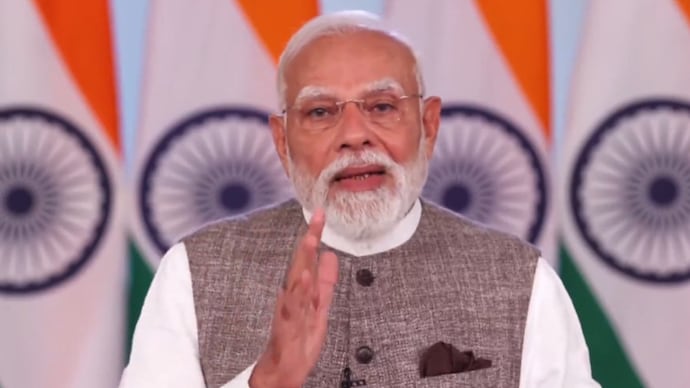
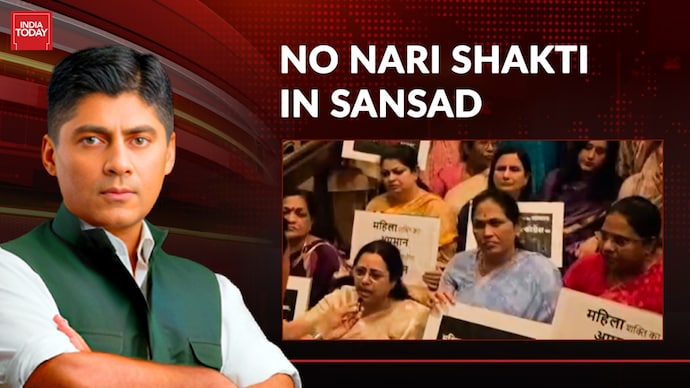
Prime Minister Narendra Modi launched a sharp attack on Congress during his address on the women’s reservation bill, calling its politics “parasite-like”. He said the party survives by riding on regional allies while blocking reforms that empower women. Modi accused Congress of missing a historic opportunity and choosing politics over women’s rights. He also said the Opposition’s actions had stalled the progress of “Nari Shakti” and hurt the aspirations of millions. Calling the bill a step towards empowering half the population, the Prime Minister said the government’s resolve remains firm and efforts to secure women’s rights will continue despite the setback.
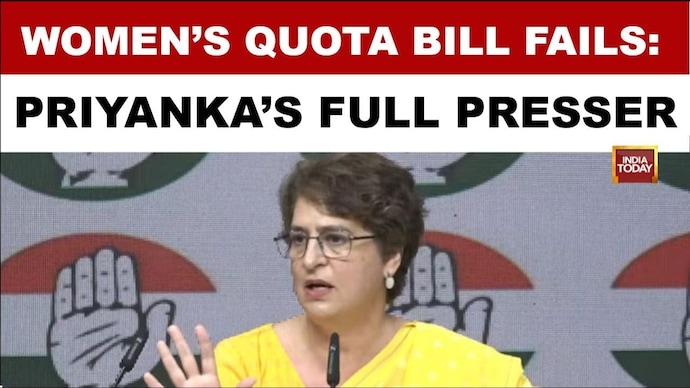
The opposition has blocked a bill in Parliament, describing the move as a victory for democracy and the federal structure. The defeated legislation linked women's reservation to a new delimitation exercise based on the 2011 census. The opposition argued the bill was a move to alter parliamentary proportions, potentially reducing the political weight of Southern states and bypassing a caste census. Instead of the proposed changes, the opposition demanded the immediate implementation of the 2023 women's reservation legislation on the existing 543 Lok Sabha seats. Furthermore, there is a demand for an Other Backward Classes quota within the women's reservation framework. The opposition accused the government of using women's rights as a shield to push through a delimitation agenda that would alter electoral dynamics, stating they will fight for immediate representation without compromising the federal balance.
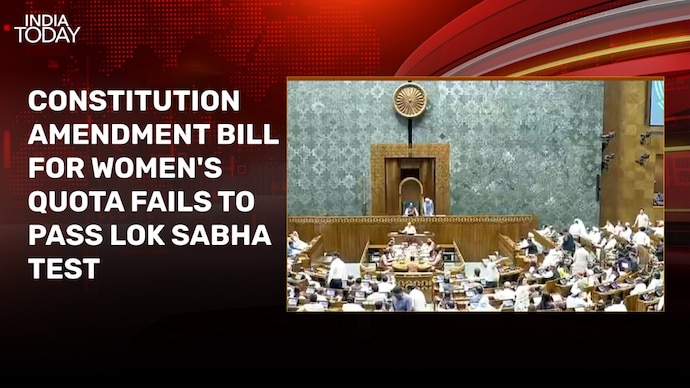
The Women's Reservation Bill has been defeated in Parliament after the government failed to secure the required two-thirds majority for a constitutional amendment.
In an exclusive interview with India Today, senior Congress MP and jurist Dr. Abhishek Manu Singhvi discussed the defeat of the Women's Reservation Amendment Bill in the Lok Sabha.
The Constitution Amendment Bill to implement 33 per cent reservation for women failed to pass in the Lok Sabha after the government failed to secure the required two-thirds majority, receiving 298 votes in favour and 230 against.
The Constitution Amendment Bill to implement 33 per cent reservation for women in legislatures in 2029 and increase the number of Lok Sabha seats to 816 was defeated on Friday.
India's women hankering for more representation deserve better, much better. We need to end the patriarchal system that still dominates large sections of our political class. No one has really won or lost in that sense today.
The 131st Constitutional Amendment Bill, designed to mandate a 33 percent reservation for women in the Lok Sabha and state assemblies, failed to pass in Parliament.
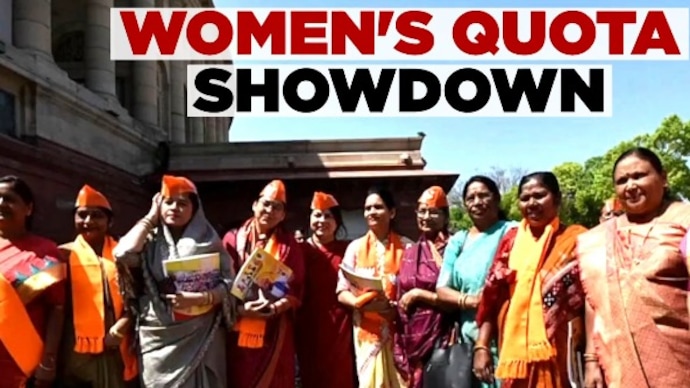
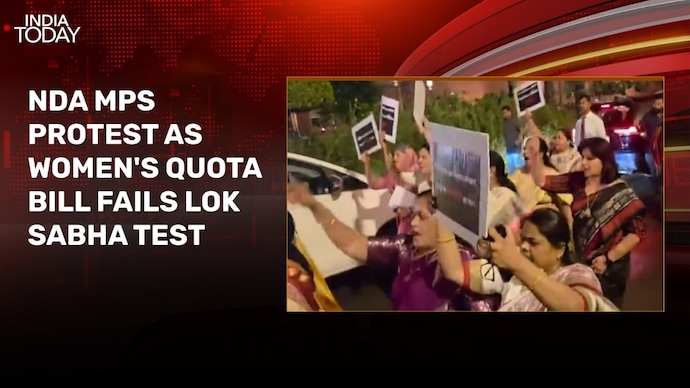
The Women's Reservation Bill failed to pass the floor test in Parliament, falling short of the required two-thirds majority by 54 votes, with 298 votes in favour and 230 against. Following the defeat, women parliamentarians from the ruling coalition staged a protest in the Parliament complex, accusing the opposition alliance of obstructing women's empowerment.
Union Home Minister Amit Shah on Friday said that the Opposition is against women's reservation and not against its implementation.
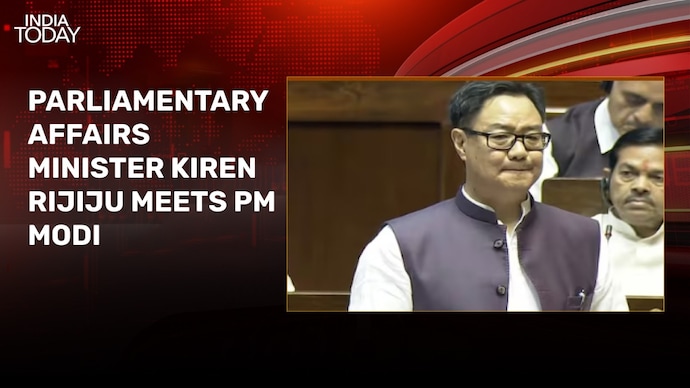
Parliamentary Affairs Minister Kiren Rijiju met Prime Minister Narendra Modi to ensure a unanimous stand from the government in the Lok Sabha ahead of the voting on Women Reservation Amendment Bill 2026, the Delimitation Bill 2026, and the Union Territories laws.
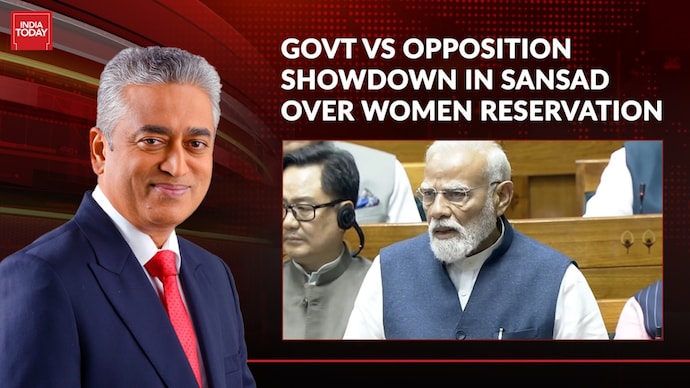
A massive political showdown erupted in Parliament on Thursday over women's reservation and its linkage to the upcoming census and delimitation exercise.
Senior BJP leader Smriti Irani slammed the opposition for questioning the government's intent on the Women's reservation bill.