
22-year-old man quits corporate job after earning Rs 40,000 as delivery agent
A 22-year-old man quit a corporate job for delivery work which paid him more, which led to a debate on salaries, growth, and the gig economy.


A 22-year-old man’s decision to quit his corporate job and switch to delivery work for better pay has sparked a sharp debate online, raising questions around salaries, growth, and what young professionals are really choosing today.
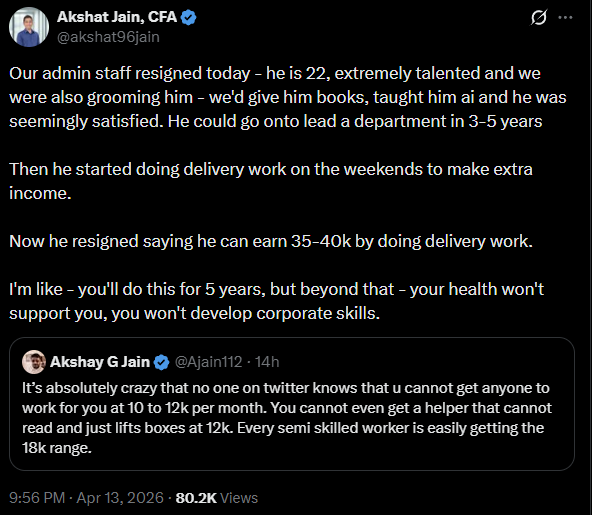
The conversation began on X after investor Akshat Jain shared that a young employee on his team had resigned despite being “extremely talented” and someone they were actively grooming for future leadership roles.
The employee had been working with them while also taking up delivery work on weekends to earn extra income. Over time, that side hustle turned into a more viable option.
“Now he has resigned saying he can earn 35-40k by doing delivery work,” Jain wrote, expressing concern that while the income might seem attractive in the short term, it could come at the cost of long-term growth, skill development, and even health.
Take a look at the post here:
His post gained traction on social media, however, the reactions that followed told a very different story.
A large section of users interpreted the situation as less about the employee’s short-term thinking and more about the realities of compensation. Several argued that if a young worker was willing to leave a supposedly promising corporate role for delivery work, it pointed to a gap between what companies claimed to offer in terms of growth and what they actually provided in terms of pay.
Several users questioned the idea of “grooming” employees without adequately compensating them in the present, suggesting that future potential cannot replace immediate financial needs. There was a strong sentiment that young professionals today were far more pragmatic, prioritising income that supported their current lifestyle over long-term promises that may or may not materialise.
Others also reflected on how the nature of work was evolving. Gig economy roles, despite lacking traditional career progression, were increasingly being seen as viable alternatives because they offered quicker and sometimes higher earnings. The flexibility and immediate returns of such work made it difficult to ignore, especially when compared to entry-level corporate roles that demanded time and effort without matching financial reward.
At the same time, some users acknowledged the trade-offs involved, pointing out that while delivery work might offer better pay now, it may not provide the same long-term career stability or skill development.